Your kitchen sink gurgles when trapped air struggles through your drain system, usually signaling a partial clog or blocked vent pipe. As water drains, it creates a vacuum that disrupts your P-trap’s protective water seal, allowing air to rush back up and create those unsettling bubbling sounds. This happens because debris like soap scum and hair restricts airflow, intensifying pressure imbalances. While annoying, it’s your plumbing’s way of warning you before bigger problems develop—and there’s plenty you can do to fix it.
What Does a Gurgling Kitchen Sink Actually Mean?
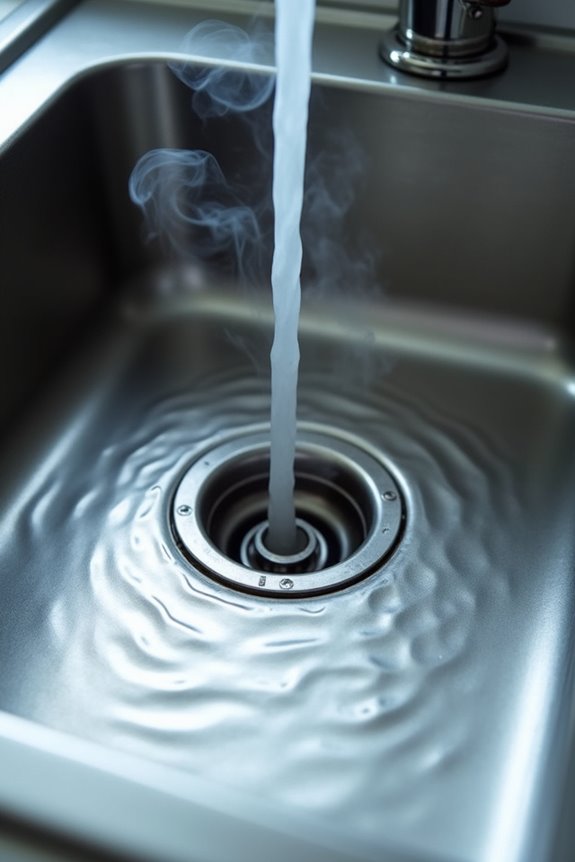
Why does your kitchen sink sound like it’s trying to communicate with you? That gurgling noise you’re hearing isn’t random—it’s actually your plumbing system signaling for help. When I first encountered those mysterious sounds, I realized they meant something specific was happening beneath my sink.
Gurgling sounds typically indicate trapped air struggling through your drain system, often caused by a partial blockage or a blocked vent. These noises occur because water’s passage creates air pressure imbalances, forcing air to bubble up oddly. Sometimes soap scum, hair, or grease buildup restricts water flow, making those unsettling sounds worse.
The good news? Understanding what your sink’s telling you means you’re already halfway toward fixing it. Recognizing these warning signs helps you address issues before they worsen, potentially saving you money on professional drain cleaning later.
Why Trapped Air in Your P-Trap Creates Gurgling Sounds
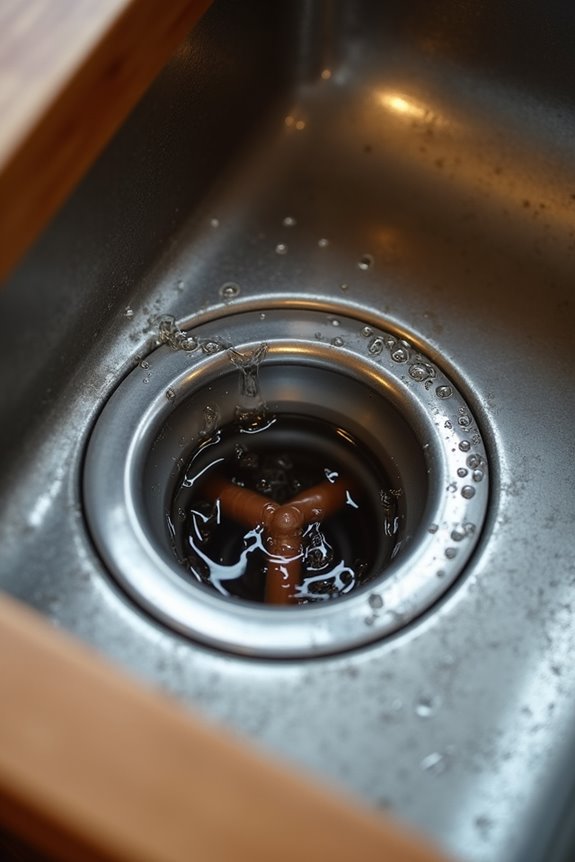
When water drains from your sink, it creates a vacuum effect in the P-trap below—that curved pipe section that normally holds water to block sewer gases—and this vacuum pulls air down through the drain, producing those distinctive gurgling sounds you hear. Your P-trap’s water seal is crucial because it acts as a barrier between your home and the sewage system, but when air rushes in to fill the space left by draining water, it disrupts that seal and causes the noise and bubbling. Understanding this vacuum-and-seal relationship helps explain why gurgling intensifies when your drain isn’t venting properly, since trapped air has nowhere to escape except back up through the water column.
The Vacuum Effect Explained
As water rushes down your drain, something invisible but powerful happens inside your pipes—trapped air gets squeezed out, and that’s where the real trouble starts. I’ve learned that this creates a vacuum effect, which is basically your sink drain pulling desperately for air to fill the space water’s leaving behind.
Here’s what happens: as that vacuum forms, it tugs on your P-trap’s water seal, causing the water to bulge and shift. That’s the gurgling you’re hearing—your plumbing system struggling to breathe. When your venting is blocked or your drain’s already sluggish, the air pressure imbalance intensifies dramatically. The vacuum becomes stronger, the gurgling louder. Your sink’s essentially gasping for air, and that telltale sound signals the moment everything shifts.
Water Seal Maintenance Matters
The secret to stopping that annoying gurgle lies in something you can’t see but absolutely can protect: your P-trap’s water seal.
Here’s what I’ve learned: when your P-trap loses its water seal through evaporation or a slow leak, air gets drawn into your drainage system, causing persistent gurgling. That water barrier’s your defense against air suction—it’s what keeps things quiet and functioning smoothly.
I maintain mine by regularly checking that my trap stays properly filled with water after use. It sounds simple, but this one habit prevents vacuum formation and keeps drainage flowing quietly. Cleaning your P-trap occasionally and ensuring it’s doing its job protects you from that frustrating noise. You’re taking control of your home’s comfort when you prioritize this maintenance.
How Partial Clogs Block Air Flow and Cause Gurgling
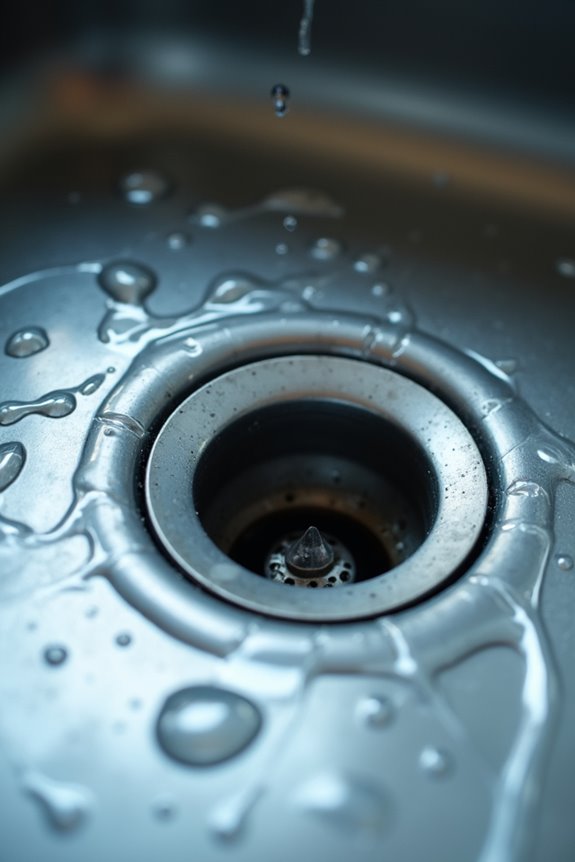
Why does your drain sound like it’s trying to communicate with you? That gurgling noise you’re hearing? It’s actually your partial clog creating chaos beneath the sink. Here’s what happens: debris like soap scum and hair narrows your drain, disrupting the air flow that normally keeps things quiet. When water tries to move through this drainage obstruction, air gets trapped behind it, forcing the P-trap to work overtime. Instead of venting smoothly, that compressed air pushes back through, creating those unsettling gurgling sounds we all recognize. The reduced pipe space increases backpressure, amplifying the noise as water battles the constricted section. Even when water’s still visible, that partial clog is already working against you, generating audible complaints every time you drain.
Blocked Vent Pipes and Air Pressure Problems
While we’ve been focusing on what happens inside your pipes, there’s another culprit working against you—and it’s literally above your head. Your drainage system needs air to function properly, and when blocked vent pipes prevent that airflow, you’re creating a pressure problem that manifests as gurgling in your kitchen sink.
Here’s what’s happening:
- Air can’t enter the drainage system as water flows down
- A suction effect develops, pulling air from your sink trap
- Pressure imbalances force air back up through fixtures
- Your sink gurgles as trapped air escapes
Debris, leaves, bird nests, or ice buildup commonly obstruct vent stacks on your roof. When vents are clogged, air pressure can’t equalize properly, disrupting drainage throughout your home. Locating and clearing that vent restores normal airflow, and your gurgling typically disappears.
Sewer Line Issues Affecting Multiple Fixtures
If you’re noticing that gurgling sounds aren’t limited to just your kitchen sink—if your bathroom drains, toilets, or shower are acting up too—you’re likely dealing with a main sewer line blockage rather than an isolated pipe problem. I’ve found that when multiple fixtures throughout your home drain slowly or back up simultaneously, it’s a clear signal that air’s getting trapped in your main sewer line, which is struggling against sediment buildup, tree root intrusion, or foreign objects lodged deep in the pipes. You’ll want to call a professional plumber for a sewer inspection, since this isn’t something you can typically fix yourself with a plunger or drain snake—the blockage is too far down the line, and clearing it properly requires specialized equipment and expertise.
Main Sewer Line Blockages
How’s your entire home’s drainage system performing? If you’re noticing that your kitchen sink gurgles while draining, I’d encourage you to contemplate whether this issue extends beyond just that one fixture.
A main sewer line blockage creates problems throughout your entire home. Here’s what you might experience:
- Gurgling sounds in multiple fixtures simultaneously
- Slow drainage across sinks, toilets, and showers
- Intermittent backups in various rooms
- Amplified noise when flushing or using several drains together
Tree roots, sediment buildup, or foreign objects commonly cause these obstructions. The blockage forces air to struggle through your drainage system, producing that distinctive gurgling. When you’re facing a main sewer line issue, I’d strongly recommend calling a professional plumber who can perform camera inspections, rodding, or hydro-jetting to remove the obstruction completely.
Multiple Fixture Gurgling Signals
You’ve probably noticed that your kitchen sink isn’t the only drain acting up—maybe your bathroom sink gurgles at the same time, or your shower joins in with its own bubbling sounds. When multiple fixtures gurgle together, I’m telling you, that’s your red flag for a main blockage downstream. Here’s what’s happening: as wastewater tries pushing past the obstruction, air gets trapped and displaced, creating those bubbling noises that ripple through your entire plumbing system. This isn’t just inconvenient—it signals a serious sewer line issue affecting your home’s drainage. Tree roots, sediment buildup, or foreign objects commonly choke the main line, impacting every fixture simultaneously. I’d recommend calling a professional for inspection and potential rodding to restore proper airflow and get your system flowing smoothly again.
Professional Sewer Inspection Needs
When multiple drains throughout your home start gurgling in unison, that’s your cue to stop troubleshooting on your own and call in the professionals—because I’m telling you, this situation’s moved beyond a simple plunger fix.
Here’s what professional plumbers bring to the table:
- Camera inspection technology that pinpoints exactly where your mainline blockage lives
- Assessment of pipe condition to identify tree roots, sediment, or foreign objects
- Diagnosis of venting issues that force air back through your fixtures
- Solutions that actually resolve the root cause, not just temporary relief
A sewer inspection costs money upfront, but trust me, it saves you from guessing games and repeated clogs. Early intervention prevents costly backups and water damage that’ll make you wish you’d called sooner.
How to Figure Out Which Problem You Have
Before you can fix that annoying gurgle, you’ll need to play detective in your own kitchen—and I’ve found that pinpointing exactly what’s happening makes all the difference between a simple fix and calling a plumber. Start by observing whether the gurgling happens only in your kitchen or echoes from other fixtures too. Test fixtures throughout your home to determine if you’re dealing with local drainage issues or a sewer problem. Notice the timing: does gurgling start immediately or after a delay? Check if it intensifies with faster water flow, suggesting a partial blockage or vent pipes restriction. Listen carefully to one sink versus multiple fixtures. These observations help you distinguish between a trapped P-trap issue and something more serious requiring professional intervention.
DIY Drain Clearing: Plunger and Auger Techniques
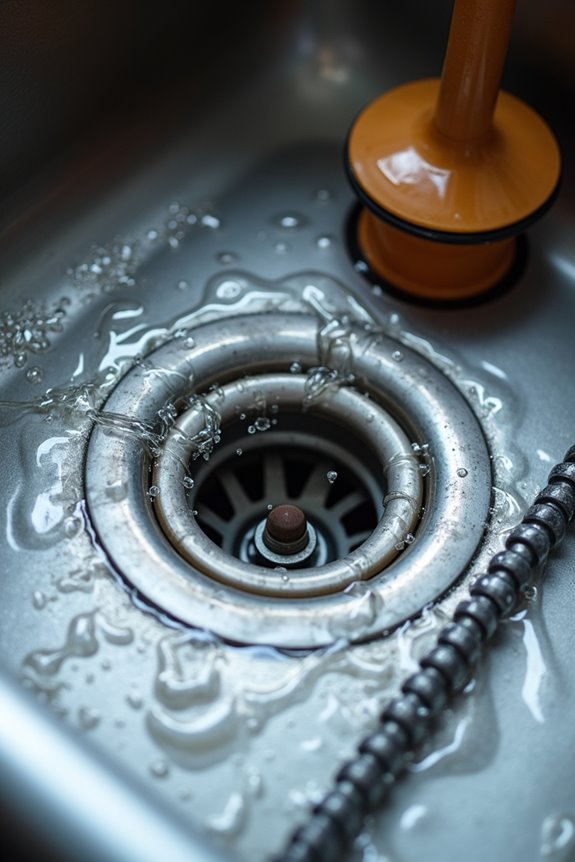
I’ve found that the most straightforward way to tackle your gurgling sink is trying a plunger first, since it’s simple and often works for partial blockages that haven’t ventured too far down your pipes. If that doesn’t do the trick, I’ll reach for a drain auger—that coiled snake tool that twists through deeper sections of your plumbing to break apart stubborn clogs you can’t access from above. Both methods require patience and proper technique, but they’ll save you money and the worry of harsh chemicals eating away at your pipes.
Plunger Method Essentials
How’s your plunger doing down there in that cabinet? I’m going to walk you through the plunger method essentials that’ll help you tackle that annoying sink gurgling.
Here’s what makes this approach work:
- Create an airtight seal by ensuring the plunger cup fully covers your drain opening
- Fill your sink with enough water to submerge the plunger completely
- Use quick, forceful pushes without lifting until you break the seal
- Maintain steady pressure to dislodge partial blockage buildup
I’ve found that a tight seal is everything—it’s what separates frustration from success. When you’re dealing with water drain issues and that gurgling sound, your plunger method becomes your first line of defense. The key is patience and technique working together.
Auger Technique Application
When your plunger’s done its job but that gurgling persists, it’s time to bring in reinforcement—a drain auger, sometimes called a snake, tackles blockages lurking deeper in your pipes where suction alone can’t reach. I’ll insert the cable into my sink drain, rotating the handle while feeding it forward until I hit resistance, then retract it to dislodge debris. This drain auger technique handles partial blockages that cause those annoying sounds, addressing underlying gurgling causes effectively.
I choose a pipe-safe auger sized for my 1-1/2 inch drain, avoiding tangling and damage risks. I’m careful with pressure too—excessive force threatens older pipes. Once I’ve broken through the clog using proper sink drain snaking methods, I flush everything with hot water, listening for blessed silence.
Why Chemical Drain Cleaners Aren’t the Answer
While it’s tempting to reach for that bright yellow or neon-colored bottle of chemical drain cleaner when your sink starts gurgling, I’d encourage you to pause before you do. Here’s why I recommend skipping them:
When your sink gurgles, resist the urge to grab that bright yellow chemical drain cleaner bottle.
- They corrode pipes and damage fittings, especially in older plumbing systems
- They often provide only temporary fixes for partial blockages
- Hazardous fumes can seep into your kitchen, requiring protective gear
- Repeated use pushes debris further down, creating worse clogs
Chemical drain cleaners won’t address venting or gas trap issues that actually cause gurgling. They’re a band-aid solution that can backfire spectacularly. Instead of risking pipe corrosion and potential leaks, I’d suggest getting a professional evaluation. You’ll discover the real problem and get a lasting solution that protects your home.
How to Prevent a Gurgling Sink
Now that you understand what causes that unsettling gurgling sound, the favorable news is that you can stop it before it starts. I’ve found that regular maintenance is your best defense against a gurgling drain. I flush my sink monthly with hot water, then baking soda and vinegar—it’s refreshing how effectively this natural combo tackles buildup. I also keep my P-trap sealed with water, which prevents air from sneaking back up the pipes. For water flow to remain smooth, I’m careful about what enters my drain: no grease, minimal coffee grounds, and definitely no fibrous foods. I check my exterior vent pipes seasonally, clearing away leaves and debris. These simple habits, practiced consistently, keep my kitchen sink running quietly and peacefully.
What Items You Should Never Put Down the Sink
Beyond maintaining your drains, have you considered what you’re actually putting down them? I’ve learned that certain items create havoc in our pipes, causing those annoying gurgling sounds we all dread. Here’s what I avoid to protect my sink hygiene:
- Grease, fats, and oils—they solidify and trap debris
- Coffee grounds, eggshells, and fibrous foods like celery—they bundle together
- Paper towels, wipes, and sanitary products—they block water flow
- Starches and large food scraps—they slow drainage significantly
I’ve discovered that harsh drain cleaners actually worsen venting issues and corrode pipes. By preventing these drain blockages through careful disposal choices, I’ve eliminated those frustrating gurgling episodes. Small decisions about what enters our sinks create real differences. We’re protecting our homes together, one conscious choice at a time.
When to Call a Professional Plumber
How do you know when that annoying gurgle has crossed from a fixable nuisance into something requiring professional help? I’ve learned that persistent gurgling sounds, especially ones that grow louder over time, signal you need professional plumbing expertise. When my own DIY attempts with snaking and plunging failed, I realized a vent obstruction or main sewer line issue demanded proper diagnosis.
Here’s what convinced me to call: slow drainage across multiple fixtures, backing up into other drains, and gurgling that worsened despite my efforts. Professional plumbers brought tools I didn’t have—video inspection technology that revealed hidden blockages I couldn’t see. They evaluated my entire vent system and sewer line conditions, pinpointing exactly what was wrong. Sometimes, we’re simply not equipped to handle these problems ourselves, and that’s okay.