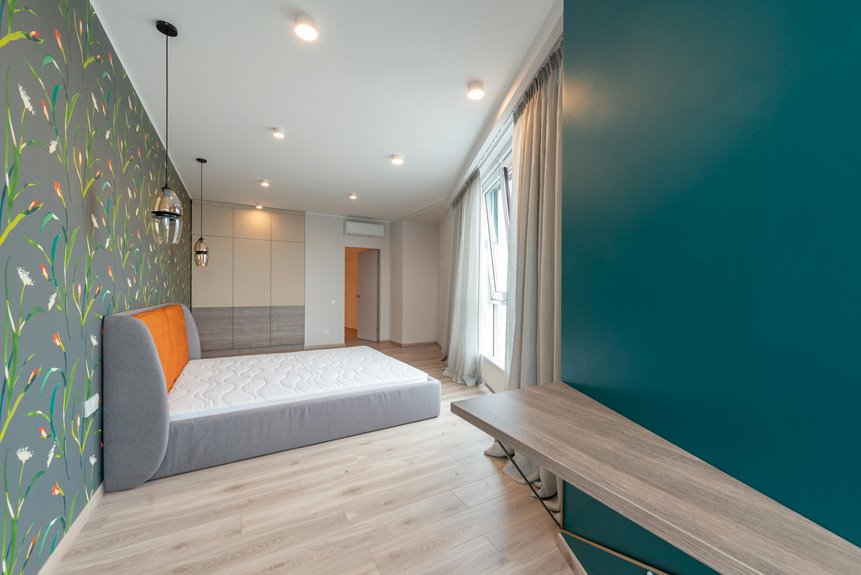
Floor-length curtains create polish and intentionality, but the right length depends on your space’s demands. I’d recommend break-length—where fabric just kisses the floor—for most rooms since it balances elegance with practicality.
Float-length works best in active homes with kids or pets, while puddle-length delivers luxury in formal spaces with minimal traffic.
Mounting your rod high and extending it wide instantly increases perceived height and fills the window properly.
Knowing which length matches your fabric type and lifestyle matters.
Should Curtains Touch the Floor? Expert Consensus Explained
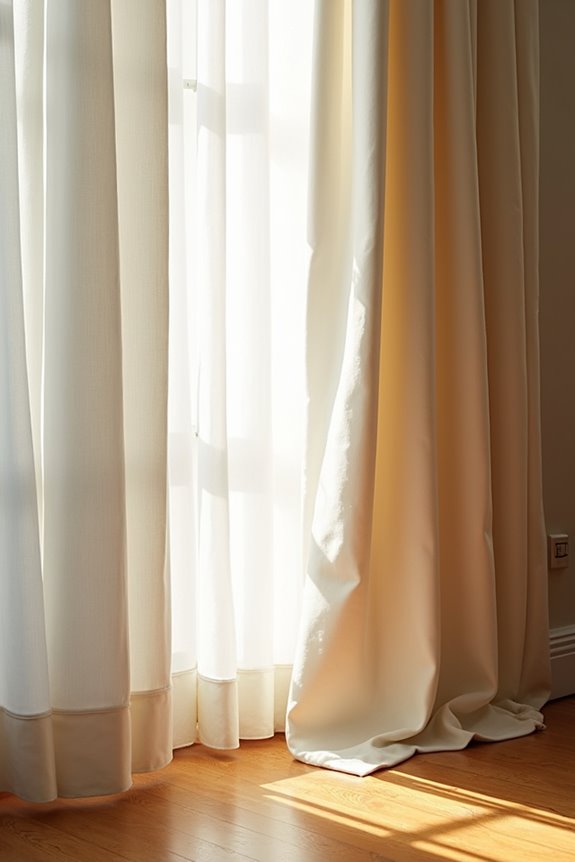
Ever noticed how some curtains seem to hover awkwardly above the floor while others kiss it elegantly? I’ve found that the expert consensus strongly favors floor-length curtains for most spaces. You’ve got three main options: float-length, which sits about half an inch above the floor; break-length, where fabric just touches the floor; and puddle-length drapery, which cascades dramatically onto it.
For your home, I’d recommend break-length as the versatile sweet spot. If you’re not touching the floor, maintain that half-inch to one-inch gap to avoid looking unintentional. However, I’d skip puddle-length in kids’ rooms or pet-filled homes—the cascade effect looks beautiful but demands serious maintenance considerations. The key is intentionality; whether you choose to touch the floor or float slightly above it, make it purposeful.
Float, Break, and Puddle: Which Length Suits Your Room?
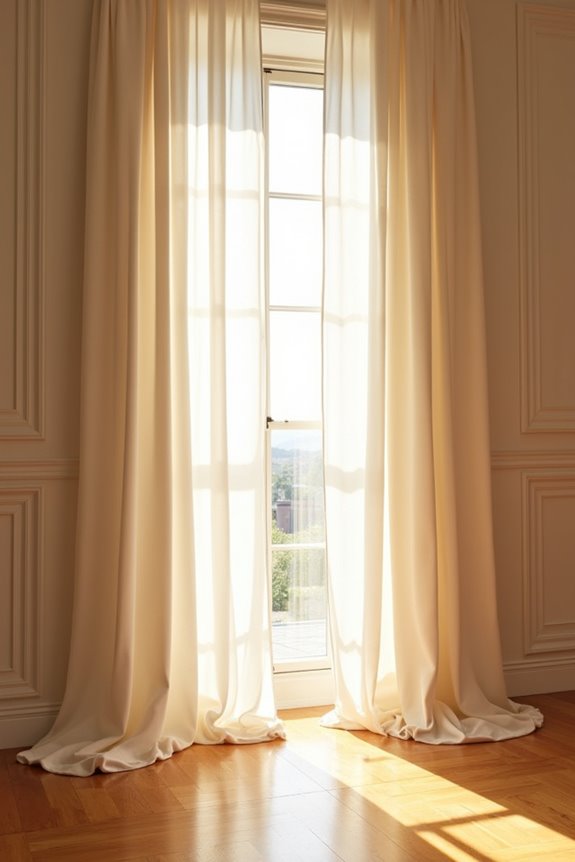
How’d you know which curtain length to choose without actually hanging them first? I’ll walk you through it.
Float length hangs ½ inch above the floor, giving your space a clean, contemporary look. Break length kisses the floor with 1–2 inches grazing it—honestly, this is what most of us choose because it’s balanced and polished. Then there’s puddle length, which adds 3–6 inches of fabric pooling on the floor for that formal, luxurious appearance.
Here’s my advice: measure from your rod to the floor, then adjust accordingly. Subtract ½ inch for float, add 1–2 inches for break, or add 3–6 inches for puddle. Consider your lifestyle too—high traffic areas? Skip the puddle. Want elegance without fuss? Break length belongs in your home.
How Fabric Type Changes Your Ideal Curtain Length
Did you realize that the fabric draped across your rod matters just as much as the measurement you took? I’ve learned that choosing your curtain length depends heavily on what you’re hanging.
With linen or wool, I opt for break or float length since fabric relaxation naturally pulls these textured fabrics downward over time. Puddle length here risks looking sloppy as gravity works its effect. Conversely, lighter synthetics and cotton hold their shape well at float length, resisting humidity shifts.
If you’re drawn to puddle length—that luxurious pooling effect—I’d reserve it for patterned or embroidered white curtains where the extra fabric feels deliberate and formal. The key? Match your length choice to your fabric’s behavior, keeping your windows polished and deliberate, not accidentally slouchy.
Measure Your Windows the Right Way
Getting your measurements right is where success begins—it’s the difference between curtains that look intentional and ones that seem like an afterthought. I’ve learned that rod placement matters first; position yours slightly above halfway between your window frame and ceiling, or raise it eight to ten inches for tall ceilings. Once you’ve nailed that down, measure from rod to floor for your specific curtain length. For float length, subtract half an inch to keep fabric hovering above the floor. Break length adds one to two inches so fabric just kisses the surface. Puddle length? Add three to six inches for luxurious pooling. These precise floor measurements give your windows a polished appearance, creating that gathered-by-design feeling you’re after.
Why Float-Length Works for Modern, Active Spaces
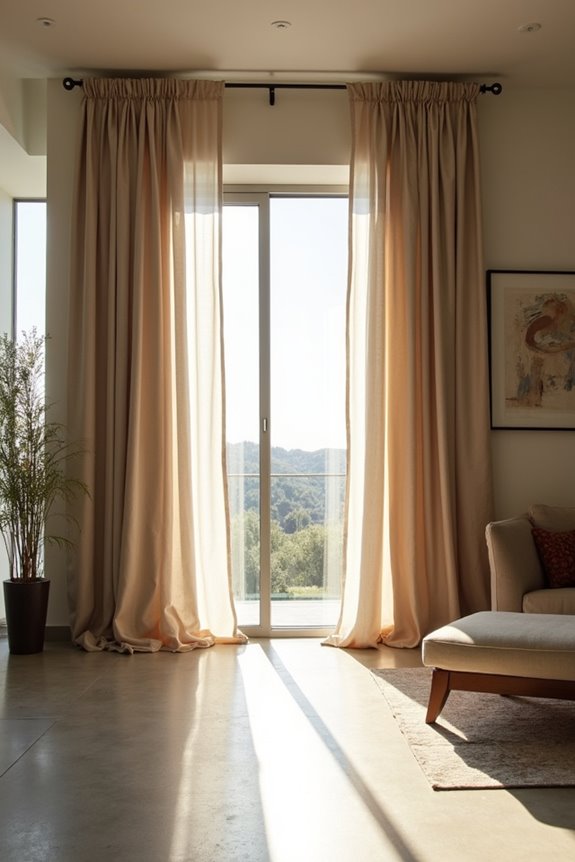
I’ve found that float-length curtains strike the practical balance between style and function, giving your space that clean, contemporary feel without the fuss of traditional floor-sweeping lengths. When you’re managing an active household—whether it’s kids, pets, or just the daily hustle—these curtains hover just ½ to ¼ inch above your floor, which means less snagging, easier vacuuming, and way less maintenance headaches. They work well in bedrooms, kitchens, and living rooms because they keep your space looking uncluttered and polished while actually working with your life, not against it.
Modern Aesthetic And Functionality
Why does float-length drapery work so well in today’s homes? I’ve found that this curtain length balances polish and practicality effectively. When I position my rod high and wide, I emphasize my ceiling height and achieve a contemporary look. The fabric hovers just a half-inch above the floor, giving my space a deliberate, tailored appearance without the excess of puddling.
What appeals to me most is how this window treatment functions in real life. My kids run through the house, pets brush past—and I’m not concerned about snagging. Float-length curtains work well in bedrooms, kitchens, and living areas because they maintain that clean aesthetic while remaining practical. It’s the modern approach that doesn’t require perfection, which feels appropriate for how I live.
Practical Benefits For Active Homes
How much differently does your home actually function when your curtains won’t snag on anything passing by? I’ve found that float length works well in high-traffic areas for busy families. In kitchens and bathrooms, this window treatment prevents the dust buildup and snagging risks that plague longer styles. The measurement technique is straightforward: determine your curtain rod placement, then subtract just ½ inch from floor-to-rod distance. I’d recommend synthetic materials like Sunbrella for durability—they resist stretching and shrinking, maintaining that precise clearance over time. Float length means less frequent cleaning and fewer frustrations during daily opening and closing. When you’re living actively in your space, these practical benefits matter. Your curtains become helpers rather than obstacles.
Why Break-Length Works for Almost Every Room
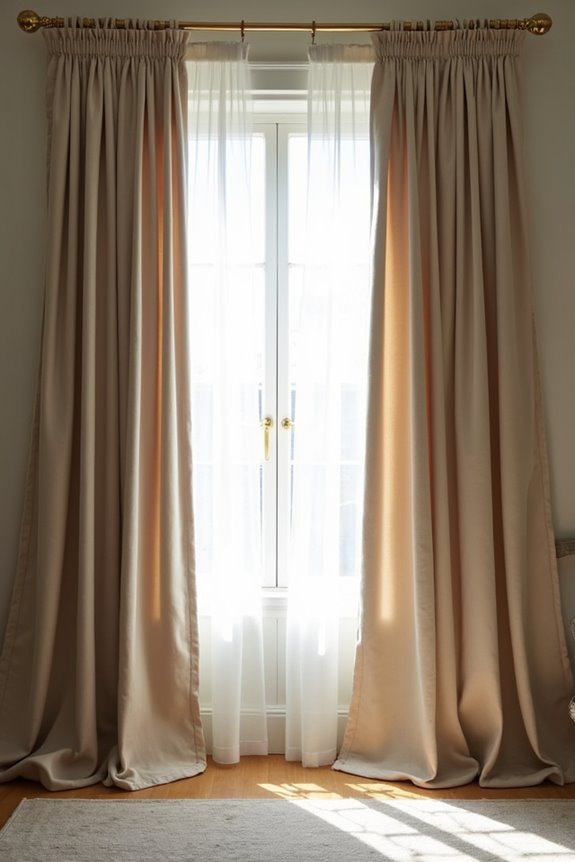
When you’re standing in front of your windows trying to figure out exactly where your curtains should land, break-length is the answer that keeps showing up—and for good reason.
I’ve found that this versatile length works well in almost every room because it adapts to your space rather than demanding perfection. Break-length curtains kiss the floor with just 1–2 inches of fabric, creating that polished, deliberate look without fussiness.
| Room Type | Floor Challenge | Best Fabric |
|---|---|---|
| Living Room | Uneven heights | Medium-weight |
| Bedroom | Sloped floors | Lightweight synthetics |
| Kitchen | Variable levels | Durable textiles |
| Dining Area | Mixed flooring | Tailored blends |
| Office | Inconsistent surfaces | Professional weights |
Whether your floors slope or vary unexpectedly, break-length hangs well. You’ll appreciate how it prevents constant dragging while maintaining that sophisticated window treatment appeal. This length has earned its reputation for good reason.
When to Choose Puddle-Length for Drama and Luxury
I’ll admit that puddle-length curtains caught my eye the moment I saw them draped across a formal dining room, and I understand why you might be tempted to add that luxurious pooling to your own space. But here’s the reality I’ve discovered: while they’re beautiful in a formal living room or bedroom where traffic stays minimal, they become impractical nightmares in active households with kids or pets who’ll constantly disturb that carefully arranged fabric. You’ll need to weigh whether that elegant look is worth the commitment to maintaining pristine, undirtied fabric and protecting it from daily wear.
Formal Spaces Demand Elegance
Puddle-length curtains aren’t your everyday window treatment—they’re a deliberate choice that shapes a room’s entire personality. When I’m designing formal spaces, I reach for this luxurious look because it commands elegance without saying a word. You’ll measure from rod to floor, then add three to six inches of extra fabric that pools beautifully on your floors. This technique works best with decorative fabrics like embroidered whites or rich patterns that justify the drama. I love how puddle-length curtains hide those annoying floor irregularities while creating an undeniably sophisticated atmosphere. They’re perfect for dining rooms, master bedrooms, and entryways where you want guests to experience the weight of your style choices. Just skip this length if you’ve got kids, pets, or high-traffic areas—practicality matters too.
Practical Limitations and Trade-Offs
How much drama can your space actually handle? I’ve learned that puddle-length drapery demands honest assessment. While I adore that luxurious pooling effect, I recognize it thrives only in formal living spaces where foot traffic stays minimal. Those extra 2-4 inches of fabric weight create visual height above floor, yet they require dedication to maintenance.
I wouldn’t recommend puddle-length in high-traffic areas or homes with children and pets—the fabric gets stepped on, soiled, and frayed quickly. Uneven floors complicate things further, making adjustment nearly impossible. I’ve found that fabric weight matters tremendously; heavier materials hold puddles beautifully, while lighter fabrics bunch awkwardly.
The trade-off is real: you gain elegance but sacrifice practicality. I choose puddle-length selectively, reserving it for master suites and formal living spaces where beauty outweighs everyday wear concerns.
Where to Mount Your Rod for Best Proportions
The placement of your curtain rod is an important detail that directly impacts your entire space’s visual proportions.
| Ceiling Height | Rod Placement | Best For |
|---|---|---|
| Standard (8-9 ft) | Halfway to two-thirds up | Creating illusion of height |
| Tall (10+ ft) | 8-10 inches above frame | Enhancing architectural drama |
| Limited space | Ceiling-fixed tracks | Sleek, contemporary style |
For width extension, position rods 10-15 centimeters wider on each side, which stretches the window’s appearance. When pairing this with floor-length curtains, the vertical lines elongate your walls. Ceiling-fixed tracks work effectively for bi-fold doors, maximizing both height perception and clean lines.
Six Installation Mistakes That Shrink Your Room
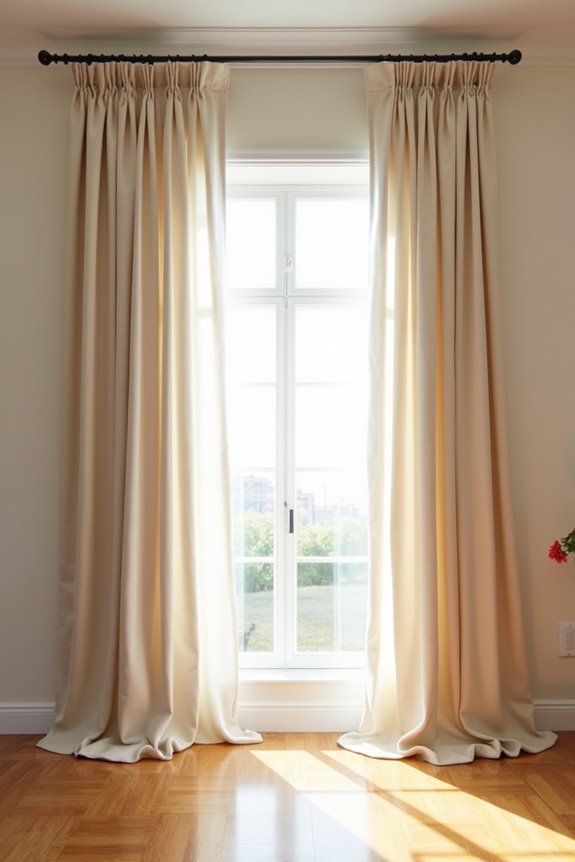
I’ve seen it happen countless times—someone hangs their curtains with the best intentions, only to step back and feel like their room just got smaller.
The biggest culprit? Mounting your rod too low or too close to the window. This crushes your illusion of height instantly. Similarly, choosing curtain length that stops awkwardly mid-wall creates visual chaos. You’ll want floor-length panels that either float 1–2 cm above the floor or kiss it entirely—nothing in between.
Another common mistake involves undersized panels. Skimpy curtains can’t provide proper window coverage, making your space feel cramped. Not extending your track wide enough compounds this problem further.
Finally, hanging curtains too narrow eliminates that luxurious, full appearance. Avoid these curtain installation mistakes, and you’ll improve how your room actually feels.