I’d match your trash can to your household size, not your kitchen square footage. A 13-gallon can works for most families of four, while two-person households do fine with 10–13 gallons. If you’ve got pets or entertain often, bump up to 20 gallons. Here’s the real deal: measure your space first—under-sink areas need slim cans under 10 inches tall—then pair your can with matching bag sizes to prevent messy slippage. There’s more to consider when you understand how waste habits actually shape the perfect fit.
Choose the Right Capacity for Your Household Size
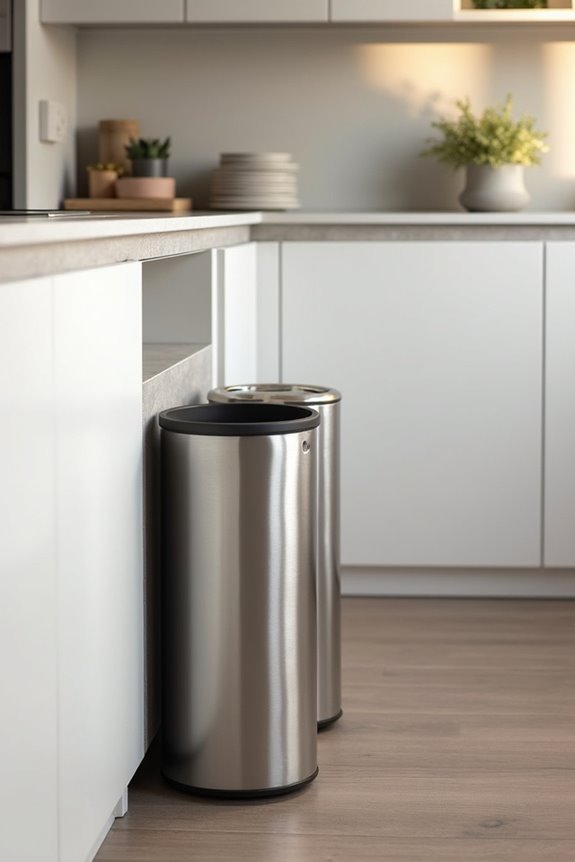
How do you know when you’re emptying your trash can too often—or not enough? I’ve learned that matching your trash can size to your household size makes all the difference. A 13-gallon can works perfectly for typical families, but I’ve discovered that two-person households cooking daily might need 10–13 gallons as a baseline. If you’re a family of four like many I know, sizing up to 12–16 gallons accommodates daily waste and packaging without constant trips to the curb. Larger households or those with pets require 20–30 gallons or multiple bins. I’ve found that adding 20% extra capacity handles heavier use scenarios beautifully. Your trash can size shouldn’t stress you—it should simply fit your life.
Measure Your Space Before Buying
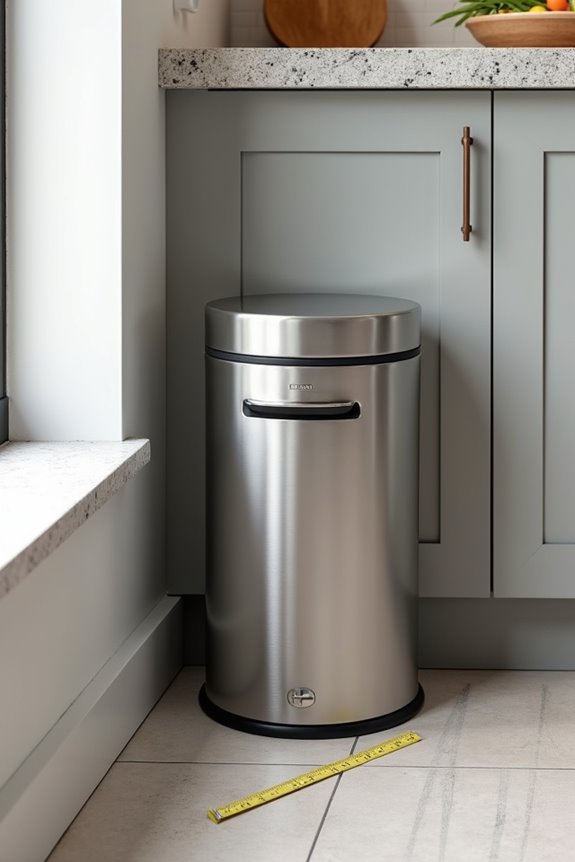
Where’s your trash can going to live? That question matters more than you’d think, because the wrong size won’t fit your space, no matter how perfect it seems otherwise.
I’ve learned that space measurement and cabinet dimensions are non-negotiable. Before I shop, I grab my tape measure and check every angle—height, width, depth. Under-sink spaces run about 30 inches tall, but plumbing eats that real estate fast. Pull-out cabinets need exact interior widths.
| Location | Typical Height | Best Capacity |
|---|---|---|
| Under-sink | Under 10 inches | 7–9 gallons |
| Pull-out cabinet | 12–20 inches | 9–13 gallons |
| Counter/corner | 20+ inches | 12–16 gallons |
I aim for cans fitting snugly without crowding. That’s how I find my perfect match.
Why 13-Gallon Cans Suit Most Families
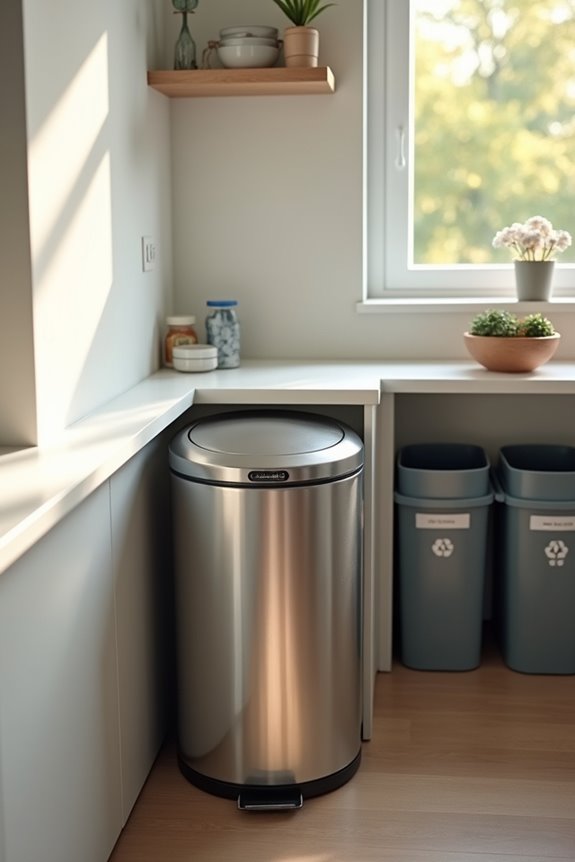
I’ve found that a 13-gallon can strikes the sweet spot because it aligns perfectly with standard garbage bags you’ll find at any store, eliminating the frustration of bags that slip or overflow. What I appreciate most is how it handles a typical family’s daily waste without demanding constant trips to the curb or hogging precious kitchen real estate, letting you go several days between changes while still keeping your space feeling organized. The real beauty lies in this balance—you’re getting genuine capacity that matches how most households actually produce trash, without paying for empty space you’ll never use.
Standard Household Waste Output
When you’re standing in your kitchen surrounded by grocery bags and dinner prep scraps, you’re probably not thinking about gallon capacities—but that’s exactly when your trash can size matters most. I’ve found that most households like mine generate a predictable waste output that a 13-gallon can handles beautifully. Here’s what I’ve learned about typical waste patterns:
| Household Size | Daily Waste | Emptying Frequency |
|---|---|---|
| 2 people | 3–5 gallons | Every 2–3 days |
| 3–4 people | 6–10 gallons | Every 1–2 days |
| 4+ people/pets | 10–15 gallons | Daily or twice daily |
The 13-gallon waste output standard works because it matches how we actually live—accommodating our meals, packaging, and everyday refuse without demanding constant trips to the curb.
Bag Compatibility And Convenience
Now that you know how much waste your household generates, there’s a practical reality that’ll make your life easier: finding the right trash bag to fit your can.
I’ve learned that bag compatibility matters more than you’d think. Here’s what I consider essential:
- 13-gallon bags are widely available and affordable at every store
- Secure fit prevents slippage and messy leaks during removal
- Brand-specific bags or compatible rim systems work best
- Size fit accuracy reduces frustration when changing bags
- Standardized cans eliminate guesswork about compatibility
The 13-gallon can isn’t just popular—it’s practical. When I choose bags designed for my bin or use a compatible anchor system, everything fits snugly. No more wrestling with oversized or undersized bags. You’ll appreciate this convenience daily, and frankly, it’s one small decision that genuinely improves your kitchen routine.
Balancing Capacity With Space
How do you choose between having enough room for your trash and not crowding your kitchen? I’ve found that a 13-gallon can strikes that perfect balance most families need. It holds enough daily waste without dominating your space, whether you’ve got three people or five sharing the kitchen. I appreciate how this size fits standard 13-gallon bags, making shopping straightforward and affordable. In my experience, smaller kitchens benefit from understanding that cramped space creates frustration. A 13-gallon can nestles nicely under most sinks or beside counters, staying out of sight yet accessible. Larger households might stretch to 16 gallons, but honestly, 13 gallons handles typical waste comfortably. It’s the Goldilocks choice—not too small, not too large—letting you manage trash responsibly without sacrificing the kitchen space you actually need.
How Much Extra Room Do You Need for Heavy Trash?
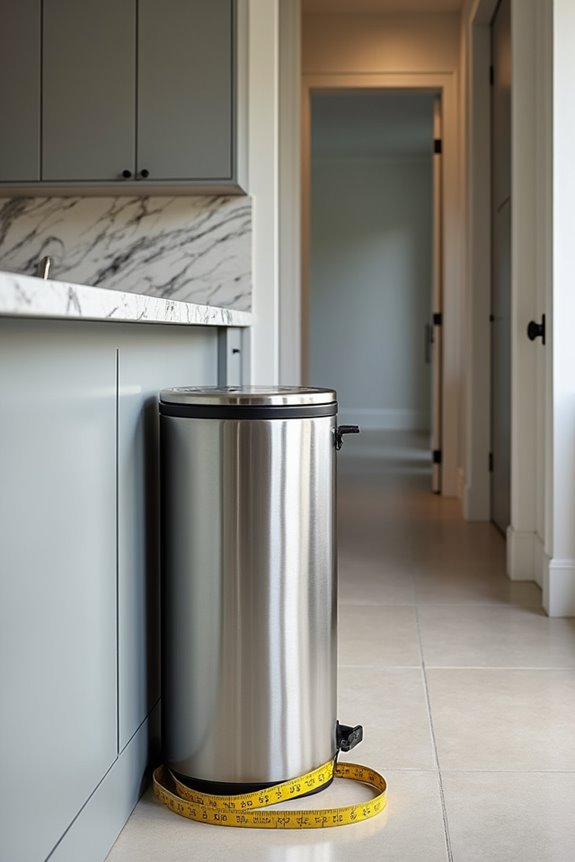
I’ve learned that when I’m hauling out heavier loads—think multiple takeout containers, bulk packaging, or wet waste from cooking—my standard 13-gallon can fills up way faster than I’d like. Here’s the thing: you can bump up to 16–20 gallons for high-activity households, which gives you that breathing room so you’re not jamming trash down or emptying daily. The real trick is matching the extra capacity to your actual waste density, not just volume, so you’re buying what you’ll actually use.
Capacity Planning For Density
When you’re staring down a kitchen that seems to generate trash faster than you can blink, you’re probably wondering whether your current can’s actually big enough—and honestly, you’re right to question it. Capacity planning for density means matching your bin size to your real-world waste volume, not some imaginary ideal.
Here’s what I’ve learned works:
- A 20–30 gallon bin handles spacious kitchens with island prep stations beautifully
- Two-person households with pets often need 12–16 gallons minimum
- Plan for peak days by sizing for 1.5× your average daily output
- Under-sink spaces demand vertical bins that maximize usable depth
- Heavy packaging weeks require roughly 20% extra cushion above baseline
I’ve found that honest capacity planning beats constant trips to the curb.
Adjusting Size For Weight
There’s a real difference between a trash can that *fits* your kitchen and one that actually *works* for your lifestyle, especially when you’re dealing with heavy stuff like wine bottles, takeout containers, and those bulky Amazon boxes that seem to multiply overnight. I’ve learned that heavy trash workloads demand about 20% extra capacity beyond your baseline needs. If you’re generating substantial weight—think frequent takeout, pet waste, or oversized packaging—you’ll want to jump from a basic 12-gallon can to the 20–30 gallon range. This breathing room prevents trash bags from bursting mid-week and lets you use sturdier, thicker bags that handle weight better. Plan generously, and you’ll avoid the frustration of constant overflow.
Empty It More Often or Buy a Bigger Can?
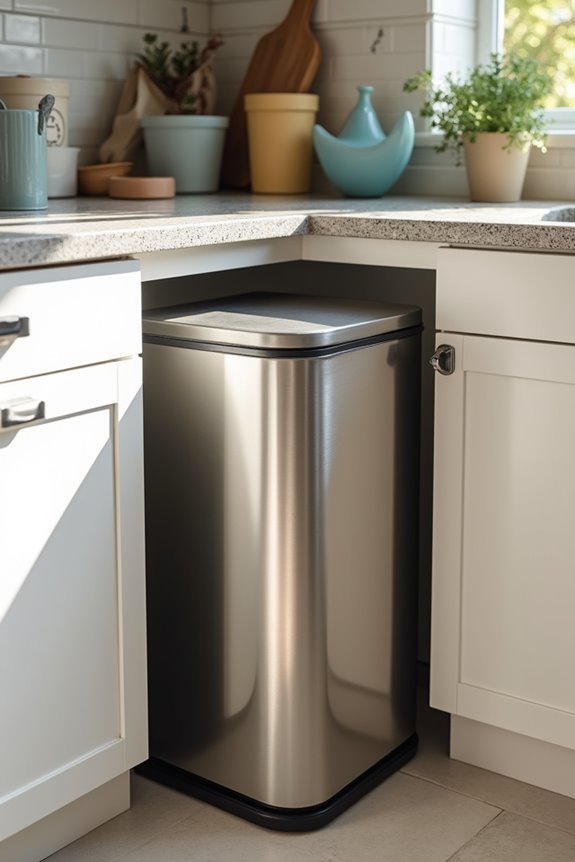
How do you know when you’ve found your trash can sweet spot? I’ve learned it’s about matching your trash can size and emptying frequency to your actual lifestyle, not some imaginary ideal version.
Here’s what I’ve discovered works:
- 13-gallon cans fit perfectly for most families, aligning with standard bags and typical daily waste
- Smaller 7–10 gallon cans require more frequent emptying but save precious kitchen space
- 20–30 gallon upgrades reduce trips when you’re managing pets or heavy packaging
- Mid-range 12–16 gallon options balance manageable intervals with space efficiency
- Under-sink constraints sometimes demand smaller cans despite more frequent disposal
I don’t think there’s one right answer. Some of us genuinely don’t mind emptying trash more often if it means keeping our kitchens uncluttered. Others prefer less frequent trips. The real trick? Choosing based on your actual habits, not wishful thinking.
How Kitchen, Under-Sink, and Cabinet Placement Limits Trash Can Size
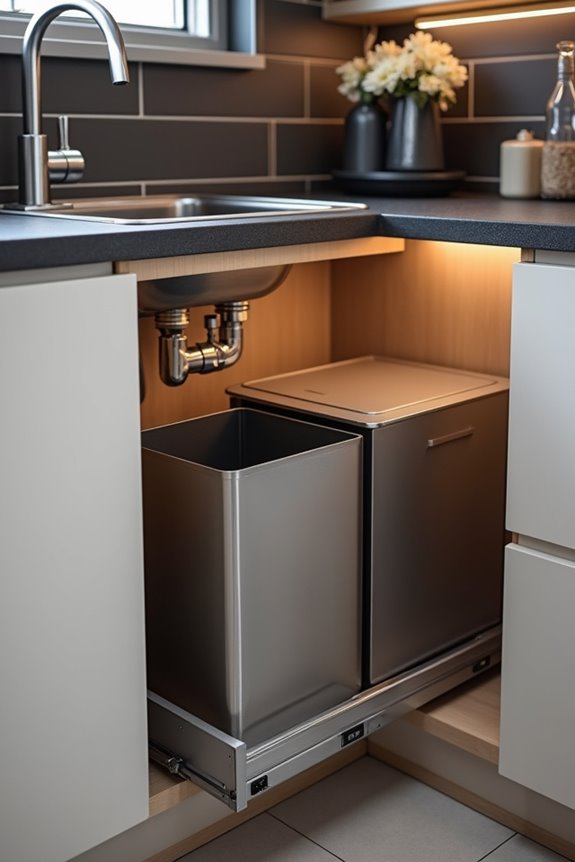
Your kitchen layout probably matters more than you’d think when picking a trash can. I’ve learned that under-sink placements demand shorter bins—typically under 10 inches tall—to accommodate your basin and plumbing without constant frustration. Cabinet placement similarly restricts your options, requiring bins around 9–13 gallons that slide smoothly within drawer dimensions. If you’re considering an in-cabinet setup, standard bins measuring roughly 15 inches wide and 20 inches tall fit most cabinet spaces nicely. Corner or counter-end positions allow slightly larger cans, usually 20–30 inches high, giving you breathing room while maintaining that integrated look you’re after. Here’s the truth, though: exact measurements matter tremendously. I’d recommend measuring your specific space first—pull-out and cabinet dimensions vary wildly, and getting it right saves you disappointment later.
Match Your Trash Bags to Your Can Size
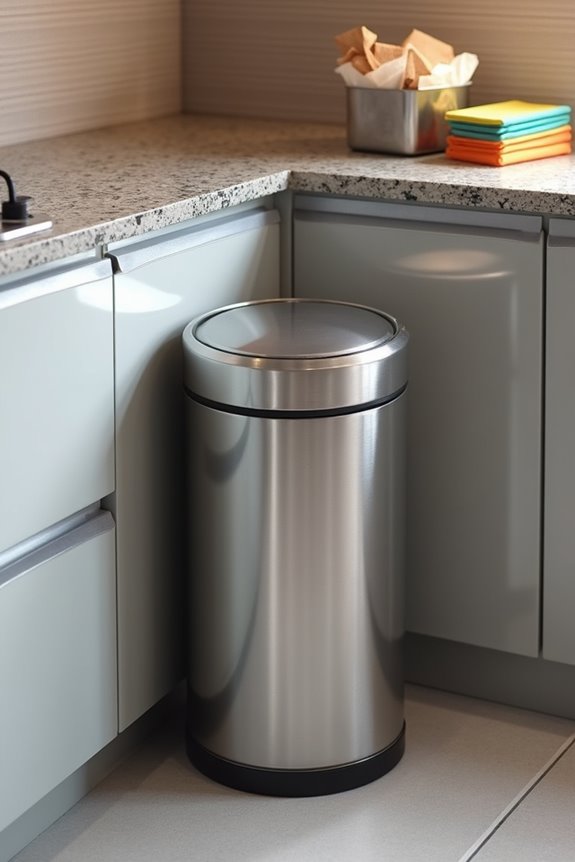
Most people don’t realize that grabbing whatever bag is on sale can sabotage an otherwise perfect trash can setup. I’ve learned that matching your trash bag to your can size isn’t optional—it’s essential for a functioning kitchen.
Here’s what I keep in mind:
- Check your can’s capacity first (10, 13, or 16 gallons) before buying bags
- Match the bag size exactly to prevent slippage and frustrating leaks
- Look for rim-lock or anchor compatibility with brands like Simplehuman
- Never force oversized bags into undersized cans (a 30-gallon bag won’t fit a 10-gallon can)
- Confirm ratings on packaging to ensure secure attachment and easy removal
When your bag size aligns with your can, everything works smoothly. You’ll notice fewer tears, better fits, and less waste. That’s the setup we’re all after.
Does Lid Type Matter When Choosing Size?
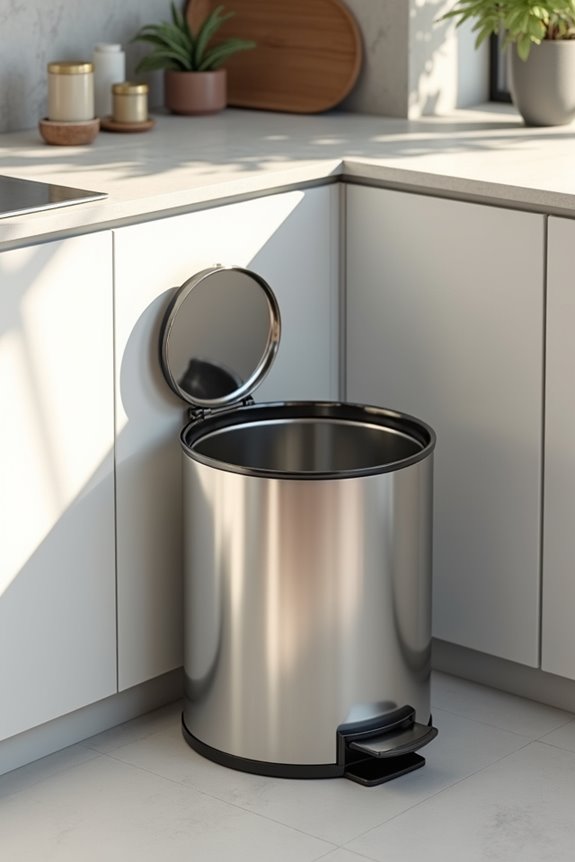
I’ll be honest—when I was sizing my kitchen trash can, I thought the lid was just the lid, a minor detail I could ignore while focusing on gallonage. I learned quickly that lid type actually shapes how your can fits into your space. A pedal-step lid requires clearance for your foot, while a sensor lid needs room for motion range. Push-lids demand direct access without obstruction. What surprised me most? The lid type doesn’t change capacity, but it absolutely influences placement. In my under-sink cabinet, a low-profile lid with reliable closure let me squeeze in a genuinely larger can than I expected. I realized the right lid type transforms constraints into possibilities, making your kitchen workflow smoother and your space feel more intentional.
When to Upgrade From 10–13 Gallons to 20
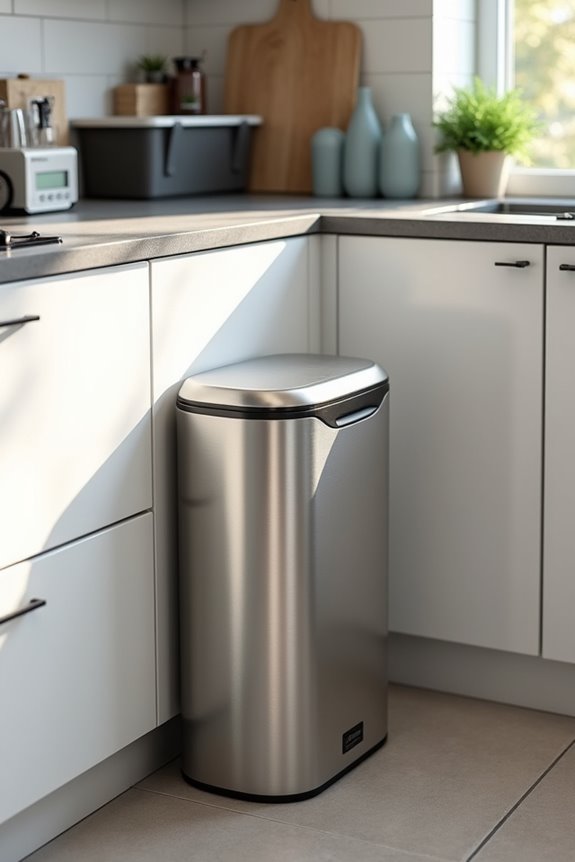
If you’re like me and you’ve found yourself emptying a 10–13 gallon bin more than once a day, it’s probably time to consider upgrading to a 20-gallon capacity. When you’ve got a larger household or your kitchen sits in an open floor plan where trash piles up faster than you’d expect, that extra space can genuinely reduce the frustration of constant bag changes. I’ve learned that if your current bin feels cramped or you’re juggling multiple small cans because space allows, making the jump to 20 gallons is a practical move that actually pays off in convenience.
Large Household Waste Output
How quickly does your trash can fill up during an average week? If you’re managing a big family, you’ve probably noticed your 10–13 gallon can doesn’t cut it anymore. I’ve found that upgrading to a 20 gallon trash can transforms how we handle daily waste.
Here’s why larger households benefit from this switch:
- Multiple family members generate more packaging and food scraps daily
- Pet waste adds up quickly, creating odor management challenges
- Meal prep and cooking sessions during busy weeks overflow standard cans
- Frequent entertaining means guests multiply your trash output significantly
- Reducing daily empties saves time and energy for what matters
When your trash fills faster than you’d like, it’s time to scale up. A 20 gallon can accommodates realistic household rhythms without constant maintenance.
Space Permits Bigger Capacity
Before you commit to a larger trash can, take a hard look at where you’d actually put it—because space availability is often the deciding factor between sticking with your current setup and making the jump.
I’ve found that upgrading to a 20-gallon can makes sense when you’ve got room to breathe. If your kitchen features an island or open floor plan, that extra space becomes your best friend. You’ll appreciate how a 20-gallon sits seamlessly in high-traffic zones without feeling cramped or inconvenient.
However, under-sink capacity matters tremendously. Measure your cabinet’s internal dimensions—width between 12–24 inches and depth that actually fits—before assuming you can squeeze in something bigger. Sometimes, I realize that my perfect trash solution simply won’t work physically. That’s okay. Honest assessment saves frustration later.
Maximize Capacity in Small Kitchens and Apartments
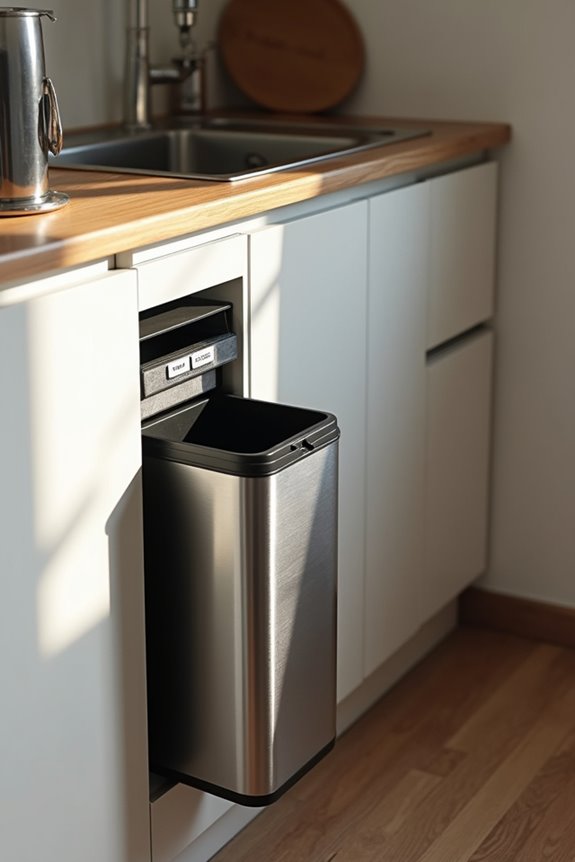
When you’re working with limited square footage, I’ve found that choosing the right trash can becomes almost an art form—it’s gotta do its job without eating up precious real estate you desperately need.
A 7–10 gallon slim-profile can is your sweet spot for small kitchens and apartments. I’ve discovered these compact models fit snugly under sinks, in narrow cabinets, and tight corners without compromising functionality. Here’s what makes them work:
- Slim profiles maximize usable floor space
- Under-sink models stay under 10 inches high
- Wide-mouth designs ease bag disposal
- Compact sizes fit standard 30-inch cabinet heights
- 13-gallon bag fits most models, simplifying liner choices
When you select the right size kitchen trash can for your space, you’re not sacrificing capacity—you’re respecting your home’s layout. That’s the smart approach to small-space living.
Compost and Recycle? You’ll Need Less Trash Capacity
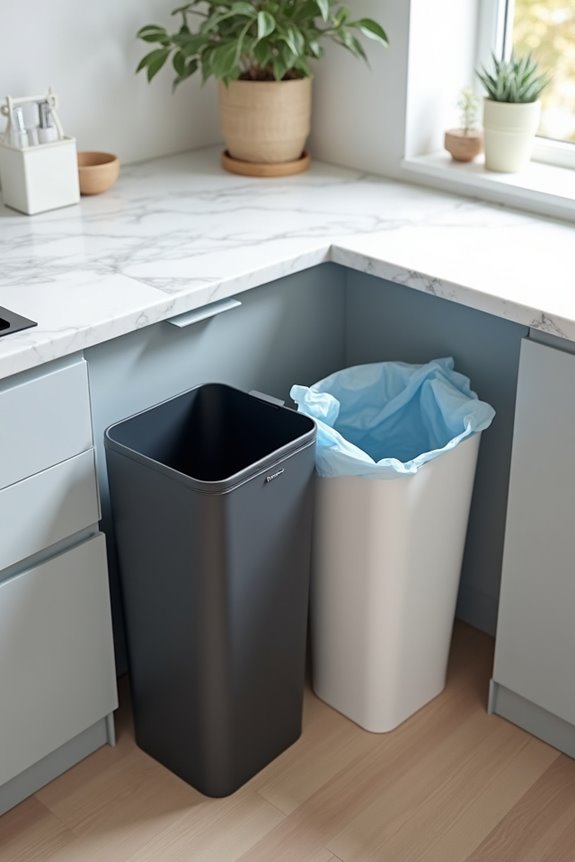
If you’re composting food scraps and recycling paper, plastic, and glass, I’ve found that you’ll dramatically shrink what actually lands in your trash can—which means you don’t need to buy an oversized bin that’ll sit half-empty in your kitchen. I typically size down to a 7–10 gallon can when I’m serious about waste reduction, since I’m diverting the bulk of my household waste elsewhere, and that smaller footprint saves valuable counter or cabinet space. The real win here is that you’re not just downsizing for show; you’re matching your bin’s capacity to what you actually throw away, which keeps your kitchen more organized and your disposal habits more intentional.
Waste Reduction Strategies
the moment you start composting and recycling seriously, your trash can suddenly feels oversized. I realized that diverting food scraps and recyclables completely transforms how much actual waste I’m throwing away. My trash can size no longer needs to accommodate everything—it’s just the leftovers, really.
When you commit to waste reduction strategies, you’re not just helping the planet; you’re simplifying your kitchen life:
- Curbside composting lets you downsize to 7–10 gallons for miscellaneous waste
- A two-bin setup separates recyclables from non-recyclable items efficiently
- Food scraps no longer create odor buildup in your main trash can
- You’ll change bags far less frequently, saving time and money
- Active kitchens benefit most from this intentional approach to trash can size
This shift feels meaningful once you experience it firsthand.
Sizing Down Appropriately
Once you’ve committed to composting and recycling, you’ll notice something remarkable: your trash can’s actual purpose shrinks dramatically. I’ve discovered that when I separated food scraps and recyclables, my residual waste plummeted. A modest 7–10 gallon bin now handles what once filled a standard can, and I’m not alone in this experience.
Most households practicing composting and recycling find a 12–16 gallon trash can sufficient for genuine waste. Here’s the practical part: matching your bag size to your bin capacity matters. I use 13-gallon bags in my 16-gallon bin, creating efficient waste separation without constant emptying.
You’re joining a community of intentional consumers who’ve realized less trash capacity doesn’t mean less cleanliness—it means smarter choices. That smaller can becomes a quiet reminder of your commitment to reducing what actually matters.
Measure Your Cabinet or Under-Sink Space
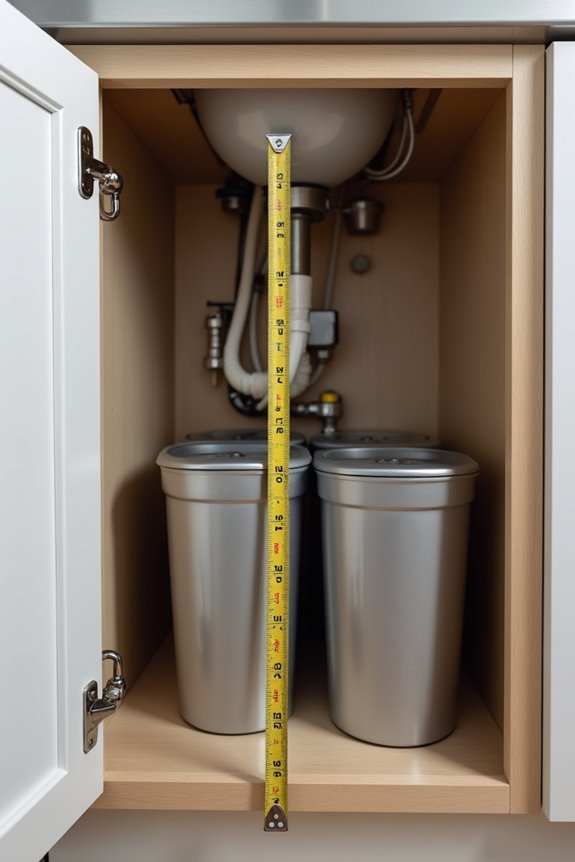
Where exactly are you planning to stash your new trash can? This question matters more than you’d think, because I’ve learned that cramming an oversized can into a tight space creates frustration nobody needs.
Before you buy anything, grab a measuring tape and check your actual under-sink dimensions:
- Measure cabinet height from floor to the underside of your sink basin (typically around 30 inches)
- Note the depth of your cabinet space, as it directly constrains can height to under 10 inches
- Confirm internal width for pull-out bases, which usually range 12–24 inches wide
- Account for plumbing obstacles that steal precious vertical room
- Compare external dimensions of any can against your measurements before purchasing
I can’t stress this enough: knowing your space prevents expensive mistakes. A slim-profile 7–10 gallon can often outperforms larger models when under-sink real estate is limited. Measure twice, buy once.
Top Pick: Simplehuman Rectangular Step Can
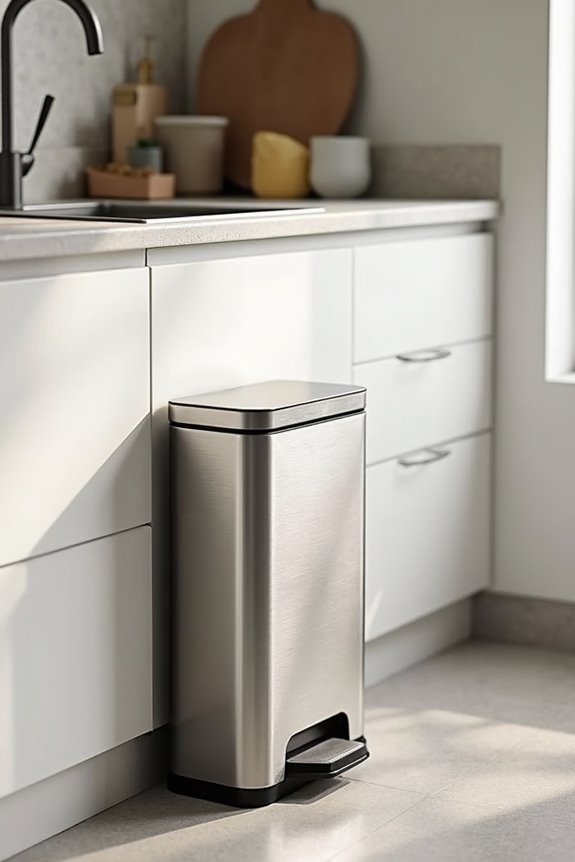
Why does a trash can need a 10-year warranty? Because I want a can I can trust, one that won’t let me down when I’m juggling meal prep and cleanup. The Simplehuman Rectangular Step Can delivers exactly that. Its removable inner bucket catches leaks and makes cleaning refreshingly simple—no more wrestling with a grimy interior. I appreciate how it fits standard bags, whether I’m using 10- or 13-gallon liners, thanks to the ridge that holds everything secure. The damper-controlled lid opens and closes smoothly and quietly, while the wide-mouth opening lets me toss larger items without awkward angles. That rear handle cutout? Perfect for moving the can when deep-cleaning happens. I’m genuinely impressed by how thoughtfully designed this rectangular can is.
Quick Sizing Guide: Match Your Needs to the Right Can
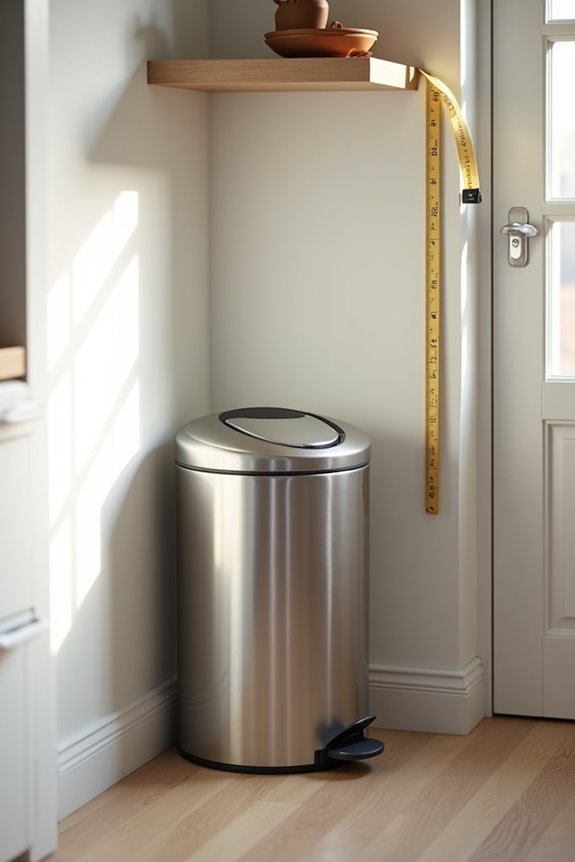
Picking the right trash can size isn’t complicated—it just requires a honest conversation with yourself about your kitchen’s demands and limits. I’ve learned that matching your can to your actual lifestyle makes all the difference, whether you’re working with tight cabinet space or have room to spare.
Consider these sizing scenarios:
- 13–16 gallon cans work perfectly for typical households balancing standard bags and daily waste
- 7–10 gallon cans fit snugly in under-sink spaces within 10 inches wide by 18 inches deep
- 20–30 gallon cans suit large families or high-waste kitchens near islands with breathing room
- Measure first, accounting for width, depth, and height before purchasing
- Pair your can size with matching bag sizes to prevent slippage and leaks
You’ll appreciate how the right fit transforms your kitchen routine into something genuinely manageable.