
A standard kitchen table measures 28 to 30 inches high, a height that’s intentionally designed to work smoothly with typical dining chairs. Here’s what matters: you’ll want roughly 10 to 12 inches of clearance between your seat and the table’s underside—that’s your sweet spot for comfortable legroom. This spacing keeps you from feeling cramped while eating, and it works nicely for most adults and kids alike. But there’s more to getting this right than just knowing the number.
What Is the Standard Height for a Kitchen Table?
Ever wonder why some dining tables feel just right while others leave your knees bumping the underside? I’ve learned that the standard dining table height is typically 28 to 30 inches—a sweet spot called the Goldilocks height that works beautifully for most of us. Here’s what I’ve discovered: this standard dining table height pairs perfectly with chair seat heights around 17 to 19 inches, creating comfortable leg room with about 10 to 12 inches of clearance between your lap and the tabletop. When you’re choosing a kitchen table and chair combo, hitting these measurements means you’ll actually enjoy sitting down to eat. I find this kitchen table height versatile and accessible, making it work whether you’re hosting dinner parties or managing everyday meals with family.
Why Kitchen Table Height Legroom Matters
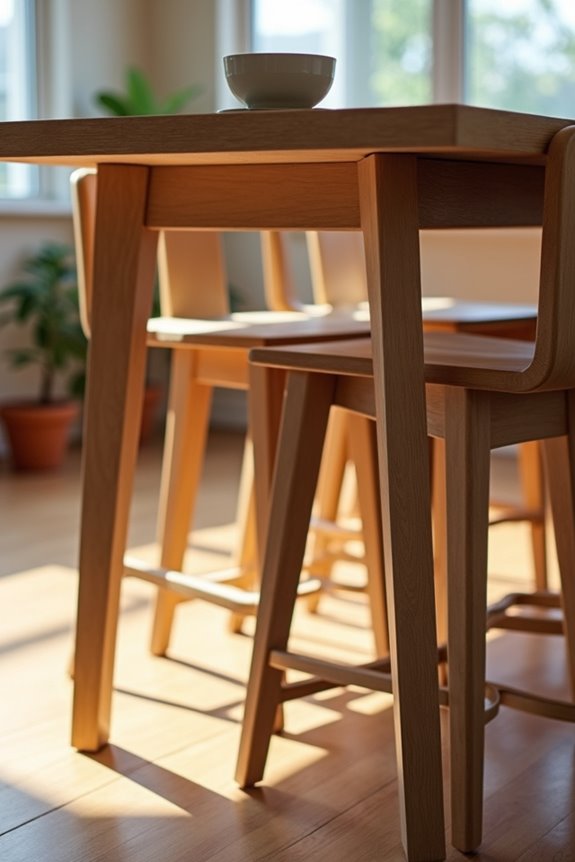
I’ve learned that legroom isn’t just a luxury—it’s what separates a comfortable dinner from an uncomfortable one, affecting everything from how long you’ll want to linger over a meal to whether your guests (and your own knees) will thank you. When I consider kitchen table height, I’m really thinking about three things that matter most: how I can relax during extended meals without my legs cramping, whether I’m sitting with proper posture that doesn’t strain my back, and whether everyone from my youngest nephew to my grandmother can pull up a chair and feel welcomed. Getting this measurement right means I’m building a table that works for every person at it, every single time.
Comfort During Extended Meals
Why does comfort matter so much when you’re settling in for a long dinner with family or friends? I’ve realized that legroom clearance transforms casual meals into memorable gatherings where everyone relaxes instead of squirming.
| Measurement | Standard Height | Why It Matters |
|---|---|---|
| Standard dining table height | 28–30 inches | Accommodates most chair designs |
| Chair seat height | 17–19 inches | Ensures proper proportion |
| 10–12 inch clearance | Under-table space | Maximizes legroom for extended meals |
When I test my table setup with actual chairs and cushions, I aim for that magical 10–12 inch clearance between the chair seat and table underside. Pedestal table designs eliminate leg obstructions, giving everyone genuine comfort. This under-table space matters because it prevents that cramped, restless feeling during extended meals. You’ll notice your guests lingering longer, enjoying both food and conversation when their legs have breathing room. That’s dining room comfort worth planning for.
Proper Posture and Ergonomics
How you sit at your kitchen table shapes everything from digestion to back pain, and most people don’t realize that legroom clearance directly impacts your posture throughout the meal. I’ve found that proper table-to-chair alignment makes a genuine difference in how I feel during dinner. A standard table height of 29 inches—that Goldilocks height—pairs beautifully with chair seat heights around 17–19 inches, giving you about 10–12 inches of comfortable legroom. Don’t forget to measure your table underside, not just the decorative top, since the apron reduces under-table clearance. Account for cushion compression too; subtract 1–2 inches from seat height because cushions flatten when you sit. This dining room ergonomics attention prevents slouching and keeps your knee clearance optimal, transforming ordinary meals into genuinely comfortable experiences.
Accessibility for All Ages
Getting the legroom right matters even more when you’ve got a multigenerational crew gathering around your table—your eight-year-old nephew, your 6’2″ brother-in-law, and your grandmother in her mobility device all need to fit comfortably. I’ve learned that universal usability isn’t just nice; it’s essential for true belonging at the table.
| Measurement | Standard Height | What It Means |
|---|---|---|
| Standard dining table height | 28–30 inches | Baseline for most households |
| Chair height | 17–19 inches | Typically paired with standard tables |
| Seating-to-table clearance | 10–12 inches | Comfortable legroom benchmark |
| Counter-height tables | 34–36 inches | Less accessible for children |
| Bar-height tables | 40–42 inches | Requires flexible seating options |
I measure my underside height carefully, accounting for chair cushions that compress. Testing actual seating across ages reveals whether knee clearance truly works. When I prioritize age-inclusive seating, everyone—regardless of height or ability—finds their place.
Matching Table Height to Chair Size: The 10-Inch Rule
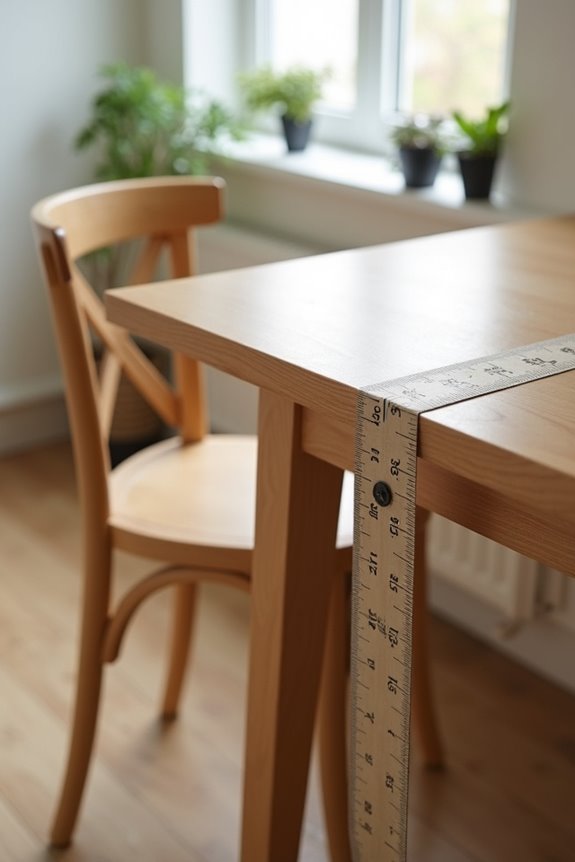
Once you’ve settled on a standard table height of around 29 inches, here’s where the real magic happens—pairing it with chairs that actually fit your body. I’ve found that the 10-inch rule transforms dining comfort entirely. You want about 10–12 inches between your chair seat height and the table’s underside, creating the legroom clearance that lets you sit naturally without cramping your legs.
Here’s my approach: I measure my dining chair height (typically 17–19 inches), then verify that gap beneath the tabletop. This table height matching ensures comfortable seating that feels intuitive rather than awkward. When chair seat height aligns perfectly with your 29-inch baseline, dining room ergonomics click into place. You’re not fidgeting, adjusting, or feeling squeezed. That’s when I know I’ve nailed the proportions for real belonging at the table.
Does Standard Height Work for Your Space?
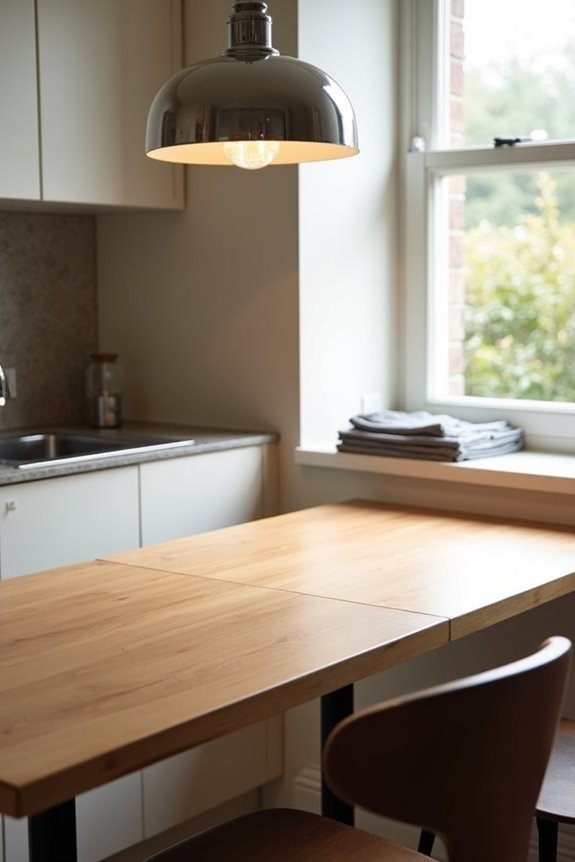
When does that reliable 29-inch standard actually fit your life? I’ve learned that standard dining height works wonderfully for most homes, but your unique space deserves consideration. Before committing, I evaluate these factors:
- Your room layout: I measure clearance around the table—at least 3 feet lets chairs move freely without cramping my dining room space
- Seating compatibility: I ensure my chair seat height pairs properly with table dimensions, maintaining that comfortable 10-inch gap for legroom
- Alternative options: I explore counter-height (34–36 inches) or bar-height (40–42 inches) tables if standard doesn’t match my lifestyle or room constraints
I’ve discovered that understanding these relationships transforms how I experience mealtimes. When table dimensions align with my space and seating, everything feels intentional and welcoming rather than forced.
When to Choose Counter Height or Bar Height Instead
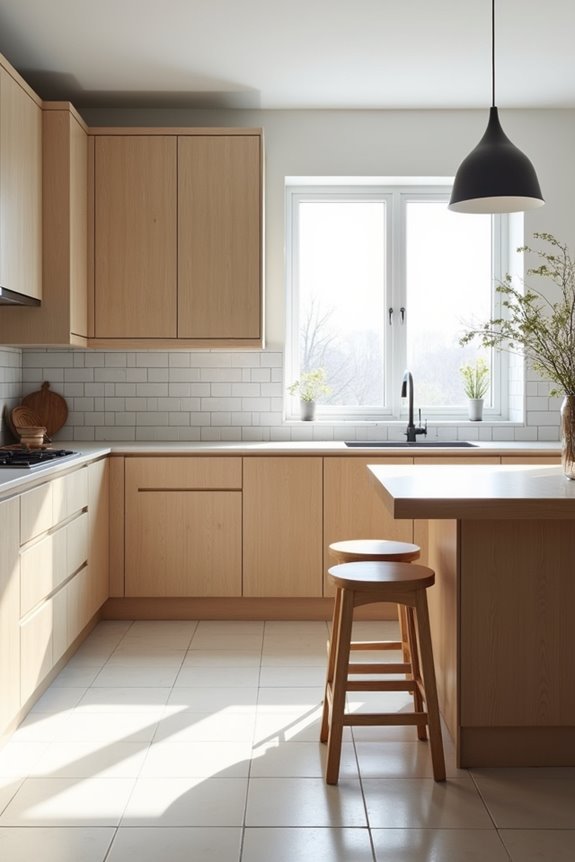
Why do so many of us feel cramped at standard dining table height when we’re cooking, entertaining, or just grabbing a quick bite in the kitchen?
I’ve discovered that stepping beyond the traditional standard dining table height opens possibilities. A counter height table or bar height table transforms how I experience my space, especially when I’m hosting or juggling meals in open layouts.
| Feature | Counter Height | Bar Height |
|---|---|---|
| Table Height | 34–36 inches | 40–42 inches |
| Stool Height | 24–26 inches | 28–30 inches |
| Best For | Casual kitchens | Entertainment areas |
The key to table and seating match lies in understanding your space and use. Counter height tables create that airy, approachable vibe, while bar height options deliver sophisticated entertaining energy. I’ve learned that versatile dining heights depend entirely on what lifestyle fits me best.
Final Checklist: Getting the Right Fit Before You Buy
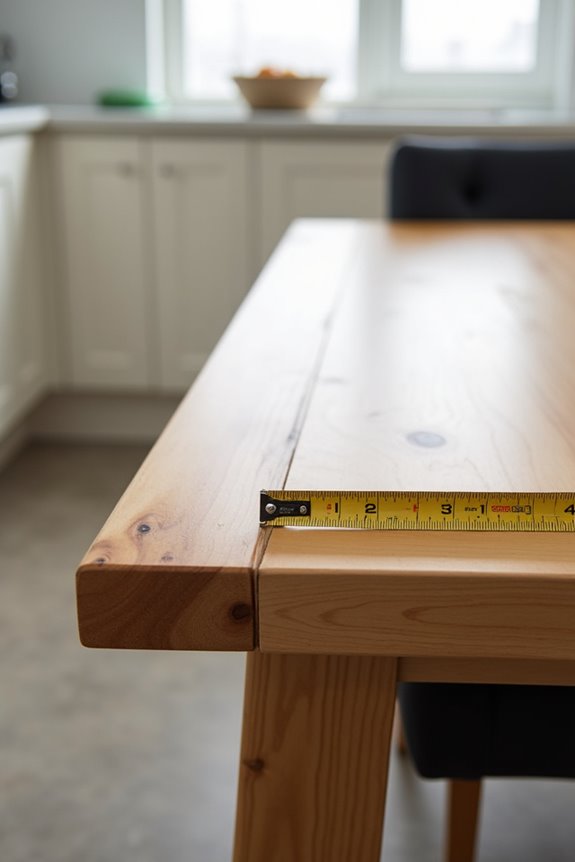
How do you know if that beautiful table you’re eyeing will actually work in your kitchen? I’ll walk you through my process for determining fit before you commit to a purchase.
Before buying, I verify these essential measurements:
- Dining table height and chair seat height: Confirm your standard height table sits at 29 inches, with chairs offering 17–19 inches of seat height
- Apron clearance: Measure to the table’s underside to calculate actual legroom, aiming for 10–12 inches of seat-to-table clearance
- Space planning: Account for comfortable seating and chair motion around your table
Here’s my best advice: test seating with your chosen chairs. Sit down, pull up close, and experience that seat-to-table clearance firsthand. This simple validation prevents disappointment, ensuring your space planning creates the comfortable seating arrangement you deserve.