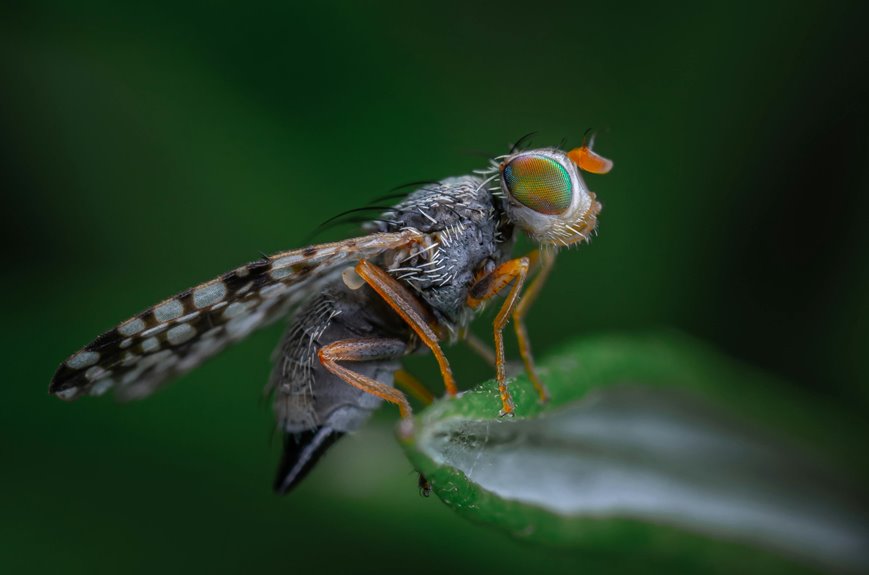
Your bathroom’s warmth and moisture create an ideal breeding ground for fruit flies. Leaky faucets, clogged drains filled with organic debris, and lingering shower steam sustain their rapid reproduction cycle. Humidity above 50–60% extends their lifespan, while biofilm buildup in pipes offers nutrient-rich larval habitats. Standing water around sinks compounds the problem. You can tackle minor infestations with vinegar traps and drain cleaning, but persistent issues often signal hidden leaks or deeper clogs requiring professional intervention—and there’s plenty more you’ll want to know about stopping them for good.
Fruit Flies or Drain Flies? Here’s the Difference
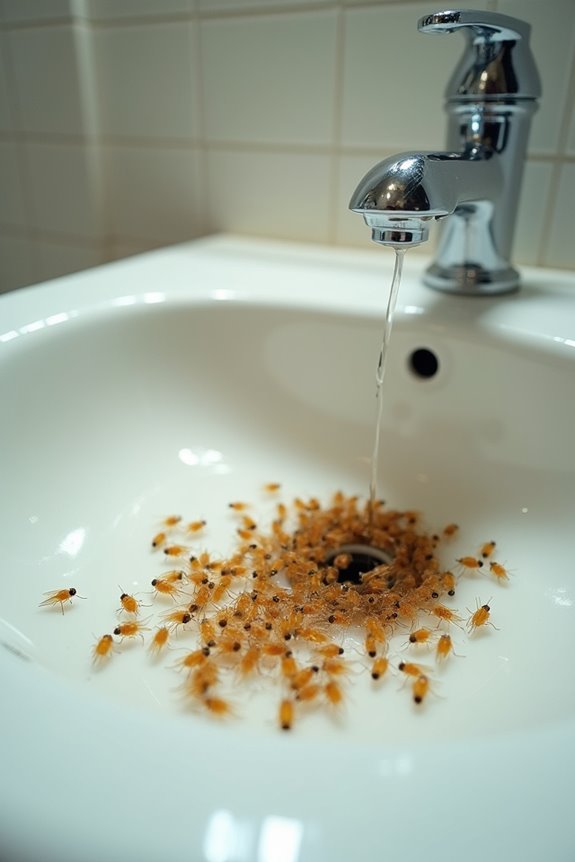
Ever spotted a tiny flying insect near your bathroom sink and wondered what you’re actually dealing with? I understand the confusion—both fruit flies and drain flies thrive in bathrooms, but they’re surprisingly different creatures. Fruit flies are larger, about 1/8 inch, with distinctive red eyes and yellow-brown bodies that hover over food sources. Drain flies are smaller and moth-like, with gray, hairy wings suited for short, fluttery movements. The real tell? Where they gather. Fruit flies gravitate toward fermenting produce or sugary spills near sinks, while drain flies inhabit the drain itself and love bathroom humidity. Understanding this distinction matters because it shapes your entire prevention strategy. Identifying which pest you’re facing lets you target the actual problem source effectively.
Why Your Bathroom Attracts Fruit Flies (Moisture, Leaks & Clogs)
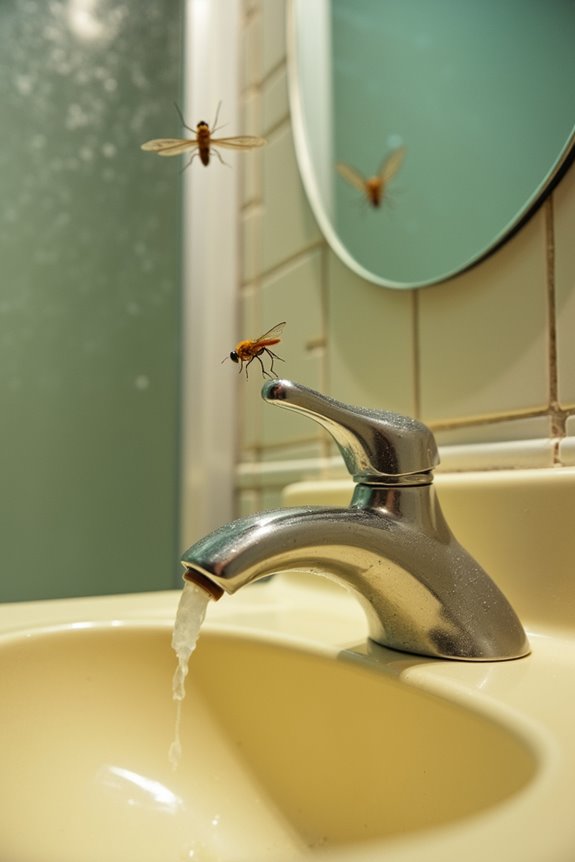
Your bathroom’s warm, humid air is like a welcome mat for fruit flies, especially when moisture lingers around sinks and showers where they thrive above 50–60% humidity. Plumbing leaks—whether it’s a dripping faucet or a crack hiding behind your walls—create the perfect breeding grounds these insects crave, often signaling trouble before you even spot the flies themselves. Clogged drains packed with hair, soap scum, and organic debris become nurseries for fruit fly larvae, as the biofilm buildup offers both shelter and a steady food source.
Moisture Creates Ideal Conditions
Bathrooms are like five-star resorts for fruit flies, and moisture is what rolls out the welcome mat. I’ve learned that these pests thrive where you’d think they’d struggle—in spaces that seem anything but fruit-filled.
Here’s what creates their ideal habitat:
- Standing water in drains traps organic debris, giving larvae a perfect nursery
- Shower steam and sink splash maintain the humidity levels fruit flies desperately need to survive
- Leaky pipes hidden behind walls sustain moisture pockets that keep pest populations thriving
Your bathroom’s warmth combined with consistent moisture creates conditions where fruit flies reproduce rapidly. Even without fruit sitting around, I realized my drains were feeding them through soap scum and hair buildup. High humidity above 50–60% basically extends their lifespan, turning your bathroom into an unwelcome breeding ground that sustains generations of these frustrating pests.
Plumbing Leaks Enable Infestations
While standing water in drains and bathroom humidity set the stage for fruit fly invasions, I’ve discovered that hidden plumbing leaks often play the starring role—and they’re notoriously easy to overlook. Cracked pipes and leaky faucets create persistent moisture sources that fruit flies absolutely crave, transforming your bathroom into their ideal breeding ground. I’ve noticed these pests thrive where moisture lingers around fixtures, especially when leaks go undetected beneath sinks or behind walls.
The tricky part? You might not see obvious puddles. Instead, watch for decreased water pressure, loose tiles, or that telltale musty smell. These subtle warning signs suggest moisture problems feeding your fruit fly problem. Addressing leaks promptly with a licensed plumber eliminates their habitat, stopping infestations before they escalate. It’s genuinely the most effective prevention strategy.
Clogged Drains Breed Flies
How many times have you noticed water pooling around your sink drain, slow to disappear no matter how long you wait? I’ve been there too, and that stagnant water creates the perfect breeding ground for drain flies and fruit flies alike.
Clogged drains aren’t just annoying—they’re fruit fly nurseries. Here’s what’s happening beneath your sink:
- Biofilm buildup accumulates inside pipes, forming a slimy bacterial ecosystem that feeds larvae and adult flies
- Decomposing organic matter trapped in clogs provides nutrients flies need to reproduce rapidly
- Standing water creates moisture that sustains their entire life cycle, accelerating population growth
I’ve learned that regular maintenance matters. Hot water flushes, enzyme cleaners, and drain strainers disrupt these breeding grounds before infestations spiral. Clearing those clogs isn’t just about drainage—it’s about reclaiming your bathroom as a fly-free zone.
Quick Fixes: DIY Traps and Drain Cleaning
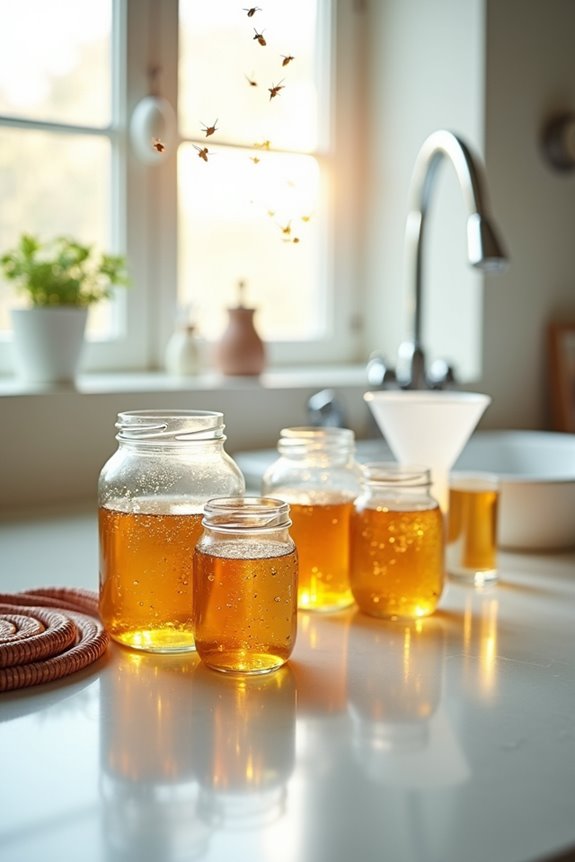
Now that I’ve identified where your fruit flies are breeding, I can share the quick fixes that’ll actually work—starting with a simple apple cider vinegar trap I can set up in minutes and moving straight into drain cleaning methods that tackle the root problem. I’ll show you how to mix that vinegar with dish soap in a cup, cover it with plastic wrap, and poke strategic holes to lure the flies in, while simultaneously flushing my drains with boiling water or vinegar to disrupt any larvae hiding in the pipes. These two approaches work together: the traps catch what’s already flying around my bathroom, and the drain cleaning removes the breeding grounds where they’re coming from.
Apple Cider Vinegar Traps
When you’re staring at fruit flies circling your bathroom sink, you’ll find that one of the simplest solutions sits right in your kitchen pantry—apple cider vinegar. I’ve discovered this trap works because the fermented scent powerfully attracts flies, and when combined with dish soap, it becomes nearly inescapable.
Here’s what I do:
- Pour three tablespoons of apple cider vinegar into a plastic cup
- Cover it with plastic wrap secured by a rubber band, then poke small holes through
- Place it near your sink where flies congregate most
The dish soap breaks the water’s surface tension, trapping insects instantly. I’ve found these traps reduce adult flies noticeably within hours. However, they’re most effective when combined with drain cleaning and moisture control, addressing the root causes keeping fruit flies returning to your bathroom.
Drain Cleaning Methods
While those apple cider vinegar traps catch the adult flies circling your sink, I’ve learned that tackling your drains is what actually stops them from coming back—because that’s where the real problem lives. Your plumbing harbors biofilm, grease, and hair that create the perfect nursery for larvae.
| Cleaning Method | How It Works | Best For |
|---|---|---|
| Boiling water | Flushes debris | Quick maintenance |
| White vinegar | Dissolves buildup | Biofilm removal |
| Drain brush | Scrubs physically | Stubborn gunk |
| Drain snake | Extracts blockages | Severe clogs |
| Hot water rinse | Disrupts breeding | Daily prevention |
I’ve found that flushing drains with boiling vinegar or water eliminates the organic matter sustaining fly populations. Using a stiff brush removes biofilm clinging to pipe walls. Run hot water for thirty seconds after each use—it’s that simple habit that keeps your plumbing inhospitable to fruit fly colonies.
When Leaks and Clogs Require a Professional Plumber
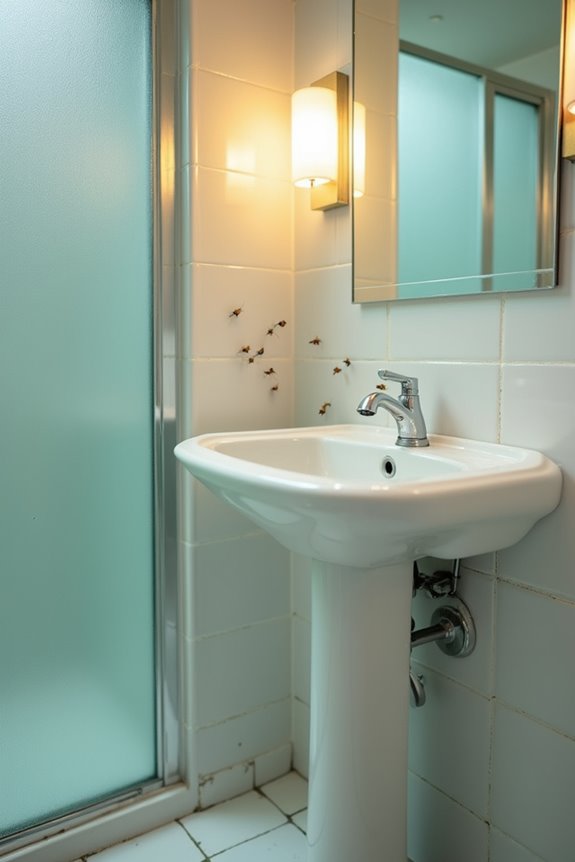
If you’ve noticed persistent puddles under your bathroom sink or water backing up when you shower, you’re probably dealing with something beyond a quick DIY fix—and that’s exactly when fruit flies start throwing their moving-in party.
Here’s when I’d call a professional plumber:
- Multiple slow drains simultaneously indicate deeper issues I can’t handle alone, signaling damaged pipes or serious obstructions requiring video inspection and professional equipment
- Gurgling pipes or backed-up water suggest obstructed drains that create perfect moisture-rich habitats for fruit fly infestations, needing expert assessment
- Unexplained puddles and low water pressure from cracked pipes or leaky faucets demand immediate professional attention before problems compound
A licensed plumber removes deep-seated clogs, fixes damaged pipes, and applies targeted treatments preventing those fruit fly habitats from returning. I’ve learned that addressing leaks and clogs promptly saves me frustration—and keeps my bathroom pest-free.
Preventive Steps to Stop Fruit Flies Returning
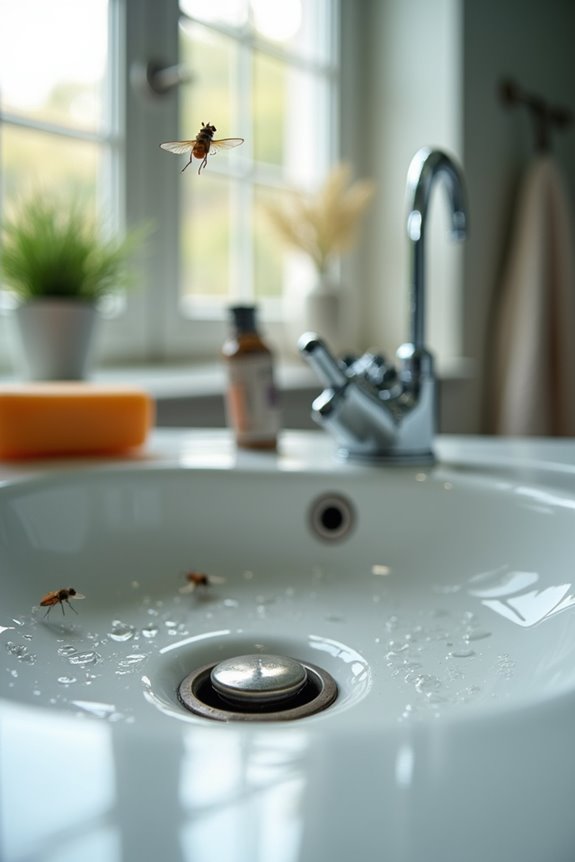
Once you’ve eliminated your fruit fly problem, the real work begins—keeping them from coming back. I’ve found that controlling bathroom moisture is essential—I run my exhaust fan during and after showers to keep humidity below 50–60%. I also hang towels immediately and store mops completely dry, removing any breeding sites these pests love.
But here’s what really made the difference for me: tackling drains cleaning. I pour white vinegar down my drains weekly, breaking up the biofilm where fruit flies hide and reproduce. I’ve installed drain strainers too, catching debris before it becomes a problem. These consistent habits have transformed my bathroom from a fruit fly magnet into a space I’m genuinely proud of. You can do this too.
When to Call in Reinforcements for Persistent Infestations
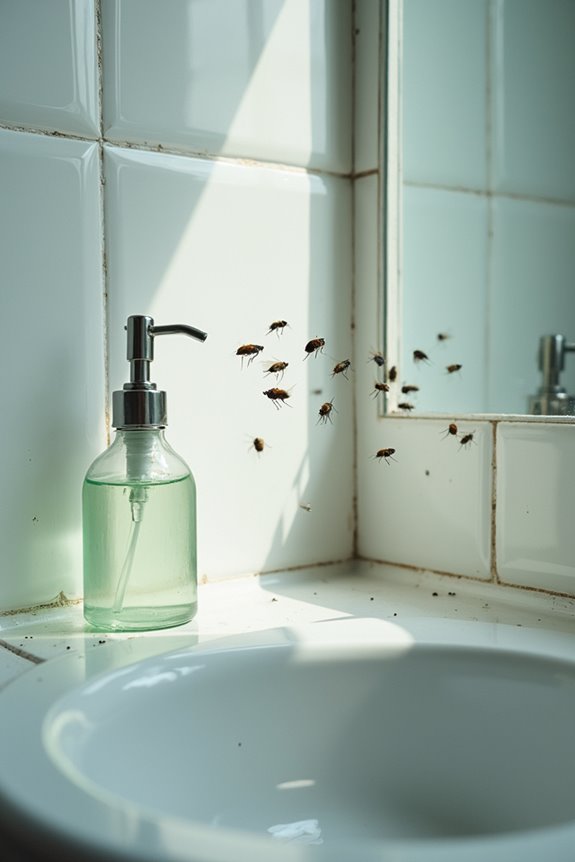
Despite your best efforts—the weekly vinegar pours, the drain strainers, the obsessive humidity control—sometimes those fruit flies stubbornly refuse to leave.
Sometimes those fruit flies stubbornly refuse to leave, no matter how hard you fight back.
If you’re still spotting drain-related gnats after two weeks of fighting back, it’s time to call in reinforcements. Professional help isn’t admitting defeat; it’s smart strategy. Here’s what plumbers bring to the table:
- Video inspections that reveal hidden clogs deep within your pipes where larvae thrive
- Deep cleaning and pipe repair to eliminate the sticky film where eggs hide
- Targeted treatments that break the breeding cycle at its source
Persistent infestations often signal bigger problems—damaged pipes, serious clogs, or ventilation issues you can’t handle alone. A plumber’s expertise transforms your bathroom from a fruit fly nursery back into the sanctuary you deserve.