Whether you need a permit depends on what you’re changing. Cosmetic updates like painting, replacing vanities, or swapping fixtures typically don’t require permits. However, any plumbing changes—moving drains, relocating toilets, replacing water heaters—almost always need approval. Electrical work in bathrooms requires permits too, as do structural changes like removing walls. I’d recommend confirming with your local building department since requirements vary by location. The specifics of your project will determine exactly what you’ll need.
Projects That Always Require a Permit

When do you actually need to call your local building department before tackling bathroom work? I’ve learned that certain bathroom renovation projects absolutely demand permit requirements. If you’re relocating plumbing lines, moving fixtures, or upgrading electrical circuits, you’ll need that permit in hand. I’ve discovered that replacing a water heater or moving a sink drain triggers approval requirements due to plumbing system changes. Installing a new shower or tub with fresh plumbing lines? That’s permit-mandatory. Same goes for altering load-bearing walls or expanding your bathroom footprint. Adding ventilation systems or completely changing your layout requires official approval too. These aren’t optional steps—they’re essential safeguards protecting your home’s safety and value, ensuring everything meets building codes and standards.
Cosmetic Updates That Don’t Need Permits
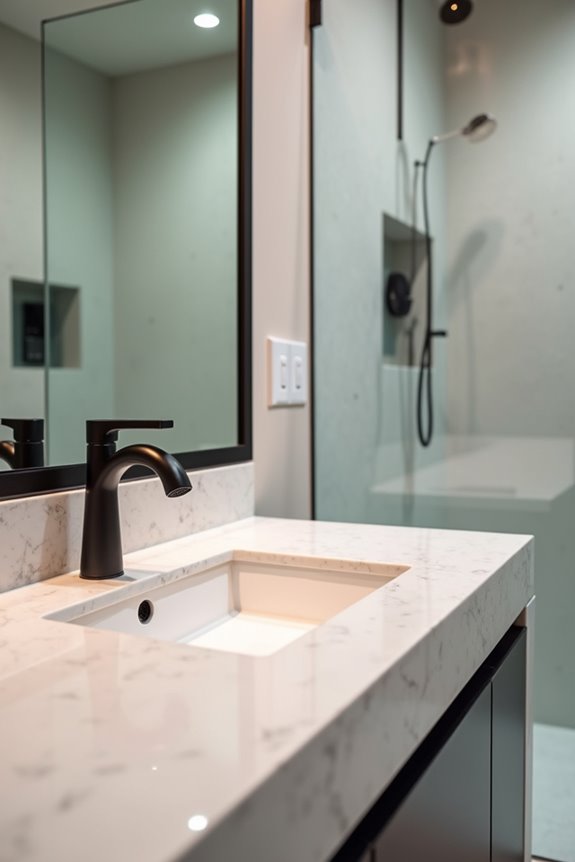
How much bathroom refreshing can you actually tackle without paperwork? I’ve discovered that cosmetic updates offer surprising freedom. Painting walls, replacing vanities without moving plumbing, installing new flooring over existing subfloors, swapping mirrors or light fixtures without rewiring—these projects typically skip permit exemption requirements altogether.
What makes this possible? These cosmetic updates don’t alter plumbing, electrical, or structural systems that inspectors scrutinize. You’re refreshing surfaces and swapping fixtures in place, not reconfiguring your bathroom’s bones.
However, here’s what I’ve learned: even when permits aren’t legally required, your work should still meet safety standards and local building codes. That’s where your responsibility kicks in.
Before starting anything, I’d verify with your local building department. Definitions vary by city or county, and you’ll want confirmation that your specific bathroom remodel qualifies as permit-exempt work.
Plumbing Changes Almost Always Require Permits
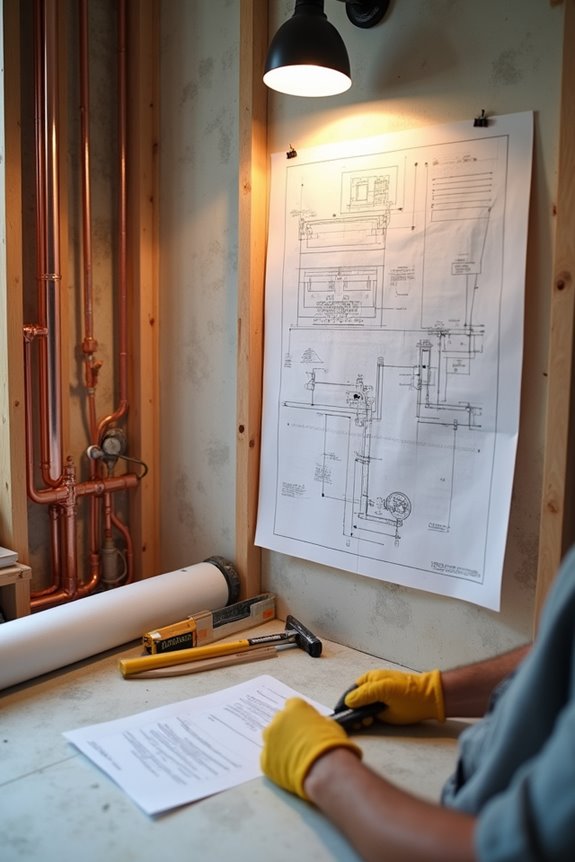
Why do plumbing changes require permits when cosmetic updates don’t? I’ve learned that plumbing modifications directly impact your home’s safety and water systems. When I’m planning a bathroom remodel involving pipes, drains, or fixtures, I need plumbing permits to ensure local code compliance.
| Plumbing Change | Permit Required | Inspection Needed |
|---|---|---|
| Moving sink drain | Yes | Yes |
| Replacing water heater | Yes | Yes |
| Adding new fixture | Yes | Yes |
| Relocating toilet | Yes | Yes |
| Altering venting | Yes | Yes |
These permit requirements protect my family and property value. A licensed contractor can confirm what my area specifically needs. I’ve realized that skipping permits creates liability issues and complicates future home sales. Taking time for proper plumbing permits gives me peace of mind that everything’s installed safely and correctly.
Electrical Work Typically Requires a Permit
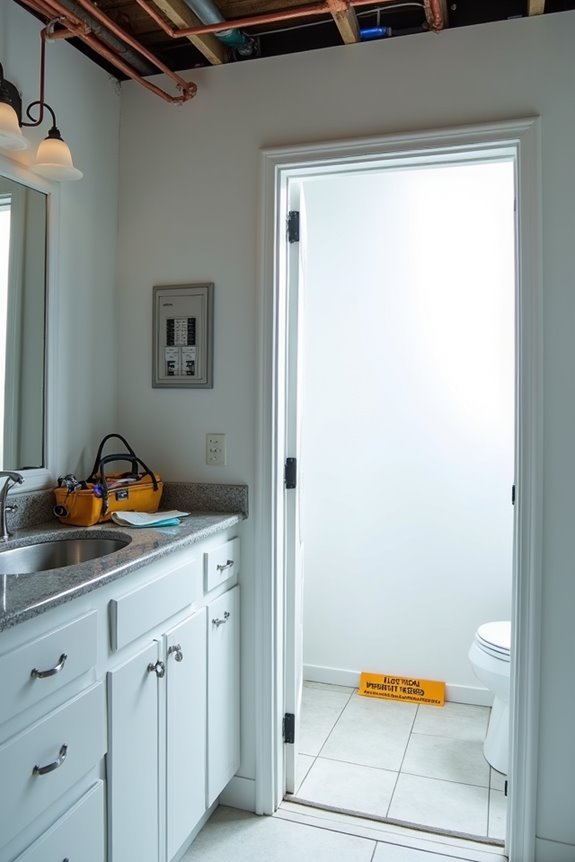
I’ve found that electrical work in your bathroom almost always needs a permit, and there’s a solid reason why—those rules exist to keep you safe from serious hazards like shock, fire, and faulty wiring that could damage your home or worse. When you skip the permitting process, you’re not just risking fines or trouble selling your house later; you’re gambling with your family’s well-being and potentially voiding your homeowner’s insurance. I’d rather spend the time getting inspections done right than face the consequences of cutting corners on something as critical as electricity near water.
Why Electrical Permits Matter
When it comes to bathroom renovations, electrical work stands apart from nearly everything else you’ll tackle—and honestly, it’s one area where you’ll almost certainly need a permit.
Here’s why electrical permits matter so much:
- Safety first: Electrical permits protect you and your family from fire hazards and shock risks
- Code compliance: Inspections ensure your wiring meets current local electrical codes
- Professional standards: A licensed contractor’s work gets verified, giving you peace of mind
- Resale value: Permitted work increases your home’s marketability and trustworthiness
- Insurance coverage: Unpermitted electrical work can void your homeowner’s insurance
I understand the temptation to skip permits and save money, but skipping this step puts everything at risk. These inspections exist because they’ve prevented countless problems. You’re joining a community of homeowners who’ve done things right—and that matters.
Safety Risks Without Permits
What happens when you skip the electrical permit and hire someone to rewire your bathroom without official approval? You’re exposing yourself to serious hazards. I’ve learned that electrical permits exist because they protect you and your family. An inspector verifies safety compliance, checking that wiring meets local code requirements and circuits handle bathroom demands safely. Without inspections, faulty wiring can cause fires, shocks, or electrocution risks. Your homeowner’s insurance won’t cover unpermitted electrical work, leaving you financially vulnerable. When selling your home, buyers discover unpermitted bathroom renovation permits through title searches, creating costly delays or deal-breakers. Building departments stress that electrical permits aren’t optional—they’re essential safeguards. Skipping this step might feel convenient initially, but the consequences transform your sanctuary into a liability.
Structural Changes That Require a Permit
If you’re thinking about removing a load-bearing wall to open up your bathroom or relocate plumbing fixtures to a new spot, I’ve got important news—you’ll definitely need a permit. These structural changes affect your home’s framework and support systems, so your local building department will want to review plans and conduct inspections to ensure everything’s safe. Moving fixtures like toilets, sinks, or showers might seem straightforward, but when they require rerouting through walls or floors, that structural impact means no shortcuts around the permit process.
Load-Bearing Wall Removal
Removing a load-bearing wall—that seemingly straightforward wall separating your bathroom from an adjacent bedroom or hallway—is actually one of the most serious structural decisions you’ll make during a renovation, and it absolutely requires a permit.
Here’s what you need to know:
- Permits are mandatory because removing a load-bearing wall changes your home’s load paths and structural integrity
- Structural design documentation from a Registered Design Professional becomes your blueprint for safety
- Multiple inspections happen before, during, and after the work to verify proper support
- An Applicant of Record (usually a licensed professional) must file your permit for layout changes
- Skipping permits invites hefty fines, mandated rework, and serious insurance complications
I won’t sugarcoat it: this isn’t a DIY project. You’re protecting your home’s skeleton, and that matters deeply.
Fixture Relocation Requirements
moving that toilet from one wall to another—or relocating your sink across the room for better flow—sounds simple until you realize it’s triggering a cascade of permit requirements. When you’re considering toilet relocation or any fixture layout changes, you’re essentially reshaping your plumbing infrastructure. Those plumbing changes demand detailed plans submitted to your local building department, along with inspections to verify everything meets code. I’ve discovered that even minor shifts in drain, vent, or supply lines require documentation. The permit process protects you, ensuring professionals handle modifications correctly. Trust me, getting inspections upfront saves headaches later. Your bathroom’s new configuration will work beautifully—and safely—when you respect these requirements.
How to Apply for a Bathroom Permit

What’s the first step you should take when you’ve decided to renovate your bathroom? I’d recommend contacting the Planning Department right away to start your bathroom permit application. Here’s how I’d approach the process:
- Submit detailed bathroom layout drawings and plumbing specifications to the Planning Department
- Gather documentation for any plumbing changes, electrical work, or structural modifications you’re planning
- Work with a licensed contractor who understands local codes and can guide your permit process
- Pay your application fee, typically between $150 and $400
- Schedule inspections at various renovation stages once your permit’s approved
The Planning Department usually reviews applications within five to ten business days. I’d recommend having a professional help with your floor plans and material specs—it’ll save you headaches later. Your permit remains valid for six months after approval, giving you plenty of time to complete your project.
Permit Fees and Validity Timelines

How much you’ll actually spend on your bathroom permit depends largely on what you’re planning to change, and I’ve found that understanding the fee structure upfront helps you budget more confidently. Most permit fees range from $150 to $400, scaling with your project’s complexity. Here’s where timing matters: your permit validity lasts just six months after approval, so you’ll need to start work promptly or request renewal if things run long.
I’ve learned that scheduling inspections at multiple renovation stages protects you against costly mistakes. Before submitting, ensure your plumbing and electrical plans are detailed and thorough—this prevents approval delays and keeps your project moving smoothly. Think of these inspections as your checkpoint system, verifying everything meets code before you move forward confidently.
Hiring Contractors to Handle Permits
Once you’ve budgeted for your project and understand the permit timeline, you’ll want to find a licensed contractor who can shoulder the administrative burden—and I can’t stress enough how much this simplifies the entire process. When you hire a contractor familiar with your local jurisdiction, you’re essentially investing in peace of mind. They’ll handle the paperwork, coordinate with your building department, and ensure your plumbing and electrical work meets code requirements.
Hiring a licensed contractor familiar with your local jurisdiction is an investment in peace of mind throughout your entire remodel.
Here’s what a good contractor brings to your bathroom remodel:
- Submits plans and manages all permit documentation
- Schedules required inspections at critical phases
- Provides written estimates with transparent timelines
- Navigates local code requirements confidently
- Reduces delays and compliance risks significantly
I recommend asking for references and clear contracts outlining permit-related costs upfront. You’ll feel supported throughout the entire process.
Penalties for Skipping the Permit Process
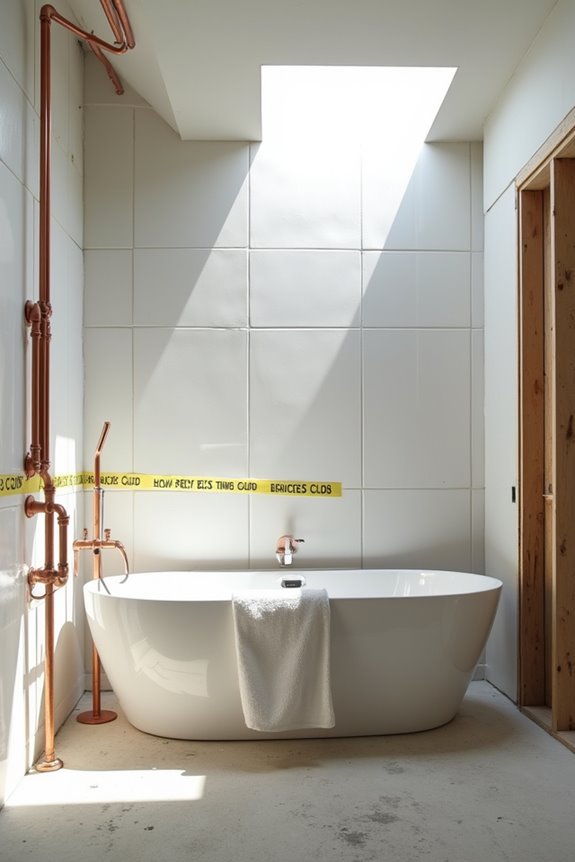
I’ll be honest with you: the temptation to skip permits and save time is real, but the consequences far outweigh any short-term convenience. When you proceed with unpermitted work, you’re risking significant fines from your local municipality that can quickly drain your renovation budget. Here’s what really keeps me up at night: if damage occurs during your bathroom renovation, your insurance company can deny your claims entirely. Those retroactive permits? They’ll cost you extra fees and penalties on top of everything else. During inspections or when you’re ready to sell, unpermitted work surfaces and complicates everything. Even minor electrical or plumbing changes need proper permits. Skip the process, and you’re gambling with your home’s future and your financial security.