That sewer smell’s likely coming from one of six common issues—a dried-out P-trap that’s lost its water seal, a clogged drain trapping bacteria, faulty vent pipes, a worn toilet seal, or even cracked sewer lines. The good news? Most fixes are simple. You can refill your P-trap with water, snake out clogs, or check your vents yourself. But if odors persist across multiple rooms or you’re seeing backups, you’ll want to understand what’s really happening beneath your bathroom.
What Causes Bathroom Sewer Smells (The 6 Most Common Culprits)
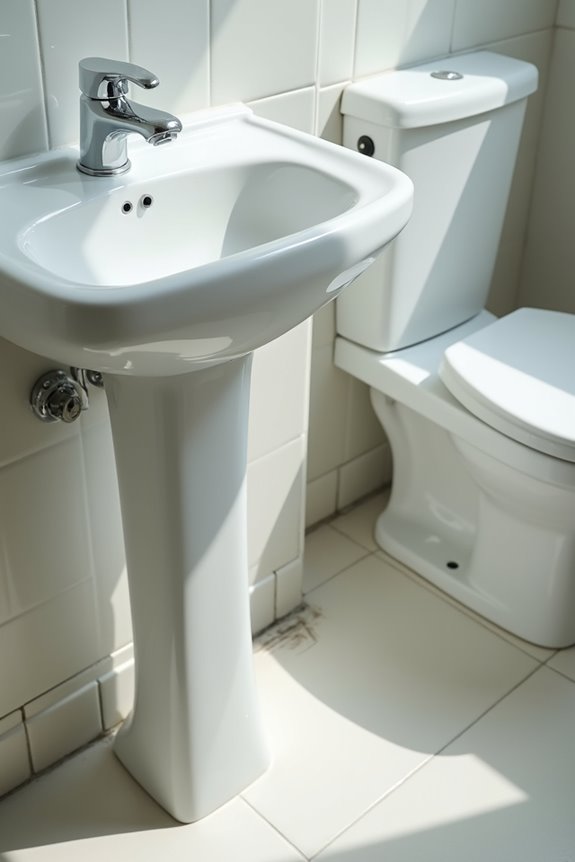
Ever notice how your bathroom suddenly smells like a backed-up sewage system when you haven’t used a guest shower in weeks? I’ve discovered that several culprits create these unpleasant sewer odors.
A dry P-trap, which sits beneath your drain, loses its water seal when fixtures sit unused—allowing gases to escape upward. Clogged drains filled with hair and soap accumulate bacteria, causing backflow and stagnation. Faulty vent pipes can’t properly expel gases, forcing sewer odors back into your space. Sometimes a worn wax ring or failing toilet seal around your bowl’s base leaks gases directly into rooms. Finally, cracked sewer lines demand professional attention—your plumber’ll use camera inspection to identify underground issues. Understanding these causes helps us tackle the problem before it worsens, restoring our bathrooms to fresh-smelling spaces.
Quick Fixes: Refill Your Dry P-Trap With Water
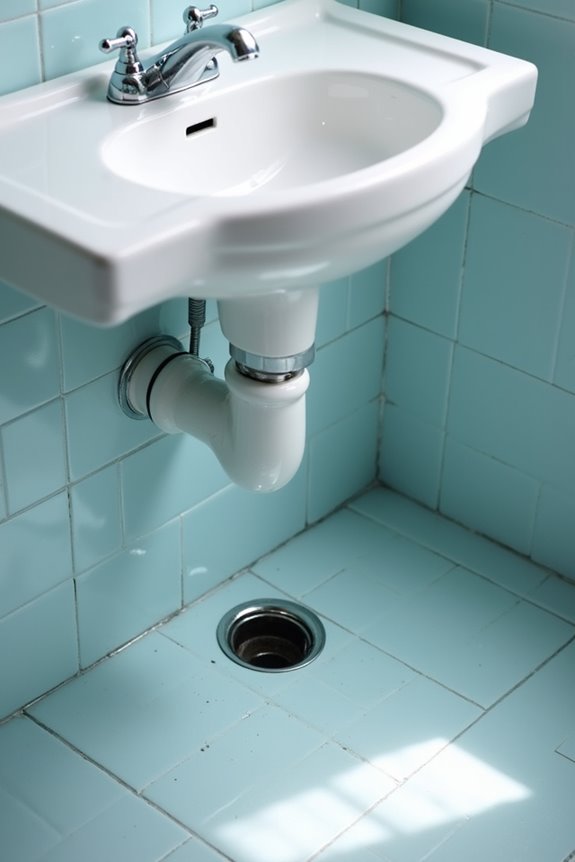
The simplest solution to a dry P-trap is often the one I’d recommend first: just run some water down the drain. When you haven’t used a fixture recently, that standing water evaporates, leaving your P-trap exposed. Without this protective barrier, sewer gases escape directly into your bathroom, creating that unmistakable odor.
I’d start by running water in the sink, shower, or tub until the trap visibly fills and the bathroom odor diminishes. If plain water doesn’t restore the water seal, I’ve found pink RV water-safe antifreeze helps maintain protection in unused drains.
Here’s my preventative measure: run water through all drains weekly. This simple drain maintenance habit prevents trap evaporation entirely. Afterward, check for leaks around P-trap connections, ensuring everything remains properly seated. You’ll keep those sewer gases where they belong—nowhere near your bathroom.
Clear a Clogged Drain to Stop Trapped Odors
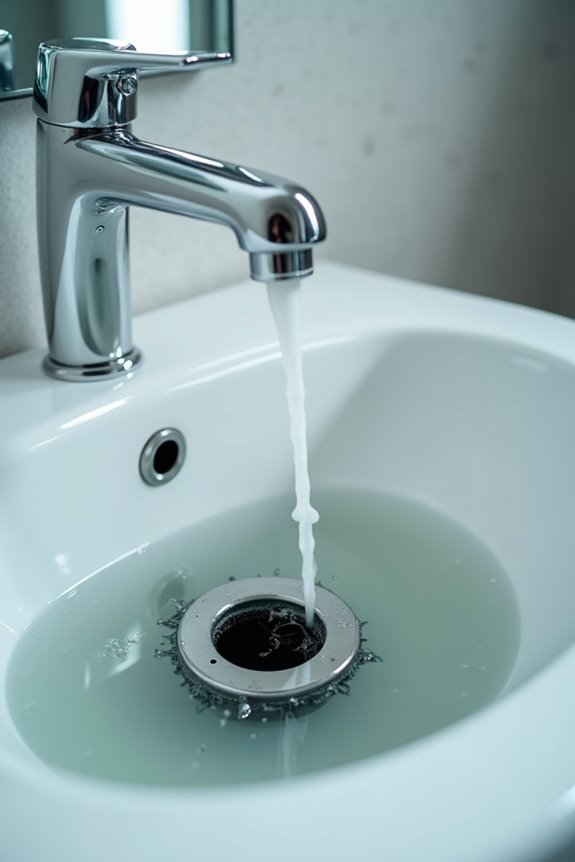
When hair, soap scum, and debris accumulate in your drain, they create the perfect breeding ground for bacteria that thrive in trapped moisture and emit that unmistakable sewage stench you’re experiencing. I’ve found that tackling this problem early with a plunger or drain snake can work wonders, though stubborn clogs sometimes demand professional hydro-jetting to fully restore your drain’s flow and eliminate the odor at its source. If that foul smell persists after you’ve cleared the clog, you’re likely dealing with a deeper issue that requires professional help to diagnose and fix.
Bacteria Buildup and Odors
How’s your drain looking these days—clear as a whistle, or more like a slow-moving river?
When hair, soap scum, and debris accumulate, they create the perfect breeding ground for bacteria. I’ve learned that standing water in a clogged drain becomes a bacterial hotspot, producing those awful sewer-like odors we all dread.
Here’s what happens inside your pipes:
- Anaerobic bacteria thrive in stagnant water, releasing sewer gases that make your bathroom unbearable
- Hair and buildup trap moisture, allowing bacterial colonies to multiply rapidly
- The blockage slows drainage, intensifying odor problems over time
The good news? You can take action. I recommend using a drain snake or cleaning regularly to remove hair and soap scum before bacteria take hold. This simple maintenance prevents those foul smells from returning and keeps your bathroom fresh.
Effective Unclogging Methods
Clearing that clog is honestly your best first move, and I’ve found that most bathroom plumbing odors disappear once you get water flowing freely again. I’ll start with a plunger—it’s simple and often works for minor clogs trapping debris and biofilm. If that doesn’t cut it, I grab a drain snake to physically break through stubborn blockages deeper in the line. For really persistent problems, a hydro-jetter blasts everything away with pressurized water. Sometimes I need to remove the P-trap itself to access deep buildup. Once I’ve cleared the clog, I run water to refill that P-trap, restoring the water barrier that blocks sewer gases from rising up. Professional camera inspection helps if I’m still stuck.
Why Your P-Trap Matters (and How It Stops Sewer Smell)
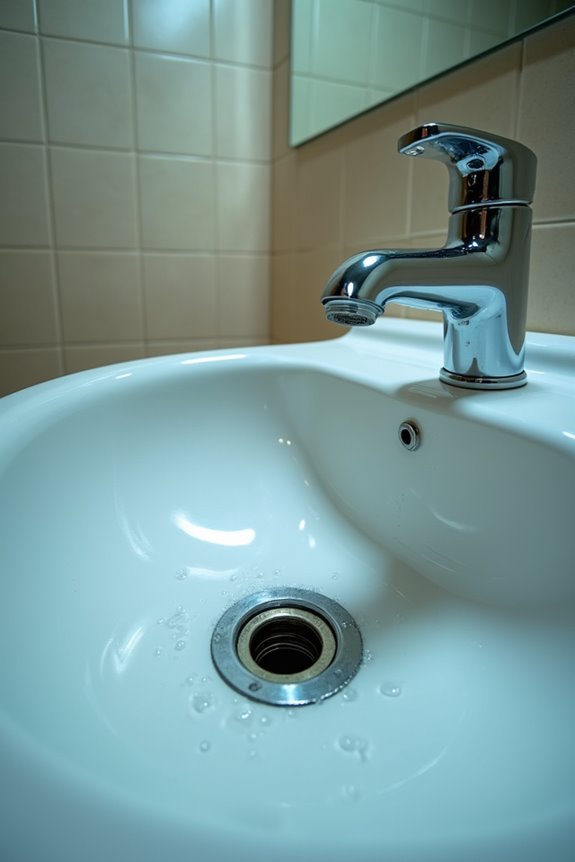
Ever wonder why your bathroom smells like a sewer line when you’ve just cleaned everything?
Here’s the culprit: your P-trap. This U-shaped pipe beneath your sink or shower holds water that creates a crucial barrier against sewer gases. When you don’t use certain fixtures regularly, that protective water evaporates, leaving your trap dry and vulnerable.
Here’s how to reclaim fresh air in your bathroom:
- Run water through unused drains to refill the P-trap and restore its gas barrier
- Use fixtures regularly to maintain consistent water levels in the trap
- Apply mineral oil sparingly to slow evaporation and extend the water barrier’s effectiveness
I’ve discovered that bathroom odors often stem from this simple problem. Running water through neglected drains takes just minutes, yet it eliminates those stubborn sewer smells. Understanding your P-trap transforms how you prevent future issues.
Check Your Toilet Seal, Vent Pipes, and Sewer Line for Leaks
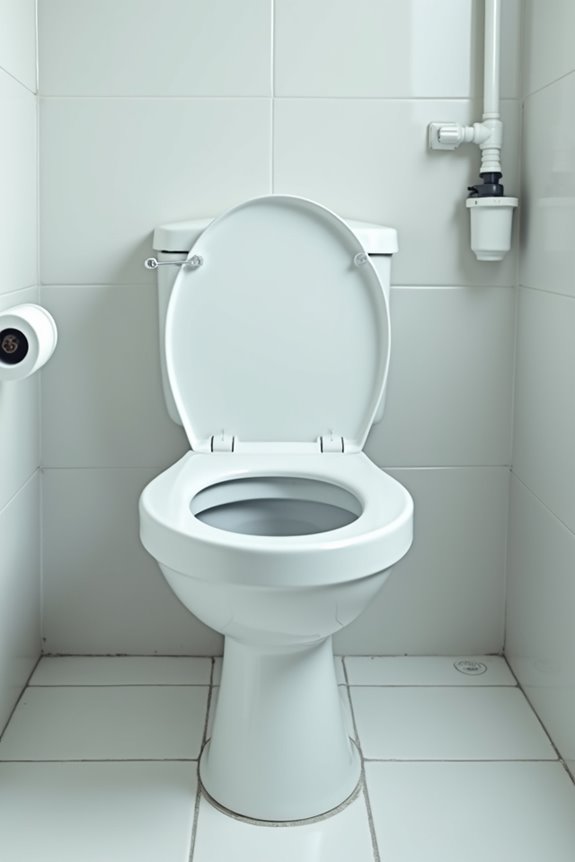
When that sewer smell won’t quit even after you’ve tackled your P-trap, it’s time to look beyond the obvious culprits—and I’ve found that the real troublemaker often hides right at your toilet’s base or way up on your roof.
| Issue | Warning Signs |
|---|---|
| Cracked toilet seal | Pooling water, damp spots, rocking motion |
| Blocked vent pipes | Slow drains, gurgling sounds, persistent odor |
| Sewer line damage | Multiple drain issues, sewage smell throughout |
I’ll check for a failing wax ring first—damp spots around the toilet base are telltale signs. Next, I inspect roof vent pipes for debris or blockages that trap sewer gases indoors. When leaks coexist with vent problems, I call a professional to confirm the source and ensure safe, complete repairs.
Signs You Need a Professional Plumber
If you’ve tried the basic fixes and that sewer smell’s still hanging around your bathroom, it’s time to call in the pros—persistent odors usually signal something deeper like a cracked sewer line or blocked vent stack that you can’t tackle yourself. When you’re noticing slow drains, gurgling sounds, or backups across multiple fixtures, you’re looking at complex pipe damage that requires a plumber’s camera inspection and specialized equipment to diagnose properly. Don’t let sewer line system failures go unaddressed, because what starts as an annoying smell can quickly become a costly problem affecting your whole home’s plumbing.
Persistent Odors Despite Fixes
You’ve tried the quick fixes—you’ve poured baking soda down the drain, cleaned your P-trap, even replaced the wax seal under your toilet—yet that stubborn sewer smell still lingers in your bathroom like an unwelcome houseguest.
When odors persist despite your efforts, you’re likely facing something more complex. Here’s what might be happening:
- Hidden leaks or cracked sewer lines allow sewer gases to escape behind walls, requiring professional leak detection and camera inspection
- Venting problems prevent proper drainage, especially when multiple drains sit unused and your P-trap dries out
- Main sewer line blockages or tree-root intrusion cause continuous gurgling and worsening odors across your plumbing
I recommend calling a professional plumber. They’ll diagnose whether you’re dealing with a faulty toilet seal, vent blockage, or deeper structural issues. Getting expert help now saves you frustration and prevents future damage to your home’s plumbing system.
Complex Pipe Damage Indicators
How do you know when that sewer smell has crossed from annoying inconvenience into territory that demands professional help? When I notice sewer odors spreading across multiple rooms alongside persistent slow drains, I recognize something deeper’s wrong. Gurgling drains paired with wastewater backups signal main sewer line issues requiring expert attention. I’ve learned that hidden pipe damage—indicated by damp spots, mold growth, or sudden water pressure changes—won’t resolve itself. The real confirmation comes through a camera inspection, which reveals cracked pipes, root intrusion, or collapsed pipe sections that demand professional repair or replacement. When hydro-jetting and snaking fail to help, that’s my cue to call in specialists who can properly assess and fix what I can’t see.
Sewer Line System Failures
When multiple drains throughout your home start moving like they’re stuck in slow motion, that’s when I know we’ve likely crossed from minor plumbing hiccup into main sewer line territory. A cracked main sewer line often signals serious trouble that demands professional attention.
Here’s what I watch for:
- Drain gurgling and persistent sewage odor that won’t quit, even after you’ve tried fixes
- Backups in toilets alongside slow drainage in sinks and showers
- Root blockage or pipe damage visible only through camera inspection
Sewer gases escaping into your bathroom aren’t just unpleasant—they’re your home’s way of telling you something’s seriously wrong. I can’t stress enough how essential professional assessment becomes here. A professional plumber uses camera diagnostics to locate exactly where sewer line system failures occur, preventing widespread damage and keeping your family safe from these stubborn issues.
Stop Future Sewer Smells: Easy Drain Maintenance Tips
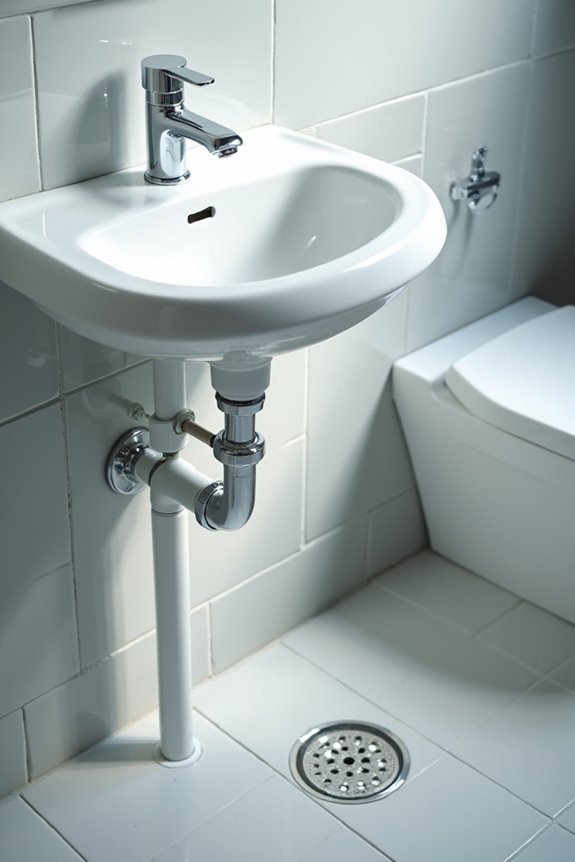
Once you’ve tackled that sewer smell, the real work begins—keeping it from coming back. I’ve learned that consistent drains maintenance is your best defense. Here’s what I do: I regularly flush all my drains, especially unused fixtures, because I know that keeping water in traps creates a seal against sewer gases. When I notice slow drainage, I grab my drain snake or use an enzymatic cleaner to remove hair and soap scum before they cause real problems. I also check my vent pipes seasonally to ensure they’re clear. If my P-trap ever dries out, I run water for several seconds to refill it. For persistent odors, I schedule a professional inspection with a camera—it’s worth the investment. These habits have transformed my bathroom completely.