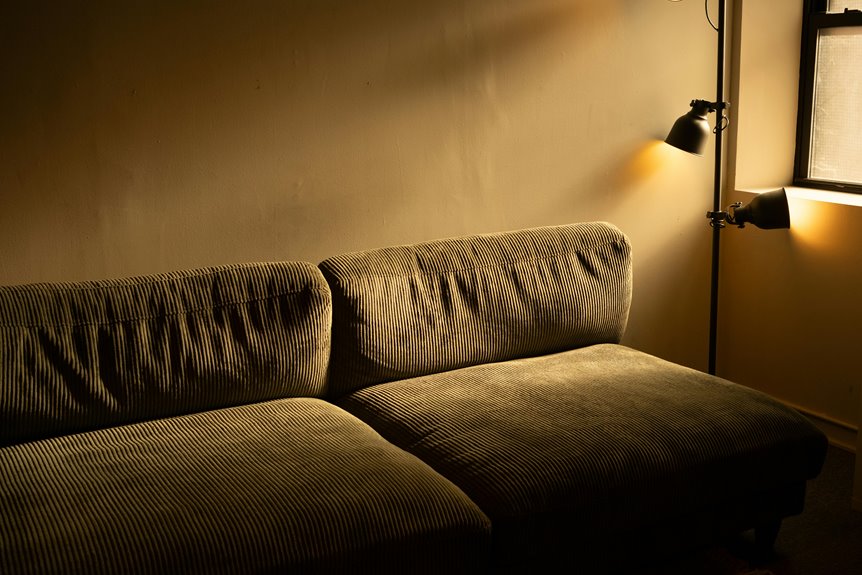
I’ve discovered that strategic floor lamp placement fills light gaps and creates warmth in living rooms.
Position lamps beside seating for task lighting, behind sectionals for layered ambiance, or in dark corners for balance.
Near windows, they blend natural light well.
A 2700K warm bulb prevents screen glare, while 12–18 inches from furniture avoids harsh shadows.
Sizing matters too—aim for 20–30 lumens per square foot across your space.
Layering multiple lamps intentionally helps you achieve the right balance throughout your room.
Start With Your Room’s Layout and Light Gaps
Before you bring home a single floor lamp, spend a few minutes observing your living room as it actually is—not as you wish it were.
Walk around and notice where shadows settle, where you actually sit, and which corners feel forgotten. I call these overlooked spots “light gaps,” and they’re your roadmap for smart placement. You’ll spot them near reading chairs, in alcoves, and along walls where ambient lighting simply doesn’t reach.
Your layout matters. Map where pathways flow naturally so you won’t trip over cords or lamp bases. Consider how your seating clusters together—that’s where task lighting works best. By identifying these gaps first, you’re not just placing a lamp randomly; you’re solving real problems in your space and creating the atmosphere you want.
Next to a Sofa or Chair for Task Lighting
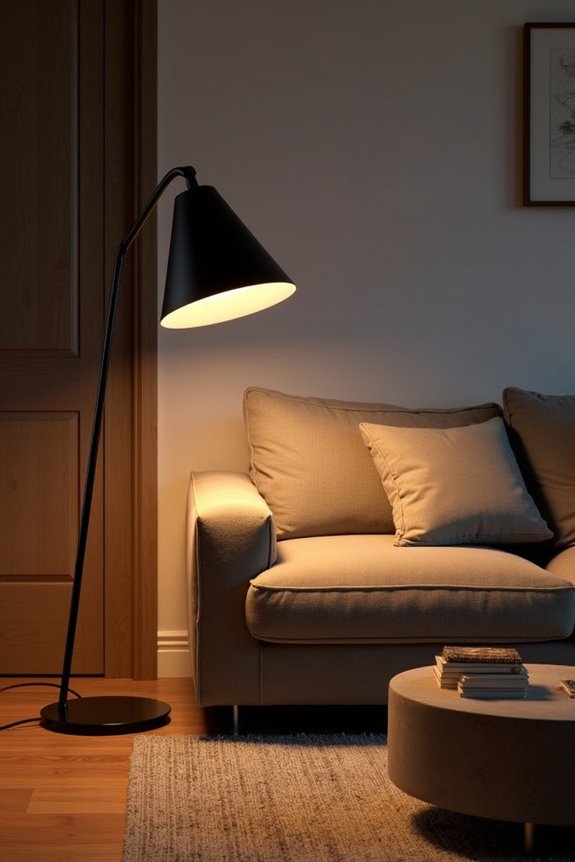
I’ve found that placing a floor lamp next to your sofa or chair improves how you use that space, especially when you’re settling in with a book or catching up on emails. You’ll want to focus on two key elements: positioning the lamp so its light hits over your shoulder without creating glare on screens, and selecting one with an adjustable arm or swivel head that gives you flexibility as you move around. Getting the height right—typically 58 to 66 inches tall—helps you avoid awkward shadows across the page when reading.
Positioning For Optimal Light
Where should you actually position that floor lamp so it does what you need it to do? I’ve found that placing it slightly behind or to the side of your seating creates the perfect reading nook without pesky glare on your page or screen reflections. An adjustable-arm design gives you flexibility to direct light exactly where you need it—typically over your shoulder for comfortable reading.
I aim for that diffuse glow that softens shadows on the material without washing everything out. The sweet spot? Around 60–66 inches from the floor, keeping the shade at eye level when you’re seated. This lamp placement improves how you use your space, making reading more enjoyable rather than a strain on your eyes.
Lamp Selection And Features
When you’re ready to choose the right floor lamp for task lighting, you’ll want to prioritize a few key features that’ll actually make reading and writing comfortable rather than frustrating. I’d recommend looking for a lamp with an adjustable arm that lets you direct light exactly where you need it. The floor lamp height matters too—aim for one around 58–66 inches so it aligns with your seated eye level. You’ll also want warm color temperature bulbs between 2700K–3000K, which creates a pleasant glow while reducing eye strain. Seek out 400–800 lumens for adequate brightness without overwhelming your space. These selections help create a welcoming reading nook where you’ll want to settle in with a good book.
Behind a Sectional to Create Layered Ambiance
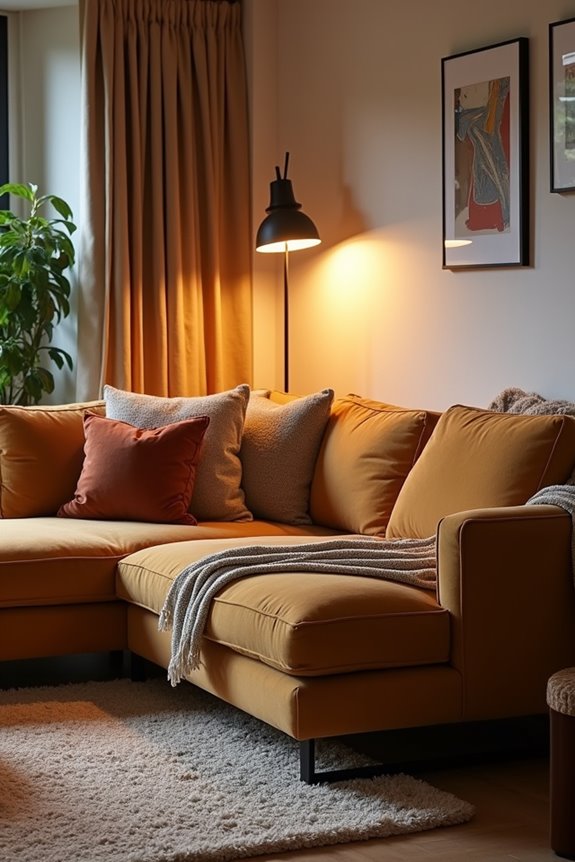
When I position a floor lamp behind my sectional, bouncing light off the ceiling and walls creates a balanced glow throughout the room without harsh shadows or glare. I find the best results come from choosing a slim, upright design—something like an Akari-style lamp—that doesn’t consume seating space or block the TV view, and positioning it about 12–18 inches from the sofa back for optimal light spread. Pairing this backlight with softer table lamps or wall sconces means I’m building light layers across the space, so there aren’t any dark corners, and I can adjust brightness on movie nights or while reading without overwhelming the room.
Indirect Lighting Creates Balance
Because most living rooms rely too heavily on overhead fixtures that cast harsh shadows and flatten the space, positioning a floor lamp behind your sectional offers an alternative that changes how light moves through the room. This behind-sofa placement creates the soft glow you want—one that bounces off walls and ceilings rather than beaming down directly. You’ll want an Akari-style or slim uplight design positioned 12–18 inches from the sofa back, angled to avoid glare while spreading even coverage. Pair warm bulbs (2700K–3000K) with dimmers so you can adjust intensity throughout your evening. Combined with overhead or table lamps, this ambient lighting strategy builds layered lighting that banishes dark corners. The result is a balanced, inviting space where everyone feels comfortable.
Lamp Selection and Placement Strategy
Now that you’ve got the foundational glow working behind your sectional, it’s time to think strategically about which lamp will actually do the job—and how to position it so it earns its place in your room.
I’ve found that a tall, arched lamp with a wide shade works well for bouncing light off ceilings and walls, creating the ambient lighting you need. Position the shade around 60–66 inches high—basically at eye level when you’re seated—so you get comfortable uplight without harsh shadows creeping across your face.
Slim tripod designs fit perfectly in corners, keeping sightlines clear and legroom unobstructed. Dimmable LEDs let you shift from mood lighting to task-friendly brightness for reading nooks or conversations. This floor lamp placement strategy improves your sectional as a gathering spot.
| Lamp Type | Height Range | Best For |
|---|---|---|
| Arched | 70–80″ | Ambient bounce |
| Tripod | 60–66″ | Corner placement |
| Adjustable | Variable | Reading flexibility |
| Slim Arc | 65–75″ | Space efficiency |
Defining Seating With Layered Light
How do you make a sectional the focal point of your living room? Positioning a floor lamp behind your seating area creates the layered lighting that draws people together. Place your lamp 12–18 inches from the sofa back, choosing a tall, slim design that won’t block sightlines. Arc lamps or uplighting styles that bounce warm light (2700K–3000K) off walls and ceilings work well, creating ambient glow rather than harsh shadows. This ambient light works with your existing fixtures, establishing multiple light sources that feel deliberate and welcoming. When your floor lamp behind the sectional glows softly, you’re illuminating a space and creating a gathering spot where people naturally feel comfortable and connected.
In a Dark Corner to Fill Empty Spaces
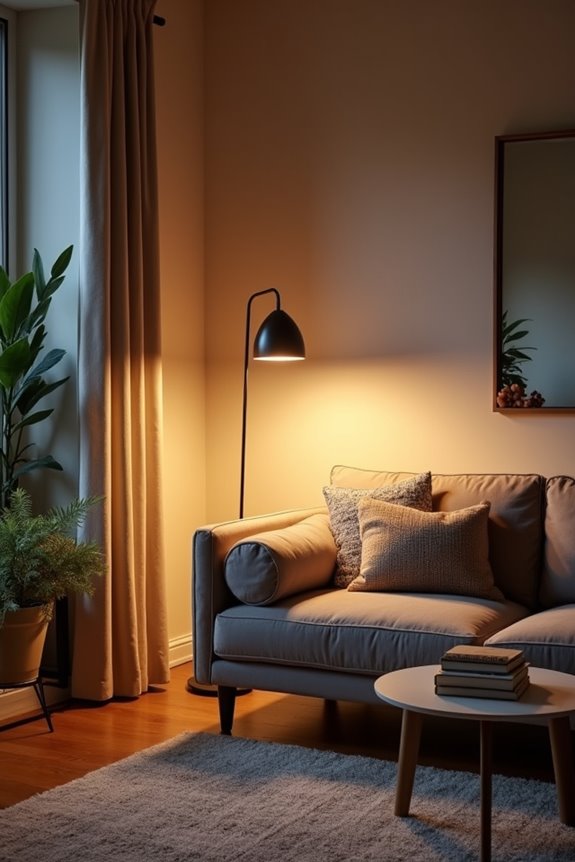
What’s lurking in that shadowy corner of your living room—the one that feels forgotten and a bit sad? I’ve found that a tall Akari-style lantern works well in these neglected spaces. By angling the lamp toward walls and ceiling, I create beautiful diffusion that spreads a warm glow throughout the area. This becomes the foundation of my corner lighting plan.
| Feature | Benefit |
|---|---|
| Wide shade design | Maximizes light spread |
| 2700K–3000K warmth | Inviting atmosphere |
| Thin, arced frame | Unobstructed pathways |
| 1500–3000 lumens | Strong secondary light |
| Paired with seating | Purposeful gathering spot |
| Multiple bulbs | Enhanced coverage |
I pair my corner lamp with a complementary chair or plant, turning dead space into somewhere I actually want to sit. That empty corner? Now it’s where I belong.
Beside a Reading Nook for Focused Comfort
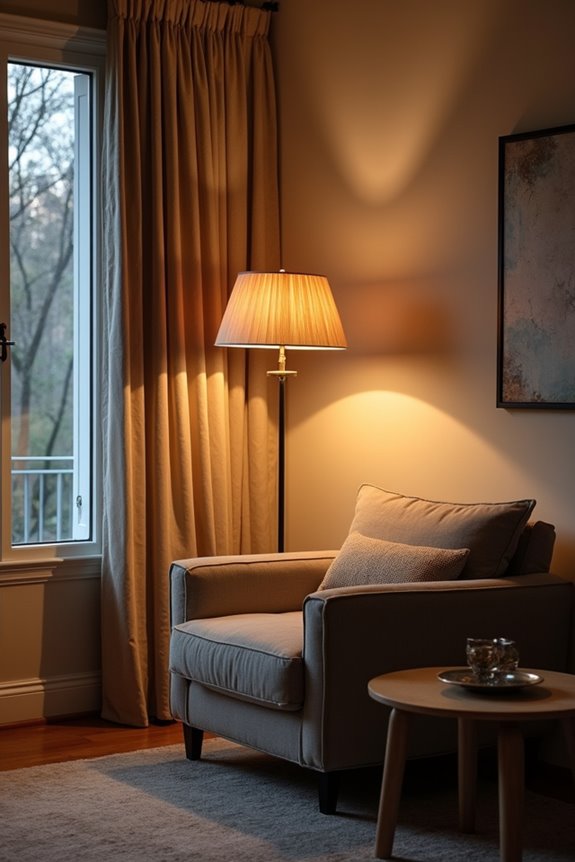
While filling dark corners with ambient light sets a welcoming mood throughout your living room, a reading nook demands something more intentional—a lamp that understands the difference between general glow and focused illumination.
I’ve found that positioning a floor lamp beside your reading chair creates a personal space. Place it slightly behind or to the side, directing an adjustable arm toward your page. I aim for 400–800 lumens with warm 2700K–3000K tones that won’t strain my eyes during long reading sessions.
Keep the lamp within arm’s reach, paired with a small side table for books and tea. A translucent shade diffuses light softly, eliminating harsh shadows. This thoughtful placement brightens your nook—it builds a comfortable corner that belongs to you.
Position a Floor Lamp Near Your TV Stand
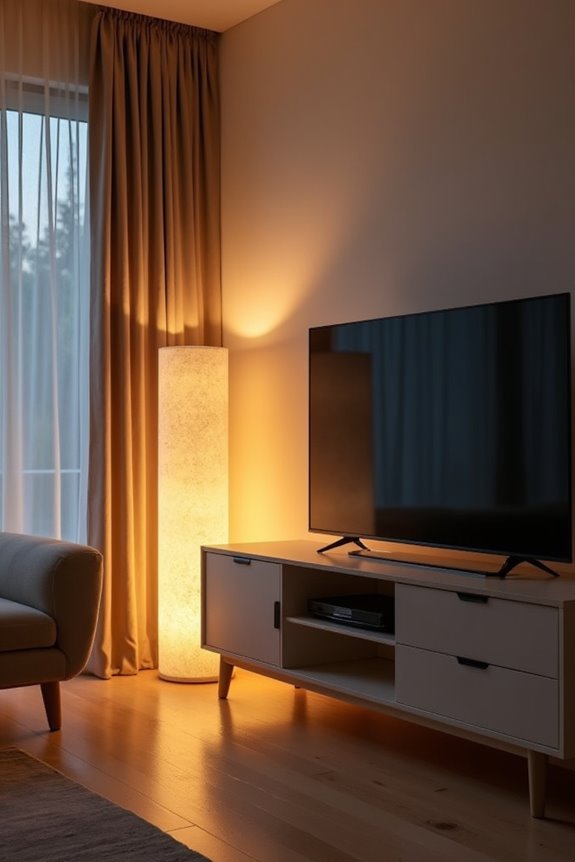
Ever notice how that glowing screen can cast your living room into shadow, making everything feel a bit too dark and disconnected? Positioning a floor lamp near your TV stand improves the viewing experience. Here’s what works best:
| Lamp Feature | Why It Matters |
|---|---|
| Warm 2700K–3000K temperature | Creates cozy ambient lighting |
| Dimmable setting | Lets you control TV glare |
| Slim or Akari-style shade | Diffuses light softly |
| 12–18 inches from sofa | Avoids direct eye glare |
| Adjustable head (wall-mounted TV) | Bounces light upward |
Place the lamp slightly behind the console, letting that warm glow settle into the room without competing with your screen. The ambient lighting doesn’t wash out colors or create harsh reflections—instead, it wraps everything in gentle comfort. Your eyes stay relaxed, and you’ll feel more connected to your space.
Use a Floor Lamp Beside a Console Table or Bookshelf
A console table or bookshelf becomes more inviting when you’ve got the right lighting to showcase what’s there. Positioning a floor lamp beside these display surfaces makes them prominent in your living room. The key is choosing a lamp with a slim profile—it keeps sightlines clear and doesn’t obstruct walkways or access to your treasured items. Adjustable lamps work well because you can direct light precisely onto shelves and surfaces, avoiding glare on nearby artwork or screens.
Layered lighting adds dimension to the space. Pair your floor lamp with complementary table lamps or picture lights to create depth and interest. This approach highlights your decorative pieces beautifully, making your console table or bookshelf a display that shows your personal taste.
Blend Natural Light With a Lamp Near the Window
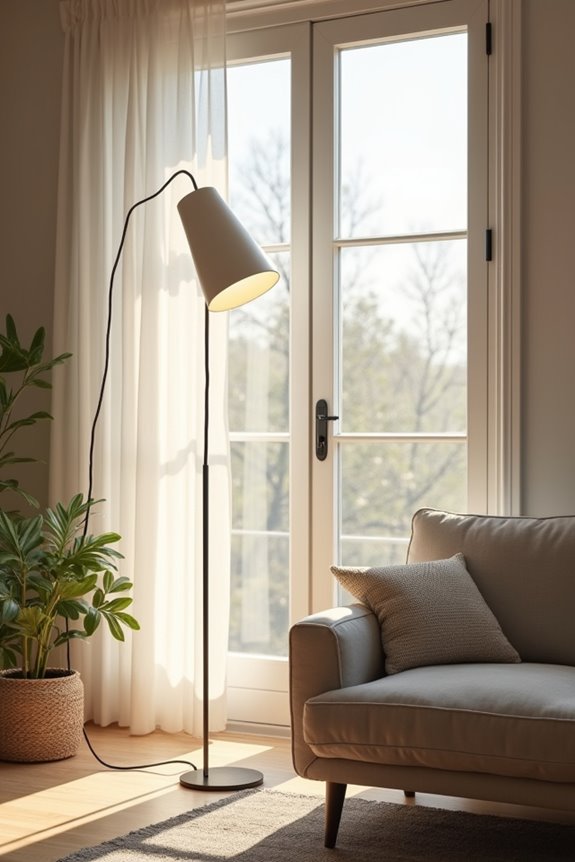
Natural light is one of those elements that significantly improves a living room, but it doesn’t work alone, especially when the sun dips lower in the sky or clouds roll in. I’ve found that positioning a floor lamp near a window creates an effective partnership between daylight and evening illumination. The trick is avoiding harsh glare by angling your lamp so light bounces off walls or ceilings, boosting ambient illumination without competing with natural light. I recommend using translucent shades that blend seamlessly during daytime hours, then investing in a dimming bulb for smooth transitions as evening arrives. This approach lets you honor daylight while building a comfortable refuge that welcomes you home, no matter the hour.
Sizing Your Lamp to Match Your Room
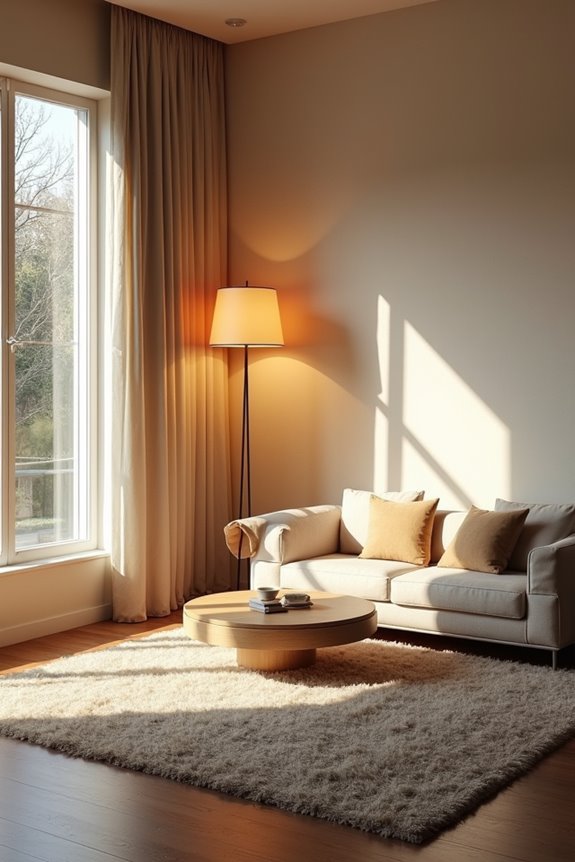
Getting the right lamp size for your living room isn’t just about aesthetics—it’s about making sure you’ve got enough light to actually see and feel comfortable in the space. I’ve learned that measuring my room’s dimensions helps me choose the perfect lamp height and lumens output. For ambient lighting, I aim for 20–30 lumens per square foot, which gives me a welcoming glow when relaxing. Your room size determines how many total lumens you’ll need—typically 1500–3000 for living areas. I consider my ceiling height too; taller ceilings mean I might need a taller lamp or higher output to reach every corner evenly. When I match my lamp to these specifics, the whole room feels well-lit, creating an atmosphere where I actually want to spend time.
Create a Multi-Lamp Plan for Balanced Lighting
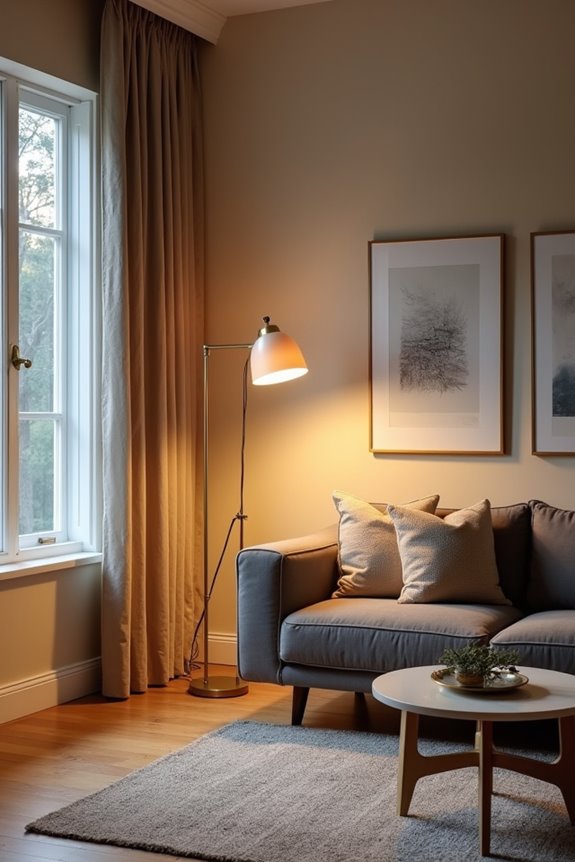
Why settle for a single lamp when layering your lighting can create a comfortable living room? A strategic trio of floor lamps builds the balanced lighting scheme you want. Position one near your sofa to anchor the main seating area, place another beside a reading chair for focused task light, and tuck the third in a corner or behind your sectional. This layered lighting approach fills dark pockets while keeping sightlines clear. Each lamp works together in your overall lighting scheme, preventing those awkward shadows that make a room feel incomplete. When you combine floor lamps thoughtfully this way, you’re not just illuminating—you’re creating an environment where you and your guests want to settle in.