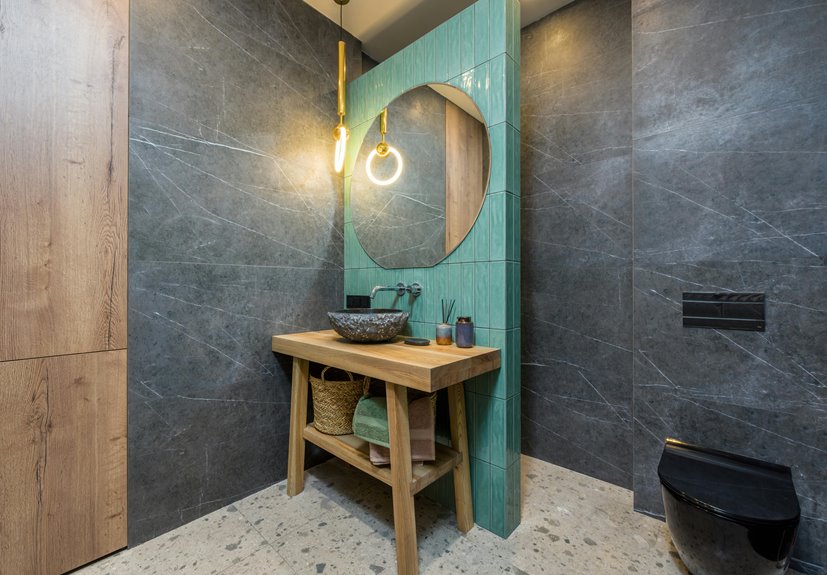
A bathroom vanity is your cabinet-and-countertop anchor—it stores toiletries, defines your space’s style, and sets the tone for daily routines. Choosing right means measuring your space carefully, evaluating storage needs, and deciding between freestanding, wall-mounted, or floating styles. You’ll want to consider sink configuration, budget (custom versus prefab), countertop materials, and hardware finishes that echo your home’s architecture. Get these fundamentals right, and you’ll discover how transforming this single fixture elevates your entire bathroom.
Measure Your Bathroom Vanity Space and Plan the Layout
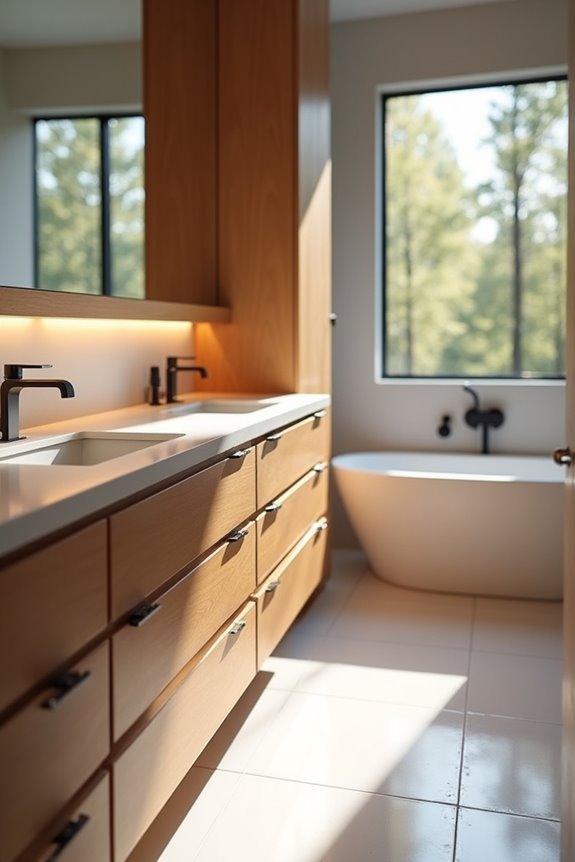
Before you fall in love with that gorgeous vanity you’ve spotted online, you’ll want to grab a tape measure and get serious about your bathroom’s actual dimensions. I’ve learned that measuring width, depth, and height prevents costly mistakes and regretful installations. You’ll check clearance for door swings and walkways, ensuring your vanity space doesn’t block movement or obstruct windows and outlets. I always account for existing plumbing alignment—it’s genuinely the backbone of smart layout planning. Consider your bathroom measurements carefully, noting where drawers and cabinet doors open freely. Plan for at least eighteen inches of clearance from the cabinet edge to your toilet’s center, meeting code requirements while maintaining proper spacing. This thoughtful approach transforms your vanity space into a functional, welcoming area that truly works for your life.
Assess Your Storage Needs Based on Bathroom Type
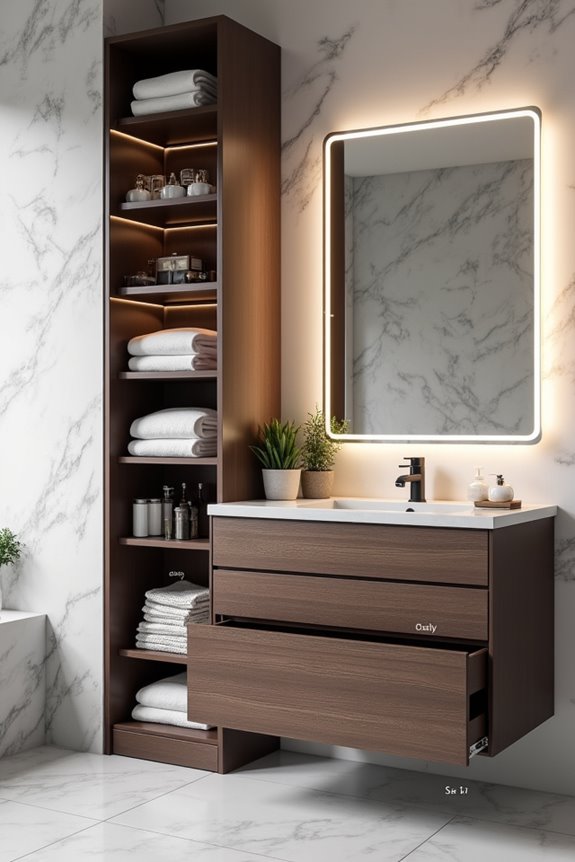
How much stuff are you actually keeping in your bathroom? I’ve learned that your storage needs really depend on your bathroom type, and honestly, matching your vanity storage to your lifestyle makes everything feel more organized and intentional.
Consider these storage solutions:
- Master baths benefit from ample drawers and cabinets for daily essentials and toiletries
- Powder rooms work best with compact storage that doesn’t overwhelm the space
- Kids’ bathrooms need mixed cabinetry with accessible countertop space for routines
I find drawers perfect for small items, while cabinets hide larger supplies beautifully. If you’re tight on space, linen towers and wall cabinets keep things elevated and uncluttered. Don’t overlook medicine cabinets either—they’re game-changer for maximizing storage without sacrificing your vanity footprint. When you assess what you’re actually storing, choosing becomes refreshing straightforward.
Decide Between Freestanding, Wall-Mounted, and Floating Vanities
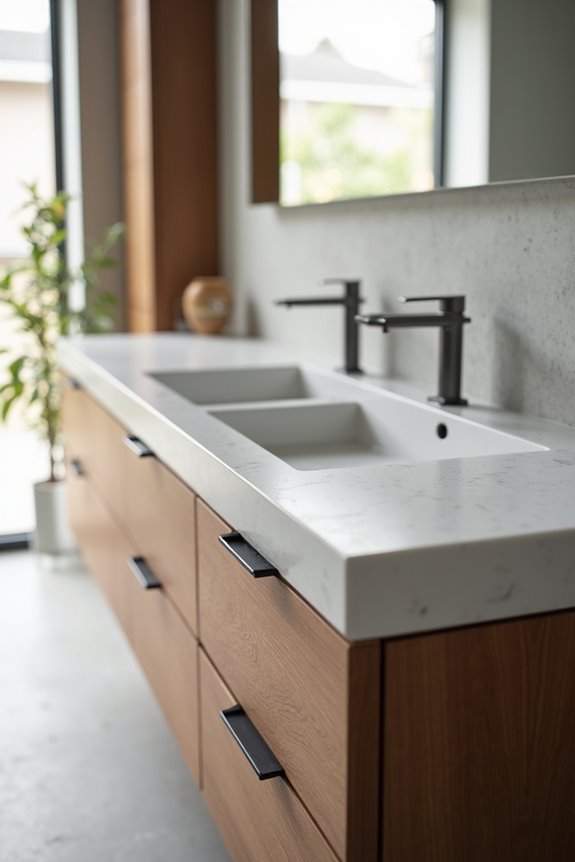
Once you’ve figured out what you’re storing, the next decision is where and how your vanity actually sits in the space. I’ve found that freestanding vanities offer classic charm with built-in storage space, working beautifully in small to medium bathrooms. Wall-mounted and floating vanities, though, create that coveted modern feel by keeping your floor visible and open. Floating vanities particularly excel at making rooms feel larger, though they demand careful plumbing coordination. Wall-mounted options visually enlarge spaces too, but you’ll sacrifice some storage compared to freestanding designs. Corner vanities smartly maximize tight spaces with single sinks. Ultimately, I’d encourage you to weigh your available space, storage needs, and design style together. That balance helps you choose vanities that truly fit your life, not just your bathroom.
Choose Your Single or Double-Sink Vanity Configuration
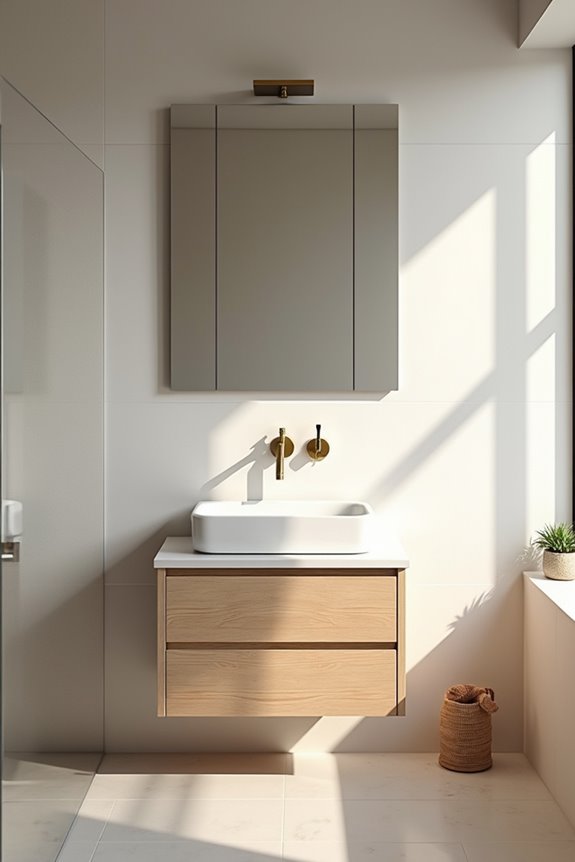
Why does one sink feel luxurious to some and cramped to others? Your vanity configuration fundamentally shapes your bathroom experience. I’ve found that choosing between single-sink and double-sink options depends entirely on your lifestyle and bathroom layout.
Consider these factors:
- Single-sink vanities work beautifully in guest bathrooms or smaller spaces, offering focused storage without overwhelming your room
- Double-sink vanities transform morning routines for couples, eliminating competition while providing ample counter space for shared essentials
- Trough-style dual sinks solve compact layouts elegantly, offering two faucets in one wider basin for simultaneous use
Your plumbing constraints matter too. I’d measure door swings, drawer clearance, and toilet spacing carefully before committing. Think honestly about how many people use your bathroom simultaneously. This realistic assessment prevents regret and ensures your vanity configuration actually serves your daily rhythm.
Budget Now: Custom vs. Prefabricated Vanities
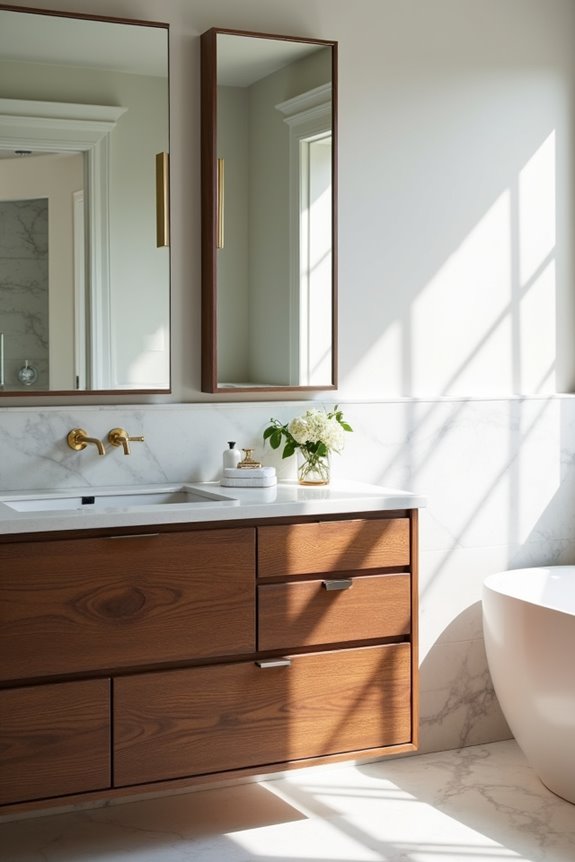
Now that you’ve settled on your sink configuration, it’s time to face the question that’ll shape your entire budget: should you invest in a custom vanity built specifically for your bathroom, or go with a prefabricated option that’s ready to install?
I’ll be honest—custom vanities demand deeper pockets and patience. You’re paying for tailored design, complete control over every element, and a perfect fit for unusual spaces. Prefab vanities, though, offer relief for tight budgets and timelines. They come standard-sized with preset finishes and hardware, meaning faster installation and lower upfront costs.
Consider your constraints honestly. Does your bathroom have quirky dimensions or specific design dreams? Custom might justify the investment. Working within standard measurements and wanting quick results? Prefab delivers practical solutions without compromise.
Match Your Bathroom Vanity Style to Your Home’s Architecture
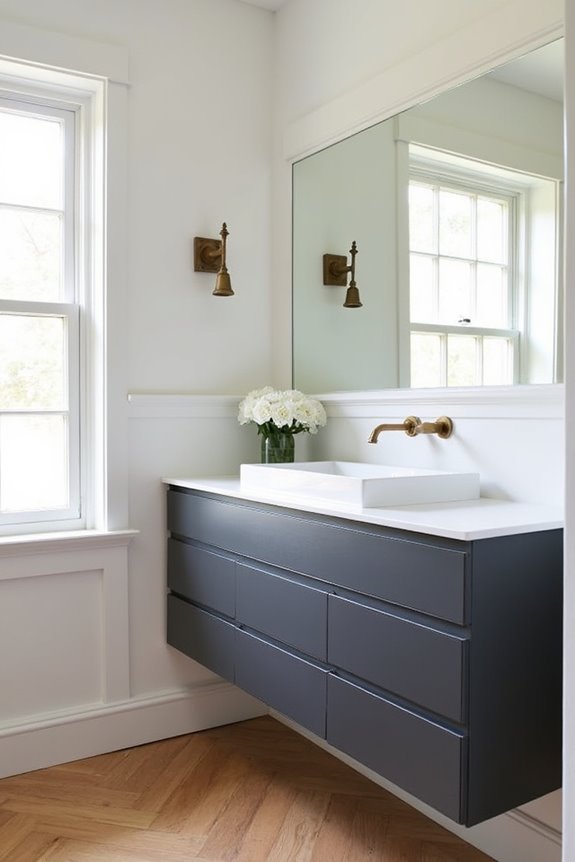
I’ve found that matching your vanity style to your home’s architecture is where the real magic happens, transforming a functional piece into something that feels purposeful and cohesive. Whether you’re drawn to traditional furniture-like bases with ornate details, sleek modern floating designs that seem to defy gravity, or transitional options that bridge both worlds, your choice should echo the character of your home rather than fight against it. I’ll walk you through how each style—traditional, modern minimalist, and transitional—can either amplify or undermine your bathroom’s architectural story, helping you make a decision that feels authentically yours.
Traditional Architecture Compatibility
How does your vanity fit into the story your home’s telling? When you’ve got traditional architecture, I’ve found that choosing a traditional vanity compatibility matters tremendously. Your furniture-style vanity should whisper the same language as your home’s bones.
Here’s what I consider:
- Warm wood tones like oak, maple, or cherry ground the space, echoing stained woodwork throughout your home
- Classic hardware—rounded knobs and decorative pulls—coordinates beautifully with period fixtures and existing bathroom elements
- Substantial cabinetry with integrated mirrors creates that furniture-like presence that belongs in traditional spaces
I notice the best traditional vanities align with your tile patterns, molding details, and overall color palette. This harmony doesn’t happen by accident. When everything speaks the same architectural dialect, your bathroom doesn’t feel like an afterthought—it feels intentional, cohesive, and genuinely yours.
Modern Minimalist Design Alignment
When you’re living in a modern minimalist home, your vanity shouldn’t fight for attention—it should disappear into the design, becoming part of the architecture itself. I’ve found that a floating vanity does exactly that, creating an open, airy feel while emphasizing clean horizontal lines. Pair it with sleek finishes in white, gray, or warm wood tones, and you’re instantly aligned with contemporary spaces.
I love how an integrated sink eliminates visual clutter, keeping surfaces uninterrupted and calm. Push-to-open mechanisms replace traditional hardware, maintaining that streamlined aesthetic you’re after. Choose matte laminates or solid-surface countertops—they resist visual heaviness and feel modern without pretension.
Transitional Style Bridge Options
What if your home doesn’t quite fit into one design camp or the other? A transitional vanity might be your perfect answer. I’ve found these pieces brilliantly bridge the gap between classic warmth and contemporary simplicity.
Consider these key features:
- Neutral finishes in whites, creams, and light wood stains that harmonize with virtually any tile or countertop
- Hardware pulls that stay understated and simple, avoiding ornate details while maintaining character
- Storage and counter space paired with either wall-mounted or furniture-style configurations for flexible functionality
What I love about transitional vanities is their honest balance. They don’t demand you choose between traditional elegance and modern clean lines—they invite both into the same room. The mix of natural wood tones with simple silhouettes creates something genuinely timeless, letting your bathroom feel both grounded and fresh.
Select Your Vanity Sink Type and Countertop Material
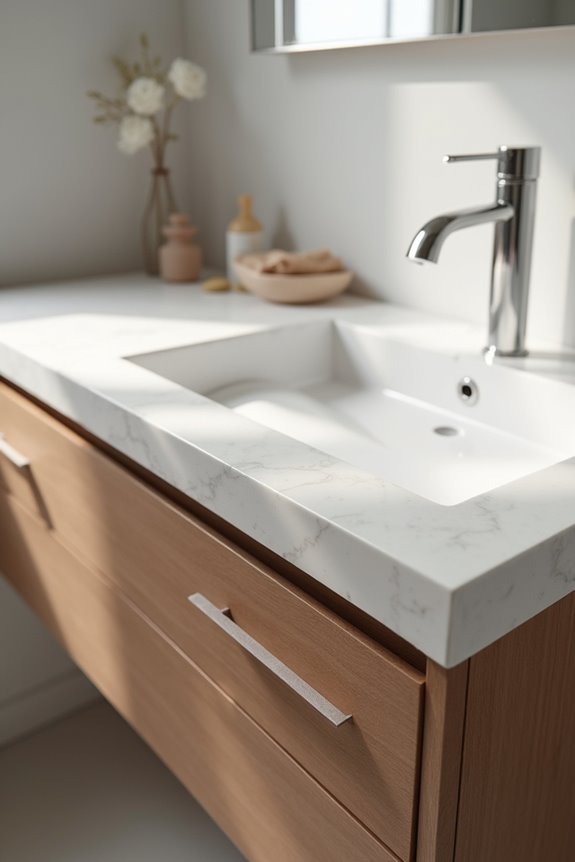
Your choice of sink and countertop defines both how your bathroom functions and how it looks, so it’s worth taking time to understand your options. I’ve found that pairing the right sink type with compatible countertop material makes all the difference.
Consider your vanity top first—whether you’re selecting an integrated sink or a separate one affects countertop compatibility. Undermount sinks offer sleek aesthetics and maximize counter space, while vessel sinks serve as striking focal points, though they demand more room.
For countertop material, quartz and solid surface options appeal to those wanting low-maintenance durability. If you’re drawn to luxury, marble and granite deliver stunning character, though they require periodic sealing. I recommend matching your sink type with materials that work together seamlessly, ensuring your vanity functions beautifully for years ahead.
Pick Hardware, Mirror Placement, and Finishing Touches
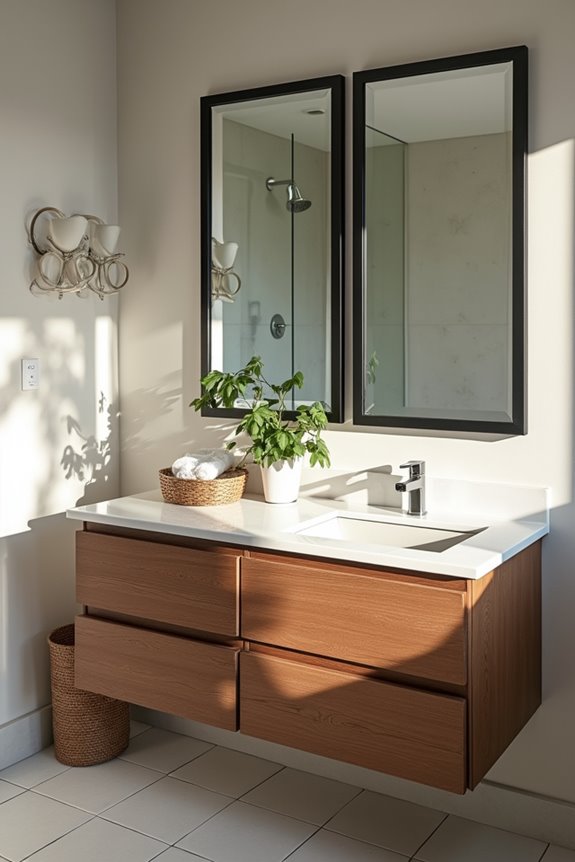
How you finish your vanity—from the gleam of its hardware to the placement of its mirror—transforms it from merely functional to genuinely intentional.
How you finish your vanity—from hardware gleam to mirror placement—transforms it from functional to genuinely intentional.
I’ve found that coordinated finishes create the cohesive look you’re after. Consider these elements:
- Hardware selection: Polished chrome, brushed nickel, black, brass, or bronze should echo your faucet and countertop choices
- Mirror placement: Position your mirror to complement vanity width and height, enhancing both grooming tasks and spatial balance
- Finishing touches: Cabinet knobs, towel bars, tissue holders, and robe hooks tie everything together seamlessly
Adding a coordinated medicine cabinet provides hidden storage while reinforcing your vanity style. Lighting—whether sconces or pendants—should illuminate grooming areas effectively while matching your hardware finish. When these elements align, your bathroom feels intentionally designed, not assembled. That’s when a vanity truly becomes yours.
Finalize Your Vanity Choice: Timeline and Next Steps
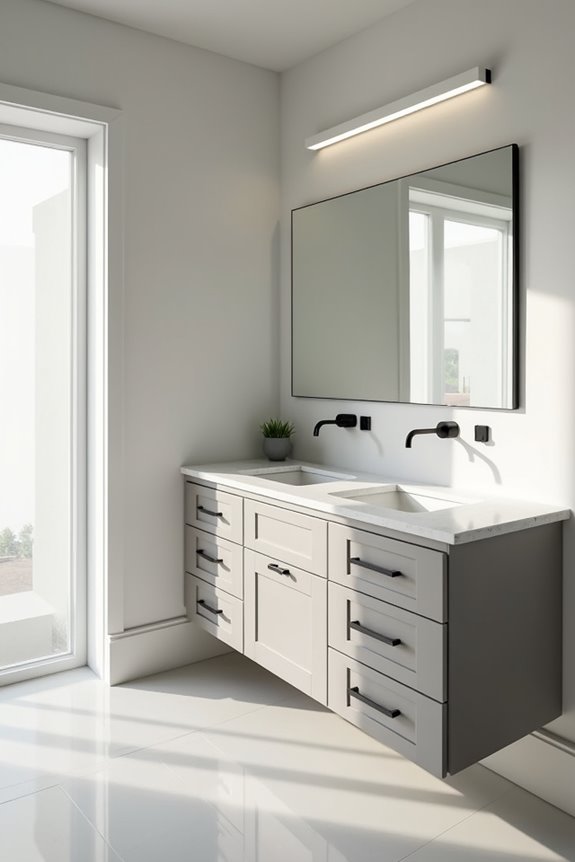
Now that you’ve settled on your vanity style, I’m guiding you through the final steps that’ll lock everything into place—measurement verification, budget confirmation, and a realistic installation timeline. You’ll want to schedule professional measurements to ensure your chosen vanity fits snugly within your bathroom’s dimensions while accounting for door swings and plumbing access, since those standard widths and depths don’t account for every layout quirk. From here, we’re mapping out your countdown: final design sign-off, order placement, fabrication, and installation day, plus I’ll show you how to build in buffer time for any surprises that pop up along the way.
Measurement and Space Verification
Before I commit to any vanity choice, I’ve got to face the reality of my bathroom’s dimensions—because a beautiful sink means nothing if it blocks the door or crowds my shower. I’m measuring width, depth, and height carefully, considering how standard vanity widths range from 12 to 84 inches with typical depths of 17 to 24 inches.
- Verify plumbing alignment matches my chosen vanity dimensions to avoid costly relocations
- Map traffic flow around toilets and showers using visualization techniques like cardboard boxes
- Account for door swings and clearance around outlets before finalizing space planning
I’m also checking comfort heights—typically 30–32 inches, though 36-inch comfort-height options work beautifully for my needs. This verification step feels grounding; I’m not just choosing aesthetics, but crafting a functional space that welcomes me daily.
Budget and Material Selection
With my space mapped and dimensions locked in, the real decision-making begins—what’ll I actually spend, and what materials can handle the moisture and daily wear my bathroom throws at them? I’m weighing budget against durability, knowing solid wood costs more but lasts longer than MDF or melamine. For countertop options, quartz tempts me with its low-maintenance appeal, though marble’s elegance demands regular sealing. I’m comparing prefab vanities—cheaper, quicker—against custom builds that match my exact needs and aesthetic. The sink choice matters too; undermount saves counter space, while vessel sinks sacrifice practicality for style. Balancing vanity materials with realistic costs means choosing quality where it counts, accepting trade-offs elsewhere, ensuring my bathroom investment survives years of steamy showers and daily living.
Installation and Timeline Planning
Once I’ve settled on my vanity choice, the real logistics kick in—and honestly, this is where dreams meet the hard constraints of my actual bathroom. I need to nail down vanity dimensions that fit my space while respecting code requirements like that essential 18-inch clearance from the toilet. Here’s what I’m tackling:
- Confirming my installation timeline by coordinating plumbing hookups with my vanity type—whether freestanding, wall-mounted, or built-in
- Scheduling layout validation using a mock-up to test traffic flow and outlet placement before ordering
- Reviewing warranty and hardware options, ensuring soft-close features and integrated electrical components are covered
I’m also deciding if I’m purchasing with a top included, since countertops need proper overhang. This upfront planning prevents expensive delays later.