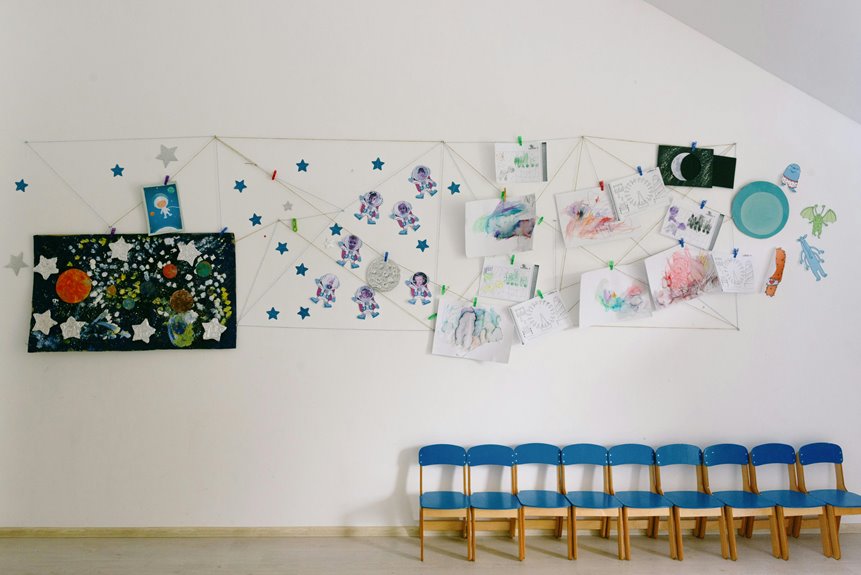
I’ve found three approaches for empty walls in your living room. First, one oversized canvas—think 3’x5’—anchors your room while a discrete picture light lets it shine.
Second, open shelving with woven baskets and small sculptures adds function and texture without clutter.
Third, a restrained gallery wall with fewer, larger pieces and minimal spacing between frames creates breathing room that reads as confident.
Each strategy works best when it echoes your dominant colors and aligns with furniture below for visual harmony. The right choice depends on whether you want visual drama, practical storage, or curated display—and there’s more to discover about executing each approach.
One Bold Artwork: Go Big With Impact
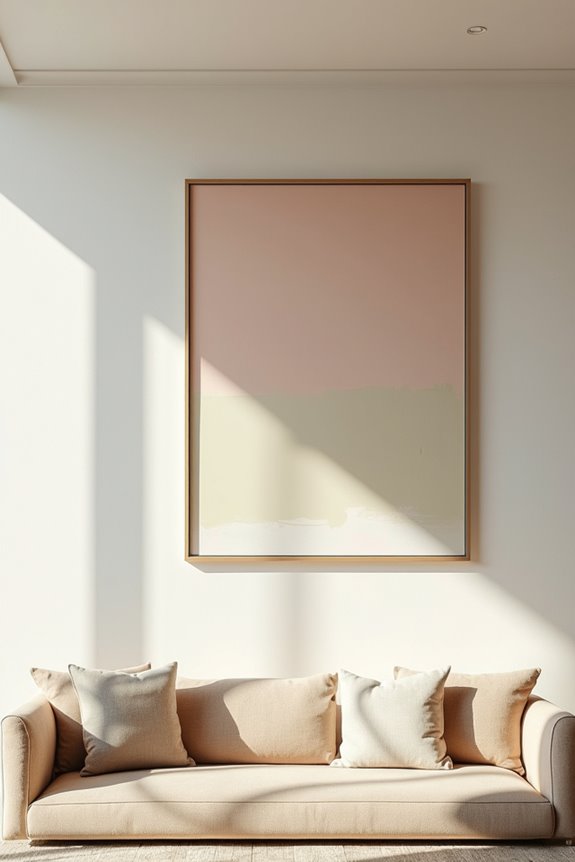
Why settle for timid when you can command attention? Choosing one oversized canvas—think 3’x5′ or larger—makes your wall space a focal point. This bold artwork becomes the room’s anchor, eliminating the need for cluttered gallery wall dynamics.
Here’s my strategy: select large-scale art echoing your room’s dominant colors—navy, olive, or warm ochre—to unify your space. The color strategy ties everything together. I keep lighting simple with a discrete picture light, letting your piece shine without competition.
The key? Negative space. I resist filling adjacent areas with additional art, which preserves the impact. When I align my artwork’s center with furniture below, the room balance feels harmonious and deliberate. This approach creates a sense of belonging through confident, thoughtful design.
Shelves and Storage: When Your Wall Needs to Work
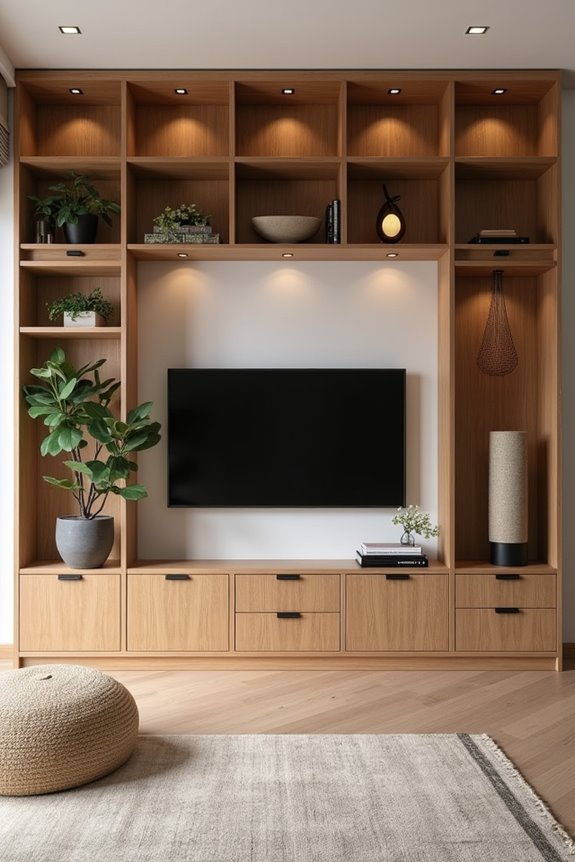
When does a blank wall become an opportunity instead of a problem? Built-in shelving converts empty space into something purposeful and functional. Open shelving displays favorite books, plants, and treasured objects while maximizing vertical space—something valuable in homes where square footage is limited.
Layer shelves with texture: woven baskets hold hidden items, vases add visual interest, and small sculptures break up the monotony. A storage bench anchors the entry zone while providing seating and concealed storage. For open-plan areas, modular shelving systems maintain flow without sacrificing function.
The key? Multifunctional pieces work harder than single-purpose furniture. When your wall needs to work, it doesn’t just fill space—it serves your needs while displaying what matters to you.
A Gallery Wall: Design With Fewer, Bigger Pieces
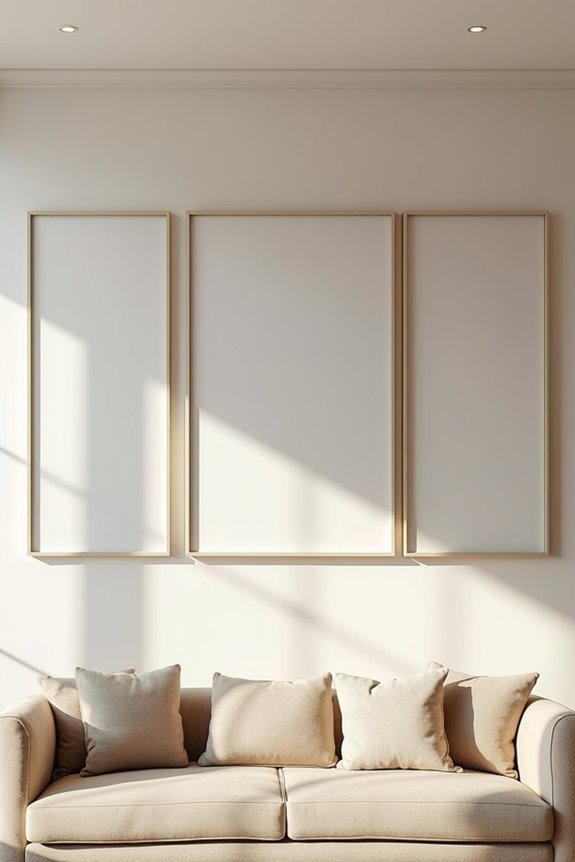
How’d you know when to stop adding frames to your wall? I learned that restraint creates belonging—choosing fewer, larger pieces gives a room a considered design rather than visual clutter. I anchor my gallery with one dominant piece, like a single large print or statement painting, then support it with just one or two supporting frames for gallery cohesion. This approach gives my focal point room to breathe.
I keep spacing minimal, no more than four inches between frames, so everything reads as unified. For lighting, I’ve discovered that a picture light covering two-thirds coverage illuminates my large-scale art without overwhelming the space. This intentional strategy—pairing quality over quantity with thoughtful lighting—makes my living room feel deliberately designed, inviting guests into my carefully considered world.