
I’d recommend eggshell or satin for most living rooms.
Eggshell gives you a warm, inviting glow that hides wall imperfections well, while satin delivers brighter reflectivity that energizes spaces with plenty of natural light.
Your choice depends on your room’s layout and lighting—dim rooms suit eggshell’s softer feel, while open-concept spaces benefit from satin’s gentle shimmer.
Satin cleans easier and resists stains better, though it costs more initially.
Test samples under your actual lighting throughout the day to see which finish works best for your living room.
What Paint Sheen Means for Your Living Room
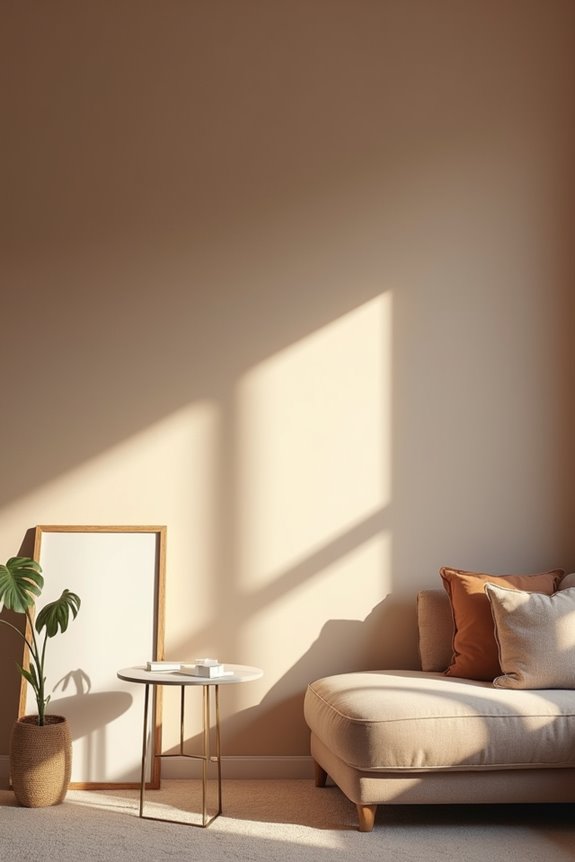
Have you ever noticed how some living rooms feel inviting and calm while others seem to bounce light everywhere? That’s where paint sheen comes in—it’s the glossiness level that fundamentally shapes your space’s personality.
I’ve learned that sheen affects more than just appearance. It influences how your walls interact with light reflection, durability, and the overall ambiance you’re creating. A flat finish absorbs light for a calm, intimate feel, while eggshell offers a subtle glow that enhances color without overwhelming the room. Satin takes it further, adding that gentle shimmer well-suited for open-concept spaces.
Here’s what matters most: higher sheens like satin provide better durability and easier cleaning, but they can highlight imperfections. Lower sheens forgive wall flaws while creating depth. Understanding these differences helps you choose a finish that works with your lifestyle and design vision.
Eggshell vs. Satin: Which Finish Works Best for Your Living Room?

When I’m choosing between eggshell and satin for my living room walls, I’ve got to weigh how hard I’m willing to work keeping them clean against the mood I want to create. Eggshell gives me that forgiving, calm surface that hides my imperfect paint job and minor dust, but satin’s superior durability and stain resistance work well when I’ve got high-traffic areas or sticky fingerprints to worry about. Let me walk you through the durability, light reflection, and practical cost differences so you can pick what actually works for your space and lifestyle.
Durability and Maintenance Differences
Because you’re likely spending countless hours relaxing in your living room, you’ll want paint that actually holds up to the wear and tear of daily life—and that’s where eggshell and satin truly show their differences. I’ve found that satin offers superior durability and washability, making it ideal if you’ve got kids or pets creating daily messes. Its higher-sheen finish resists stains better, though I’ll be honest: it’ll show fingerprints more readily than eggshell.
Eggshell provides solid durability with gentler maintenance demands. I appreciate how it forgives minor imperfections while still being wipeable enough for typical living room needs.
Here’s my takeaway: prioritize satin if cleanability matters most, but choose eggshell if you prefer a softer aesthetic without sacrificing reasonable durability. Either way, consistent cleaning extends both finishes’ lifespan significantly.
Light Reflection and Ambiance
Now that you’ve got a handle on which finish holds up better against life’s messiness, it’s worth considering how each one actually *looks* in your living room—because the right sheen does more than just resist stains; it shapes the entire mood of your space. I’ve found that eggshell creates a warm, inviting glow, softly bouncing light without drawing attention to every wall imperfection. Satin, meanwhile, delivers brighter reflectivity that energizes rooms with good natural light, though it can emphasize flaws more readily. In my open-concept living areas, I favor eggshell on walls for balanced depth, reserving satin for trim accents. For high-traffic durability without sacrificing calm ambiance, eggshell remains my preference—it’s the reliable choice that keeps your space looking polished.
Cost and Application Considerations
How much are you willing to invest in your living room’s finish—and how much effort do you want to spend applying it? I’ve found that eggshell offers genuine budget-friendly appeal without sacrificing refinement, while satin demands a higher upfront cost for superior durability and cleanability. If you’re choosing between them, consider your lifestyle honestly. Eggshell hides imperfections beautifully, making touch-ups forgiving, though its lower sheen means fingerprints show more readily. Satin resists stains better and cleans easier, protecting your investment long-term. When applying either finish, I recommend painting trim first, then walls second, so sheen remains consistent across all surfaces. This approach prevents the frustration of mismatched appearances, ultimately saving you time and creating polished results that feel worth every penny spent.
How Lighting and Layout Change Your Sheen Look
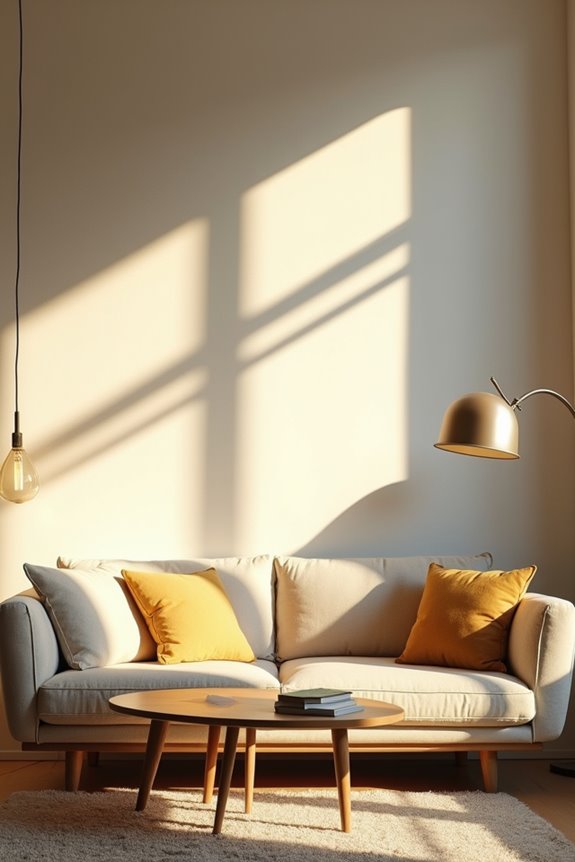
When you’re standing in your living room at different times of day, you’ve probably noticed how the same wall can look completely different—sometimes gleaming, sometimes muted, sometimes almost flat. That’s lighting at work, and it fundamentally changes how your sheen appears. Natural light actually boosts the gloss of mid-range sheens, while dim evening lighting dulls them considerably. I’ve learned that open-concept layouts demand special attention; eggshell or satin on walls balances reflected light from ceilings and adjacent spaces beautifully without creating overwhelming glare. Your layout matters too—rooms with multiple light sources benefit from lower sheens that minimize reflection. By considering both your lighting conditions and spatial flow, you’ll choose a sheen that looks sophisticated at any hour, creating the ambiance you’re seeking.
Durability and Cleanability in High-Traffic Living Rooms
If you’ve got kids, pets, or just a household that sees constant foot traffic, you know how quickly walls accumulate fingerprints, dust, and the occasional scuff mark. I’ve learned that choosing the right sheen dramatically impacts how well your walls hold up.
For high-traffic living rooms, I recommend:
For high-traffic living rooms, satin finishes offer the best balance of stain resistance, wipeability, and visual appeal for busy households.
- Satin finishes offer excellent stain resistance and wipeability while maintaining a soft, reflective glow
- Eggshell provides a balanced middle ground between cleanability and appearance, hiding imperfections better
- Semi-gloss delivers superior durability and easy cleaning, though it highlights wall flaws more readily
- Flat or matte finishes aren’t practical for busy spaces—they’re difficult to clean
I’ve found that pairing your chosen sheen with gentle, non-abrasive cleaning preserves both color and sheen over time. Satin works well between durability and visual appeal for families like yours.
Coordinating Walls and Trim
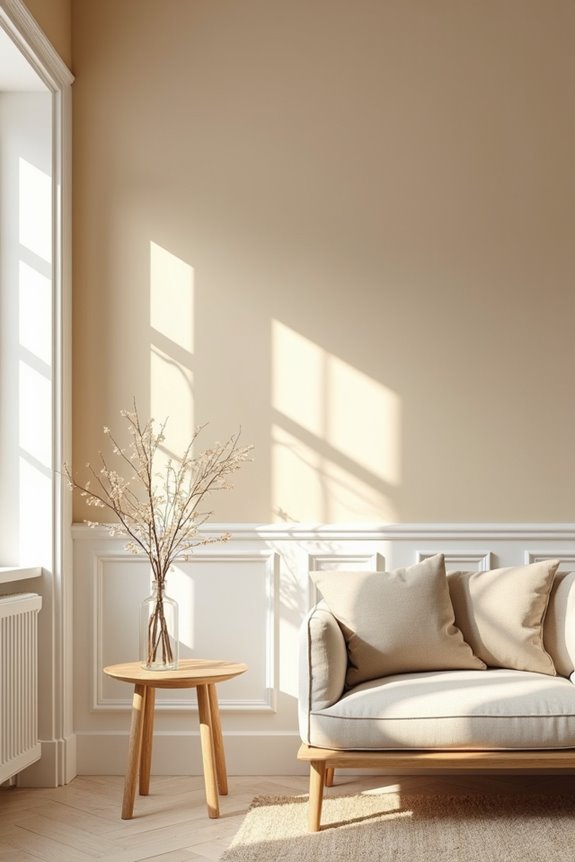
Once you’ve settled on a sheen for your living room walls, coordinating your trim—baseboards, crown molding, and door frames—requires thoughtful consideration.
Pairing flat or eggshell walls with satin or semi-gloss trim creates visual contrast while maintaining cohesion. The lower sheen on walls feels inviting and hides imperfections, while glossier trim stands out visually and handles everyday wear better.
| Wall Sheen | Trim Sheen | Best For | Visual Effect | Maintenance |
|---|---|---|---|---|
| Flat | Semi-gloss | Traditional spaces | Subtle elegance | Basic cleaning |
| Eggshell | Satin | Modern homes | Balanced glow | Easy wiping |
| Eggshell | Semi-gloss | Open-plan living | Enhanced architecture | High durability |
| Flat | High-gloss | Contemporary designs | Maximum contrast | Superior cleanability |
| Matte | Satin | Cozy retreats | Soft sophistication | Moderate care |
This approach allows your trim to stand out while your walls provide color and comfort.
Living Room Paint Sheen Mistakes to Avoid

I’ve learned that three common mistakes can derail your living room’s paint sheen choice, and I want to help you sidestep them. First, you might be tempted by high-gloss finishes thinking they’ll look polished, but they’ll actually bounce light around like a mirror and expose every wall imperfection—not the sophisticated look you’re after. Second, I often see people overlook how their wall texture or the natural light streaming through their windows will interact with their chosen sheen, which can completely change how the color appears throughout the day.
Choosing Too Much Shine
Why do so many of us assume that glossy walls equal polished living spaces? I’ve learned the hard way that high-sheen finishes actually work against us in our living rooms. Here’s what I discovered:
- High-gloss and semi-gloss paints reflect excessive light, creating uncomfortable glare
- Every dust particle and wall imperfection becomes glaringly visible under bright conditions
- Strong natural light intensifies the problem, making colors appear washed out
- Mismatched sheens on large walls feel visually busy and chaotic
Instead, I’ve found that eggshell or satin finishes strike the perfect balance. They offer just enough light reflection for depth and sophistication, while maintaining that soft glow we’re after. This sheen guide improved my living room from showroom-sterile to inviting. Your walls don’t need to shine to feel finished—they need to feel like a real home.
Ignoring Wall Texture
Textured walls demand respect when you’re choosing a sheen, yet most of us overlook this connection entirely. I learned this the hard way when I picked satin for my bumpy living room walls—the light reflection highlighted every imperfection like a spotlight on stage. That’s when I realized texture and sheen work together, not independently.
Flat or matte finishes actually hide texture well, but they’re fragile in high-traffic spaces. Eggshell offers that middle ground: enough durability for family living while forgiving textured surfaces. For open-concept homes, I’d pair eggshell walls with slightly glossier trim for subtle depth.
Before choosing your sheen, run your hand across your walls. Bumpy texture? Choose eggshell. Smooth walls? Then satin’s light reflection works effectively without revealing your surface imperfections.
Neglecting Light Reflection
How much light does your living room actually get? I’ve learned that ignoring light reflection is a costly mistake I don’t want you to repeat.
Here’s what I’ve discovered about sheen and brightness:
- Matte finishes minimize reflection, making walls feel deeper, but they won’t brighten darker rooms
- Eggshell and satin finishes balance light beautifully, enhancing brightness without creating glare
- Semi-gloss or high-gloss finishes create hot spots in open-concept spaces flooded with natural light
- Regular maintenance becomes essential with higher-sheen options to prevent fingerprints from showing
I’ve found that open-concept living rooms with abundant sunlight work well with soft satin, while matte works wonderfully in dimmer spaces. The key? Match your sheen to your room’s actual lighting, not what you assume it has. This simple consideration changes how your space feels.
Test Living Room Paint Sheen Samples Before Buying
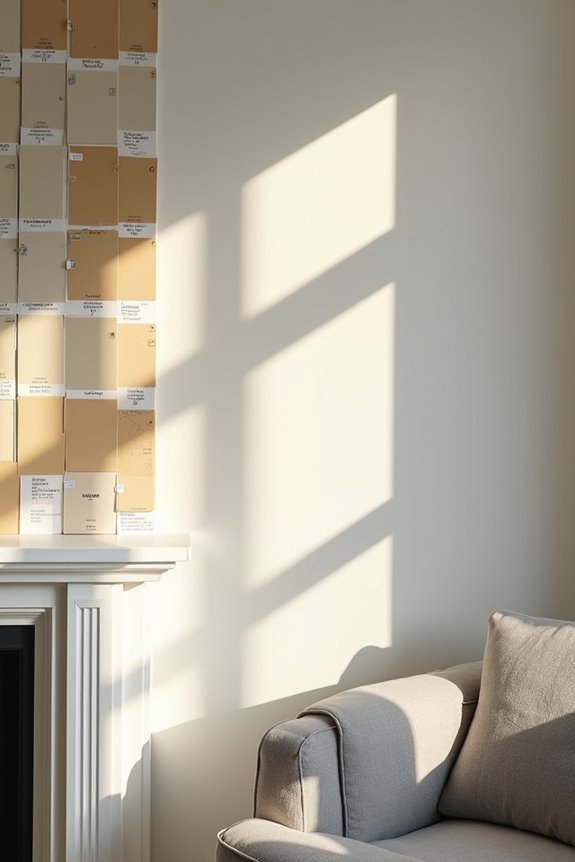
Before you commit to painting your entire living room, pick up sample pots and test them on your actual walls—it’s one of the smartest moves you can make. Start small by painting test patches of flat/matte, eggshell, satin, and semi-gloss finishes side by side. Watch how each paint sheen performs under your specific lighting throughout the day. You’ll notice how flat finishes hide imperfections beautifully while satin offers that sophisticated shimmer. Semi-gloss delivers durability for high-traffic areas. This testing phase reveals which sheen matches your living room’s personality and practical needs. Spending an afternoon observing samples beats second-guessing your choice for months afterward.
When to Choose Flat or Matte

If you’re drawn to walls that whisper rather than shine, flat or matte finishes might be your answer. I’ve found these sheens create a comfortable canvas for living rooms where atmosphere matters most.
Here’s when they truly excel:
- Hiding imperfections: Both finishes mask wall flaws beautifully, especially on older surfaces or textured walls
- Soft lighting control: They absorb light rather than bounce it, creating intimate, warm ambiance
- Visual depth: The near-sheen-free appearance maintains texture while preventing harsh reflections
- Aesthetic preference: If you prefer understated elegance over glossy drama, these finishes deliver genuine character
The trade-off? Durability isn’t their strongest suit. Flat and matte resist scuffing less than glossier options, making them better suited for lower-traffic spaces. Still, when you prioritize that whispered sophistication over maximum durability, this finish choice works well for your home.