I’d start by positioning your TV at eye level—roughly where your eyes naturally land when you’re seated—so your neck stays relaxed during those long viewing sessions. Next, I’d measure your seating distance and multiply it by 1.5 to 2.5 times the TV’s diagonal size for that sweet spot. Then I’d consider wall-mounting versus a stand, plan your outlets beforehand, and keep the screen away from windows to avoid glare. Finally, I’d treat your TV as support to your room’s design, not its star, and maintain clear traffic flow around your furniture. Each decision builds on the last, revealing how they affect your whole space.
Start With Eye Level and Viewing Distance
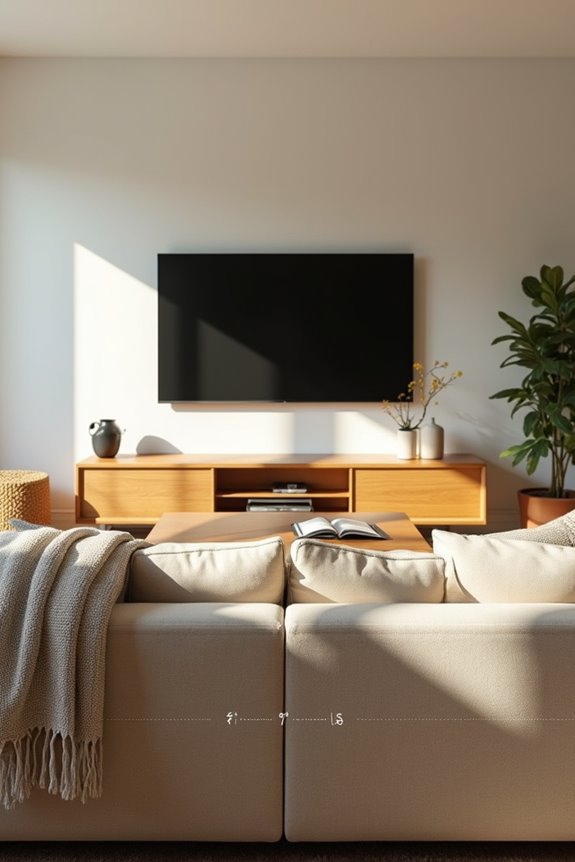
The foundation of great TV placement comes down to one thing: positioning your screen so it aligns naturally with your eyes when you’re settled into your favorite spot. I’ve learned that your eyes should land at or just below the screen’s middle—this keeps your neck relaxed and prevents that annoying strain that creeps in during marathon viewing sessions.
Here’s what I do: I measure my seating distance, then multiply it by 1.5 to 2.5 times the TV’s diagonal size. This sweet spot keeps you comfortable without squinting or leaning forward. When you nail this alignment, your whole body settles in naturally, your posture straightens, and you can actually watch without fighting discomfort. That’s the comfort we’re all after.
Choose Wall-Mounted or Stand-Based First
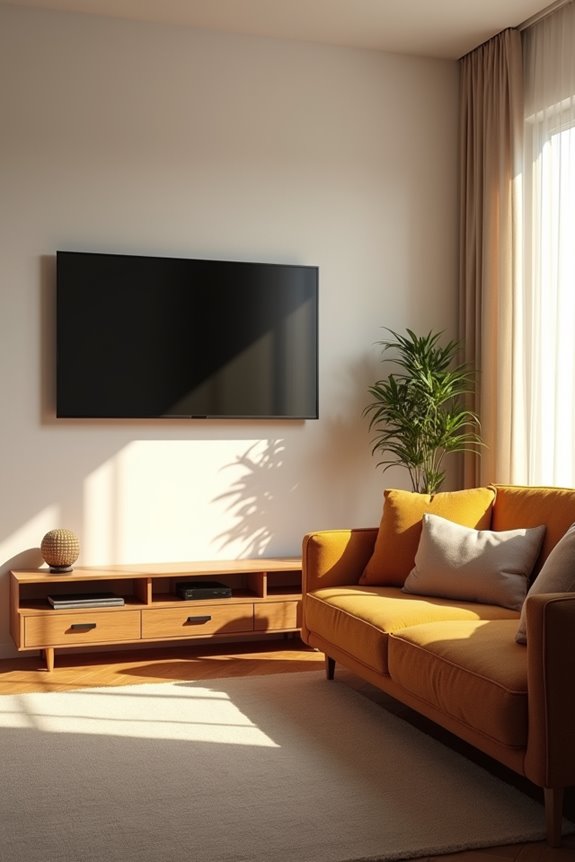
Once you’ve nailed down where your eyes should land, the next decision is how you’ll actually get your TV there—and honestly, this choice shapes everything else about your setup. I’ve found that wall mounts create a sleek, modern look, especially if you’re working with limited floor space. They let you adjust your viewing angle easily, which means everyone’s comfortable no matter where they’re sitting. On the flip side, a TV stand gives me flexibility I appreciate. I can reposition it without drilling holes, plus I get bonus storage for my media players and decor. Think about your lifestyle: Do you want that minimalist, clutter-free vibe? Or do you prefer adaptability and hidden cable management? Your answer determines which direction you’ll go.
Position Away From Windows and Glare
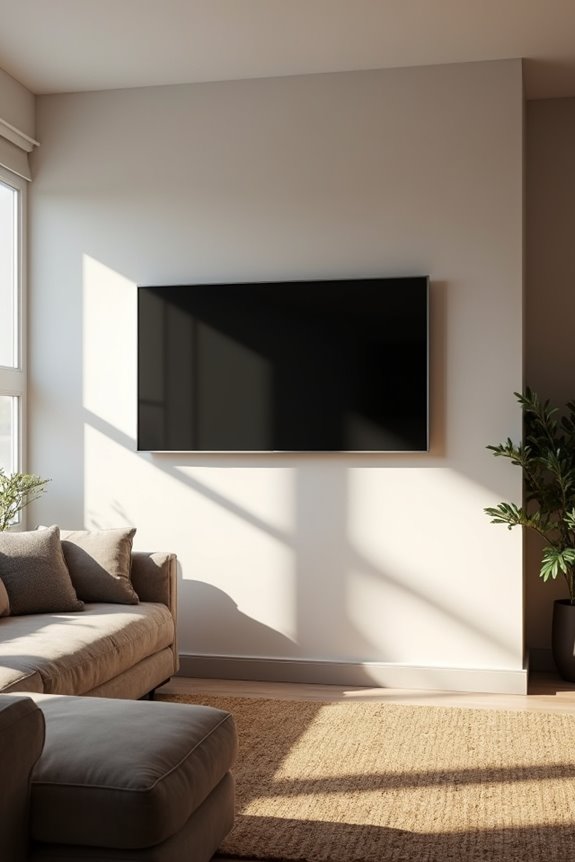
Why does your TV picture look washed out when afternoon sun floods your living room? Glare is the problem, and it’s one of the biggest obstacles to good viewing. Position your TV away from direct windows whenever possible. If that’s not feasible, use blinds or curtains to control natural light throughout the day. The angle matters too—position your screen so sunlight doesn’t hit it during peak hours. Your viewing angle should align with the screen’s center at or slightly below eye level, which reduces stray reflections while keeping you comfortable. Anti-glare screen options exist as well, though thoughtful placement solves most problems effectively.
Plan Outlets and Cable Routes Before Deciding
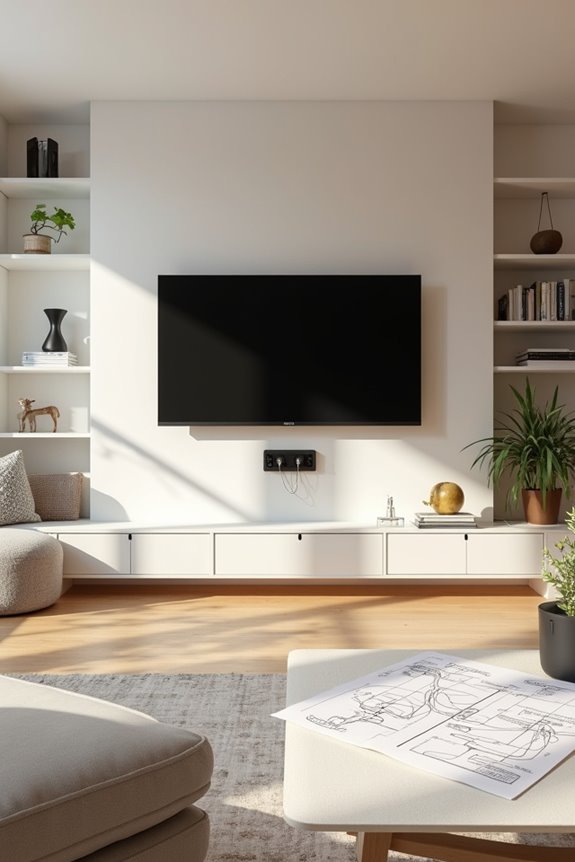
How many times have you crammed your TV setup into a corner, only to realize you’d need an extension cord stretching across your living room like an electrical snake? Planning your outlets and cable management upfront makes a real difference.
Before you decide on your TV’s location, identify all the power points you’ll need—for your television, gaming consoles, and sound systems. This prevents those messy cords from dominating your space. Strategically place outlets near your chosen spot, so hidden cords run discreetly behind walls or within cabinetry, keeping your viewing area clean and organized.
Thinking ahead matters too. Consider future device additions, so you won’t rearrange furniture just to plug something in. By prioritizing accessibility to power points, serviceability and upgrades become straightforward rather than frustrating.
Keep Your TV’s Spot Out of Traffic Lanes
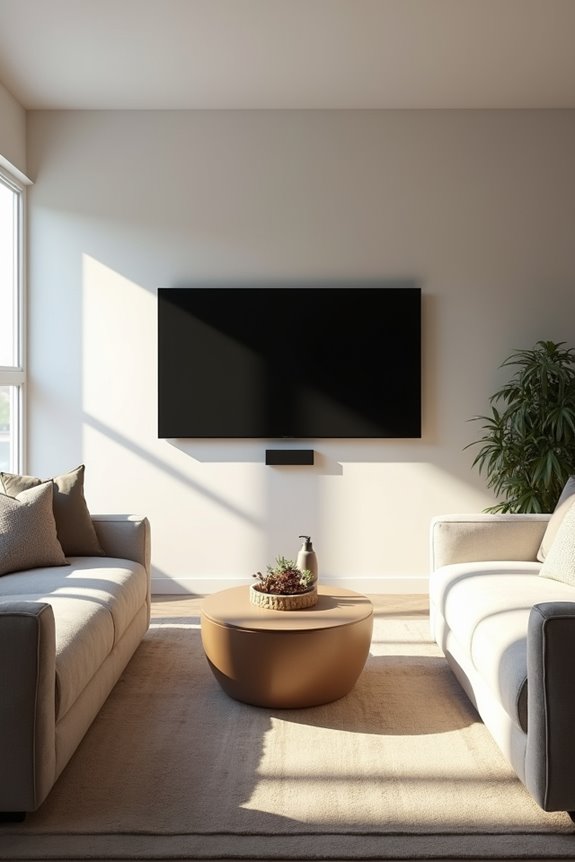
I’ve learned that placing your TV away from main traffic lanes creates a more functional living room, rather than one where people constantly shuffle past the screen. When I position mine strategically—tucked into an alcove or against a wall perpendicular to the primary walkway—I notice how much more relaxed everyone feels, without that subtle tension of interrupting others’ views or blocking someone’s path to the kitchen. By considering your room’s natural flow, you’ll find that sweet spot where the TV sits comfortably out of harm’s way, keeping both your screen and your guests protected from accidental bumps and distracted viewing.
Traffic Flow Obstruction Prevention
When you’re arranging your living room, there’s something you might not immediately consider: whether your TV placement creates an invisible obstacle course for everyone moving through the space. I’ve learned that thoughtful TV placement means positioning your screen so traffic flow naturally guides people around it, not through your viewing angles. When I wall mount my TV, I don’t position it directly in pathways between doors and seating areas. I think about how my family moves through the room daily, then position furniture to organize the space without blocking sightlines. Low-profile stands keep cords hidden from foot traffic zones. By considering these practical elements before installation, you’ll create a living room where everyone moves freely while enjoying quality screen time together.
Clear Pathways Around Viewing
Where does your family naturally walk when they’re moving through the living room? Identifying these pathways matters for smart TV placement. You’ll want to keep at least three feet of clear space in front of seating areas, so everyone moves comfortably without squeezing past obstacles.
How to approach viewing pathways and traffic flow:
- Position your TV away from doorways and high-traffic corridors to prevent accidental bumps
- Use wall mounting or low-profile stands that don’t encroach on walking routes
- Align the TV directly with seating to maximize sightlines without blocking passage
- Route cable management behind walls or along baseboards, eliminating trip hazards
- Test your layout by walking natural routes before finalizing TV placement
This thoughtful approach creates spaces where everyone belongs, moving freely while enjoying quality viewing time together.
Strategic Placement Away Walkways
Have you ever stubbed your toe on a TV stand while rushing to answer the door? I’ve learned that smart TV placement means keeping your screen away from main walkways. When I position my TV strategically, I’m thinking about traffic flow—where people naturally move through my living room. Wall mounting my TV eliminates floor obstacles entirely, letting everyone circulate freely without navigating around furniture. I’ve noticed that sightlines matter too; when my TV sits in a natural gathering spot rather than blocking pathways, the room feels more welcoming. My guests don’t have to tiptoe around equipment or squeeze past bulky stands. By keeping walkways clear and my entertainment zone defined, I’ve created a space where people actually want to spend time together, moving easily and comfortably.
Make Art, Not TV, Your Focal Point
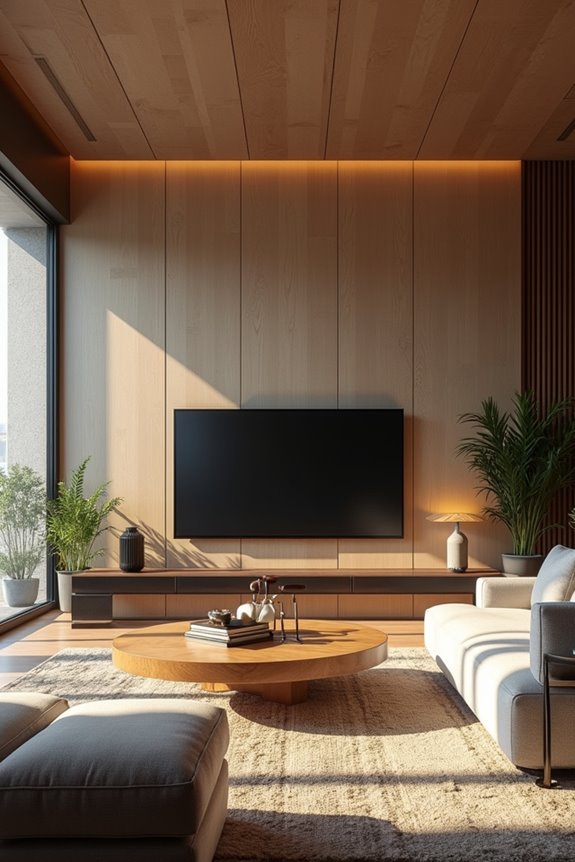
I’ve found that when I shift my design energy toward art instead of screens, my living room actually feels more welcoming and deliberate. By positioning a striking gallery wall, vibrant painting, or sculptural piece as your room’s main visual anchor, you’re inviting conversation and reflection rather than passive viewing. This approach lets your TV become a supporting player in the room’s story, while warm lighting, thoughtful colors, and curated artwork create the atmosphere that actually makes people want to gather there.
Alternative Focal Point Options
What if your living room’s most engaging feature wasn’t glowing from a screen, but rather showing your personality through art?
I’ve discovered that shifting your focal point changes how your space feels. Instead of anchoring everything around the TV, I’m creating visual interest through intentional art integration and wall mounting alternatives. This approach gives your room character while maintaining viewing balance.
Here’s how I’m making it work:
- Mount a large painting or sculpture above the fireplace as your primary focal point
- Hang a decorative mirror using the same hardware as the TV for unified aesthetics
- Feature a textured brick or tile wall as a natural visual anchor
- Layer artwork around the room to distribute attention evenly
- Position your TV as a secondary element, not dominating the space
This strategy preserves warmth and elegance while accommodating entertainment needs well.
Design Energy And Warmth
When you walk into a room where the TV dominates everything—dark screen staring back at you like an unwelcome guest—you feel it immediately.
I’ve learned that deliberate TV placement shapes your living room layout into a welcoming gathering space. By positioning your television as a secondary element and anchoring the room with compelling art or a sculptural piece instead, you’ll naturally build warmth and design energy that invites conversation.
I recommend using dark accent walls in charcoal or navy behind your mounted TV, allowing it to recede visually. This subtle approach doesn’t eliminate entertainment; it simply rebalances priorities. Add built-in cabinetry nearby to conceal cables and create unity.
When your living room celebrates art and connection rather than screens, you’ll notice how naturally people linger, talk, and truly belong together in that space.
Align Your TV With Furniture and Traffic Flow
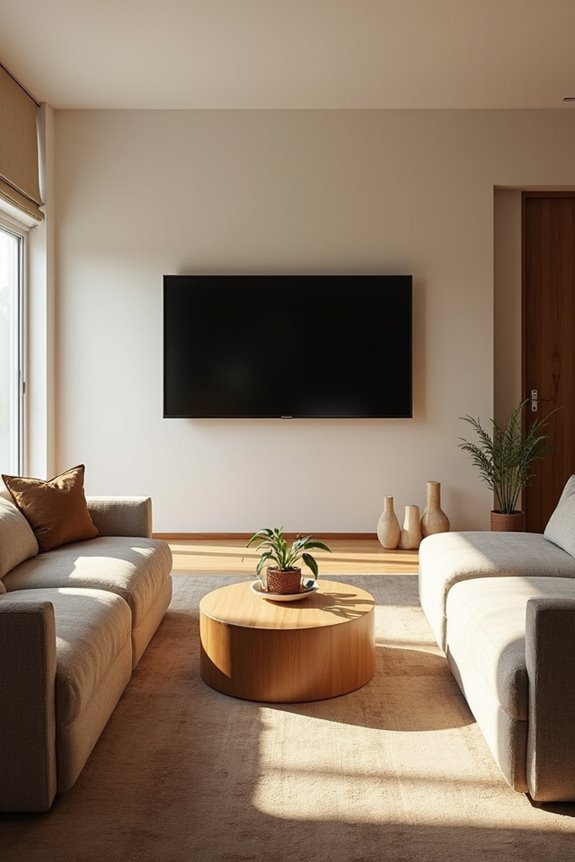
Thoughtful TV placement creates harmony between seating alignment and sightlines, shaping how your living room actually functions.
Because your TV’s placement shapes how you’ll actually use your living room, it’s worth thinking beyond just finding wall space and calling it done. Thoughtful TV placement creates harmony between your seating alignment and sightlines, affecting how everyone experiences the space together.
When I consider traffic flow and sightlines, I ask myself: Can people move freely without squeezing past the couch? Does everyone see the screen comfortably? These questions matter because they determine whether your living room feels welcoming or awkward.
Here’s what I focus on:
- Position the TV so primary seating faces it directly
- Secondary seating should have acceptable viewing angles
- Keep pathways clear of obstructions
- Avoid competing focal points nearby
- Use adjustable mounts for flexible arrangements
This balanced approach creates a room where entertainment and everyday living coexist naturally.