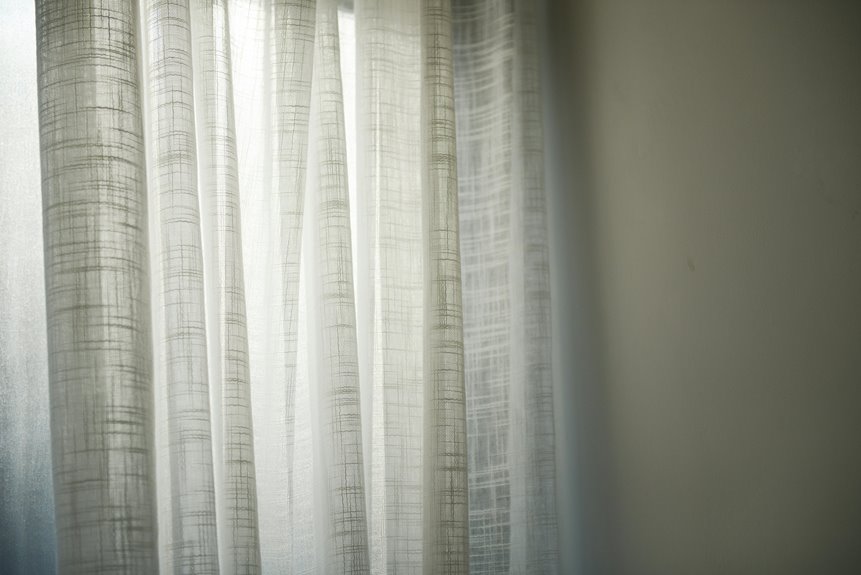
Sheer curtains blur your silhouette during daylight but won’t hide you from close range—and once your interior lights flip on at night, they become nearly transparent. They offer modest daytime privacy depending on weave density, yet they fail completely after dark due to backlighting.
You’ll need layering strategies like pairing sheers with blackout panels or heavier drapes to genuinely protect your privacy. Installation gaps make this worse.
A practical solution that balances both brightness and security involves combining multiple curtain types.
What Sheer Curtains Actually Block During the Day
Have you ever wondered what your neighbors can actually see through those wispy panels hanging in your windows? I’ve discovered that sheer curtains work differently than most people think. They diffuse light beautifully during the day, softening harsh rays and blurring outside views, but they don’t completely hide you. What you’re really getting depends on fabric density—thicker semi-sheer weaves offer more daytime privacy than lighter options. From up close, someone can still perceive movement and shadows. That’s why I’ve found layered window treatments work well for privacy. Combining sheers with blinds or heavier curtains blocks direct sightlines while preserving that gorgeous light diffusion. It’s the smart balance between brightness and protection that makes your space feel both open and secure.
Why Nighttime Privacy Fails With Sheer Fabrics
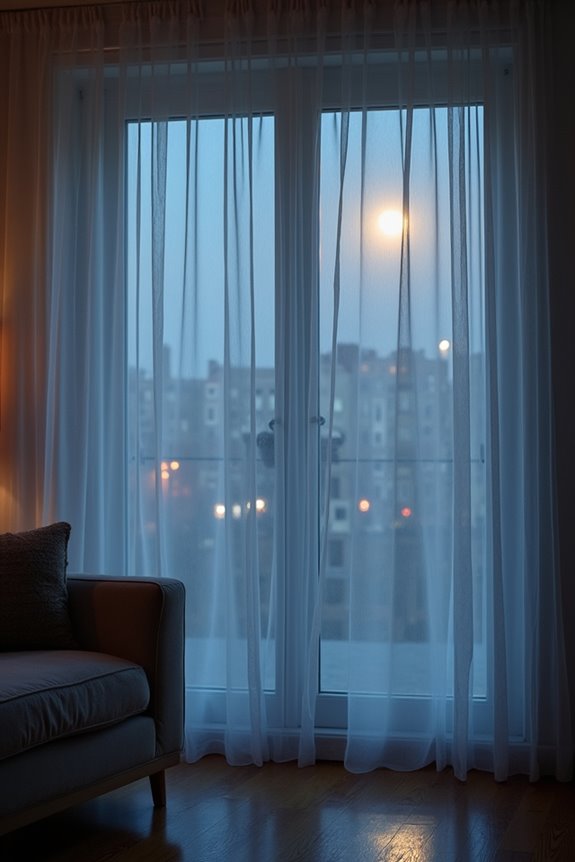
When I flip on my bedroom lamp at night, I’ve realized that my sheer curtains—which felt perfectly private during the day—suddenly become almost transparent from the outside. The problem’s straightforward: interior lighting creates a bright backlight that makes silhouettes, movement, and even room details visible through the translucent fabric, exposing what seemed like a privacy solution as a potential vulnerability. This nighttime transparency is why sheers alone cannot protect your privacy after dark, no matter how tightly woven they are.
Interior Lighting Creates Visibility
Why does your bedroom suddenly feel so exposed the moment you turn on the lights? Interior lighting transforms sheer fabrics into something unexpected—a window into your private world. When darkness falls outside and your lamps glow inside, the contrast creates perfect visibility through fabric. Your silhouettes become clear, your movements visible, and that daytime privacy evaporates entirely. The issue isn’t really the sheer fabrics themselves; it’s how light behaves. I’ve watched my own nighttime privacy disappear simply by switching on bedroom lamps. Movement behind translucent curtains becomes a shadow puppet show for anyone outside. This window transparency problem intensifies with fabric density and installation gaps. Understanding this light dynamic helps you make smarter choices about protecting your spaces after sunset.
Fabric Transparency Becomes Problematic
Something shifts the moment you close those sheer curtains at night and turn on a single lamp—what felt private during daylight suddenly isn’t anymore. I’ve realized that sheer fabric transparency works against us when darkness falls outside. The weave density matters tremendously; thinner fabrics let silhouettes pass right through, revealing movement and shapes to anyone watching from the street. Those fitting gaps along edges? They’re practically invitations for visibility. I learned that nighttime visibility depends heavily on how tightly your curtains hang and seal against the window frame. Privacy with layers becomes necessary—pairing sheers with heavier drapes creates the protection you need. Without that second barrier, your interior lighting becomes a spotlight, broadcasting your home’s activities to the outside world.
How Sheer Curtain Weave Changes Privacy Levels?
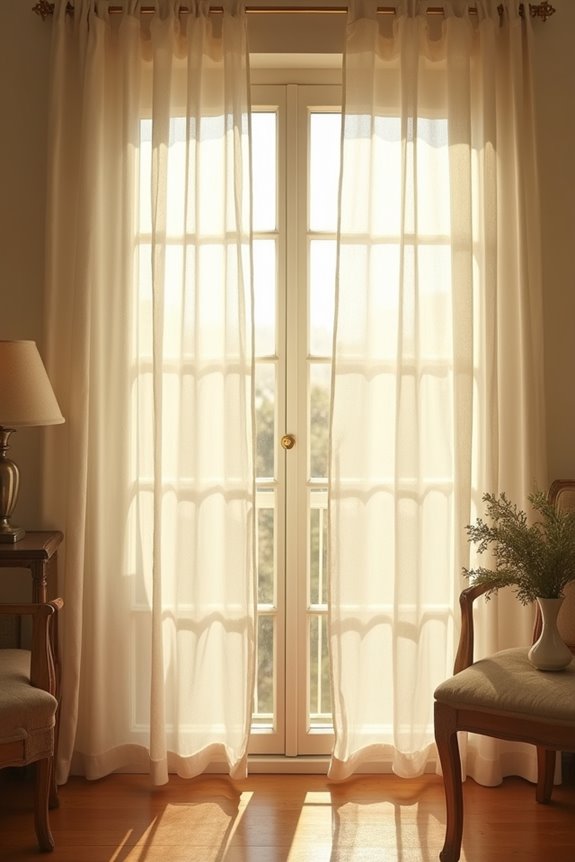
I’ve discovered that the weave of your sheer curtains matters far more than I initially realized, since tighter, denser fabrics create genuine barriers while loose, open weaves practically invite the outside world to peek in. When I examined different options side by side, patterned sheers and semi-sheer heavier weaves offered noticeably better privacy without sacrificing that airy, light-filled feel I wanted in my space. The pattern density acts as your first line of defense—the more intricate the weave structure, the harder it becomes for someone outside to distinguish your movements and shapes during daylight hours.
Tight Weaves Increase Privacy
Just how much does the actual weave of your sheer curtain matter regarding keeping prying eyes out? I’ve found that tight weaves work well for your daytime privacy. When you choose curtains with higher fabric density—measured in threads-per-inch—you’re investing in real opacity that blocks sightlines effectively.
| Weave Type | Daylight Privacy | Outside Visibility |
|---|---|---|
| Loose Weave | Minimal | High |
| Medium Weave | Moderate | Moderate |
| Tight Weave | Strong | Low |
| Dense Blend | Excellent | Very Low |
I found that heavier semi-sheer blends diffuse light while obscuring silhouettes, giving me that sweet spot between natural illumination and protection. The tighter weave creates a subtle barrier without sacrificing the airy aesthetic we all want, making you feel secure during daylight hours when visibility matters most.
Loose Weaves Reduce Visibility
While tight weaves certainly boost your daytime privacy, loose weaves work in a different way—they don’t block visibility so much as they scatter and diffuse it. Open-weave sheers create a dynamic where your sheer weave visibility changes depending on lighting conditions and viewing angles.
Here’s what happens with looser fabrics:
- Silhouettes become more apparent, especially when interior lights contrast against outdoor darkness
- Light diffusion occurs, but movement and shadows still register from outside
- Window fabric density matters less than layering curtains for genuine privacy protection
The privacy level you get depends on your specific situation. If you’re seeking meaningful privacy from street-level viewers, loose weaves alone won’t suffice. That’s when I recommend pairing them with additional light-filtering panels for better security without sacrificing natural illumination.
Pattern Density Affects Transparency
Beyond the simple division between tight and loose weaves lies a more nuanced reality: the actual density of your sheer curtain’s pattern is what truly determines how much privacy you’re getting during daylight hours. I’ve found that weave density works like a visual filter, controlling both transparency and diffusion in ways that most people don’t anticipate. Tighter patterns scatter light differently than loose ones, creating varying levels of obstruction. When I examined semi-sheer fabrics with patterned weaves—think Jacquard designs versus plain textures—I noticed the textured versions genuinely obscured outside silhouettes better. The pattern’s complexity affects how light diffuses through the fabric, offering you that balance between brightness and privacy. Knowing you can choose curtains that match your specific daylight privacy needs gives you control over your environment.
Installation Gaps That Ruin Sheer Curtain Privacy
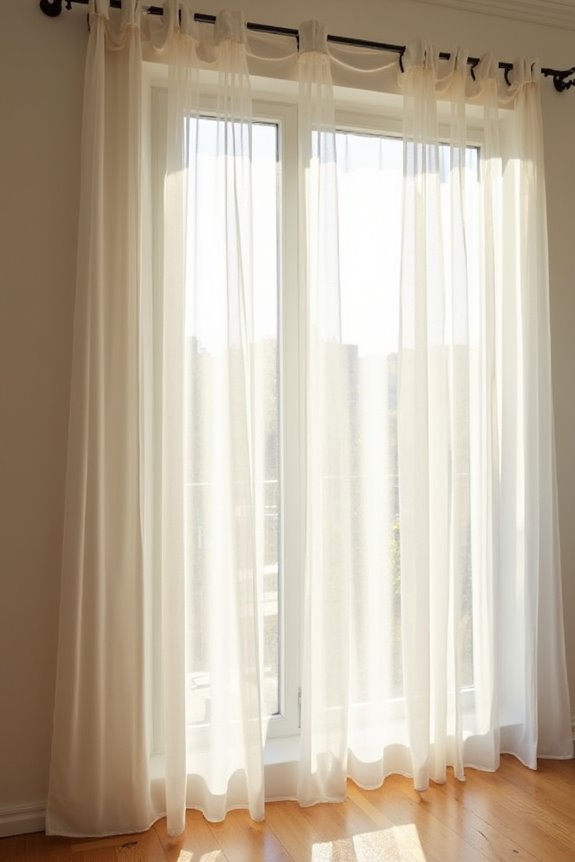
How often have you noticed those sneaky light lines creeping around your sheer curtains, even when they’re supposed to be fully drawn? Installation gaps are the silent privacy killers we often overlook. Even professional installations can’t completely eliminate them. Here’s what ruins your daytime privacy:
Installation gaps are the silent privacy killers we often overlook—even professional setups can’t completely eliminate sneaky light lines.
- Side gaps where sheer curtains don’t meet the wall, allowing outside visibility
- Improper track alignment creating uneven panel placement and light leaks
- Gaps between panels when using multiple curtains without overlap
Perfect track alignment matters more than initially obvious. Those small spaces between panels and walls directly compromise your privacy level. Layering with heavier drapes becomes necessary when you want genuine daytime privacy, not just the illusion of it.
Double-Layer Your Sheers for Better Daytime Privacy

Now that you’ve spotted those pesky gaps undermining your privacy, you’re probably wondering if there’s a practical fix that doesn’t require ripping everything down and starting over. Double-layering your sheer curtains offers an effective solution for daytime privacy.
Pairing sheers with heavier drapes creates flexibility in your approach. The outer layer blocks unwanted views while the inner sheer diffuses light well. By minimizing gaps between layers and hanging them close to the window, you maximize protection without sacrificing that soft glow.
| Layer Type | Privacy Level | Light Diffusion |
|---|---|---|
| Single sheer | Low | High |
| Double-layer sheer | Medium | Medium |
| Sheer + drape | High | Low |
| Sheer + blinds | High | Medium |
| Professional install | Maximum | Customizable |
This approach gives you control over your window treatments based on your specific needs and preferences.
Sheer Curtains Plus Blackout Panels: The Privacy Fix
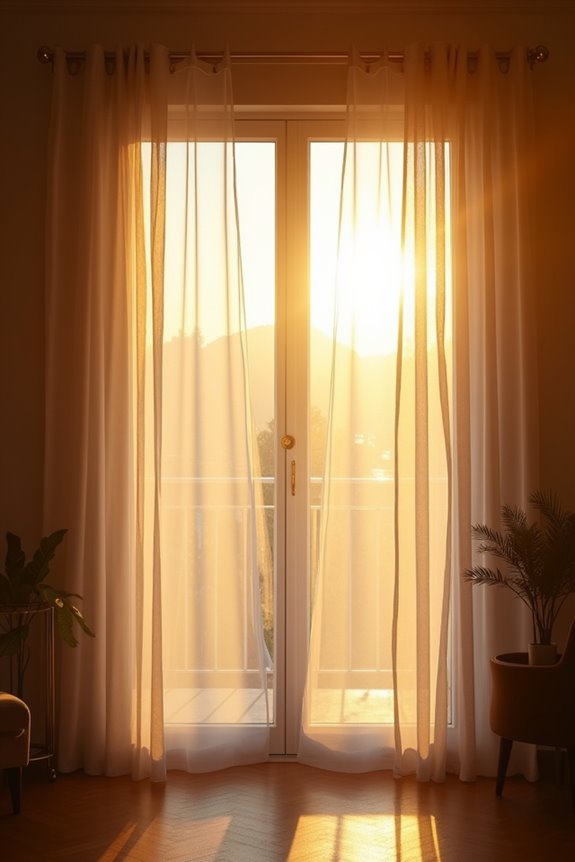
What if I told you that the solution to your privacy puzzle doesn’t require choosing between soft, filtered light and complete darkness?
Combining sheer curtains with blackout panels creates an effective privacy solution. Here’s what makes this combo work:
- Daytime privacy happens when sheers filter sunlight and blur outside silhouettes, keeping your home concealed without sacrificing natural light
- Nighttime protection kicks in when you draw blackout panels fully, since interior lighting makes sheers transparent alone
- Optimal results come from installing sheers closest to the window with blackout panels on the outer layer for quick adjustments
The effectiveness depends on panel thickness, lining quality, and how snugly they fit your window frame. This layered approach gives you flexibility—you control exactly how much privacy you need, exactly when you need it, creating the personalized window solution your home requires.
Tight-Weave Fabrics for Real Daytime Privacy
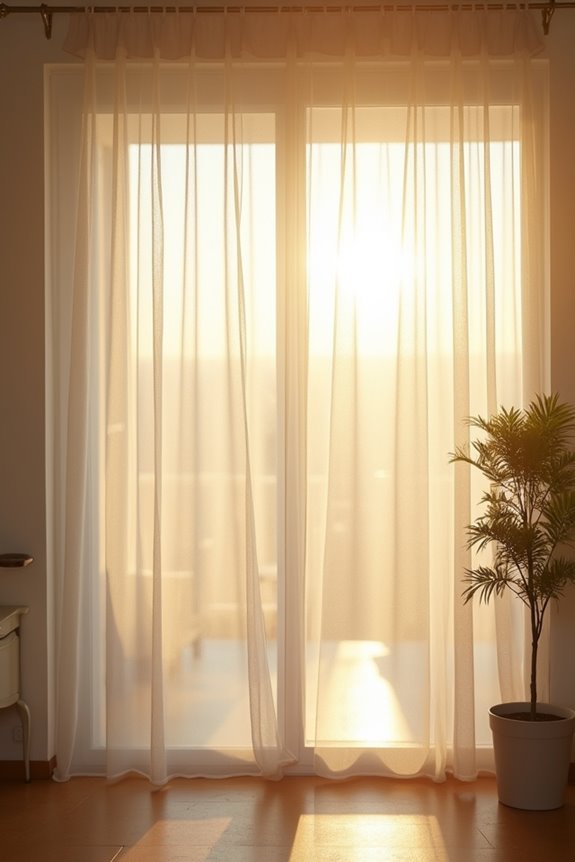
If you’re tired of sacrificing privacy just to let natural light flood your rooms, tight-weave fabrics offer a smarter middle ground than standard sheers. I’ve found that these densely woven materials reduce silhouettes and movements visible from outside, thanks to their higher thread counts and tighter weave density. The privacy level you’ll achieve depends largely on the weave density—denser fabrics block more views without completely eliminating translucent light. You won’t achieve total visibility blockage during daylight, but you’ll notice a clear improvement. What I appreciate most is how tight-weave fabrics maintain softness while delivering real daytime privacy. They’re the Goldilocks solution: not too sheer, not too heavy, just right for those seeking genuine privacy alongside natural illumination.
Rooms Where Sheers Alone Suffice (And When They Don’t)
You’ll find that sheer curtains work well in spaces where you’re willing to trade some privacy for soft, diffused light—and most living areas fall into this category. Daylight diffusion through quality sheers creates an inviting atmosphere suitable for gathering spaces. However, you’ll want to reconsider sheers alone in these situations:
Sheer curtains trade privacy for soft, diffused light—perfect for living areas where gathering happens naturally.
- Bedrooms where nighttime visibility from outside becomes problematic
- Home offices handling sensitive work requiring concentrated privacy
- Ground-floor bathrooms needing complete visual concealment
For these rooms, I’d recommend layering with heavier panels or combining your sheer curtains with blinds. This approach gives you flexibility—enjoying soft morning light while maintaining genuine protection when you need it. Layering window coverings means you’re not sacrificing daylight diffusion or style.