Your bedroom’s musty smell after cleaning likely isn’t from dirt—it’s hidden moisture and mold I bet you can’t see. That lingering odor comes from invisible compounds called MVOCs trapped in damp carpets, behind walls, or under flooring. Water leaks and poor ventilation create perfect breeding grounds for mold spores that cleaning alone won’t eliminate. You’ll need to tackle the moisture source directly to truly banish the smell. There’s a proven approach that addresses what’s actually causing this problem.
Why Your Bedroom Still Smells After Cleaning
Have you ever finished scrubbing your bedroom from top to bottom, only to catch that same stale, musty odor creeping back in?
I’ve been there, frustrated and confused. Here’s what I’ve learned: that lingering musty smell often signals hidden moisture or mold lurking where we can’t see. These culprits release MVOCs—invisible compounds creating that distinctive stench—while damp textiles and carpets trap odors deep within their fibers. Water leaks behind walls or trapped under flooring silently fuel the problem.
The real issue? Inadequate ventilation and air quality. Without proper air exchange, stale air just circulates, recycling the same musty smell. I’ve discovered that opening windows and running fans genuinely help. Sometimes, though, deep cleaning with deodorizing treatments like baking soda addresses surface issues, but underlying moisture remains the true culprit requiring professional assessment.
Moisture and Mold: The Hidden Culprits
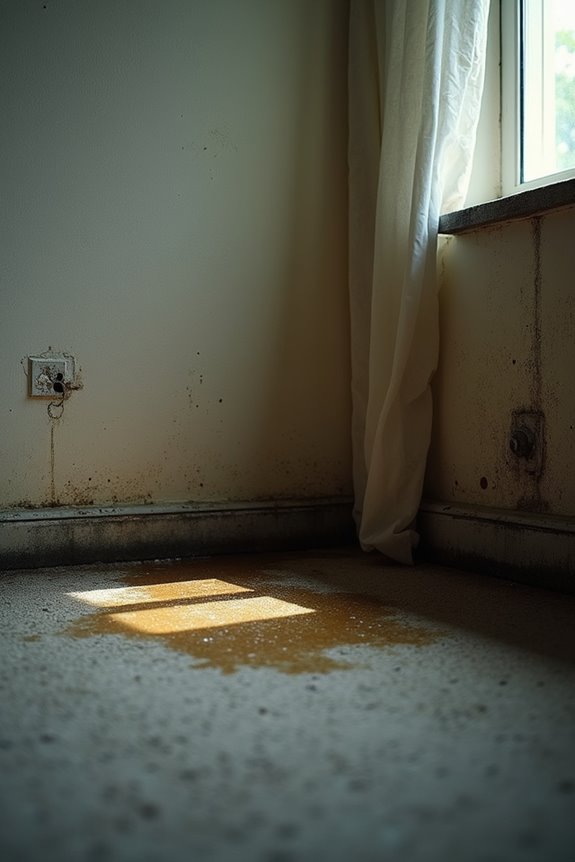
When I realized that opening windows and sprinkling baking soda weren’t solving my bedroom’s smell problem, I started looking deeper—literally. I discovered that hidden moisture was the real culprit, feeding mold growth that released MVOCs—those invisible compounds creating that persistent musty odor. My bedroom’s indoor humidity had climbed above 60%, creating the perfect environment for hidden mold to thrive behind walls and under floors.
I found water damage from a slow leak that’d been lingering for months, completely undetected. Poor ventilation meant damp air was trapping mold spores, keeping that smell alive despite my cleaning efforts. When I inspected more carefully, I noticed subtle discoloration and dampness in corners I’d overlooked. Addressing the moisture itself—not just the smell—finally gave me the fresh bedroom I desperately wanted.
After You Clean: Prevent Moisture Traps and Mold Regrowth
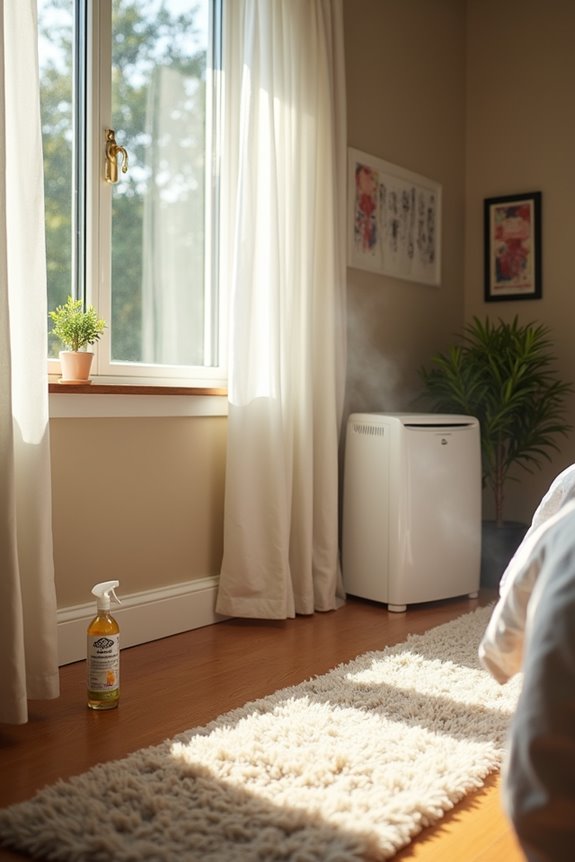
The work doesn’t end when you’ve scrubbed away the visible grime and aired out your bedroom—that’s actually when the real prevention begins. I’ve learned that moisture traps form sneakily under carpets, behind baseboards, and in wall voids when ventilation stays poor. That’s why I now use dehumidifiers and fans to ensure drying is complete, targeting humidity control between 30–50% indoors. Hidden moisture sources like leaks or condensation on cold surfaces demand immediate attention; I check damp surfaces regularly to catch problems early. By monitoring airflow and controlling humidity consistently, I prevent mold regrowth and those stubborn MVOCs that create musty odors. Proper drying paired with ventilation keeps my bedroom fresh, protecting both my space and my peace of mind.
Eliminate Stubborn Post-Cleaning Odors: Your 5-Step Guide
Why does that fresh, just-cleaned smell fade into something musty within days? I’ve discovered the culprit: hidden moisture fueling mold, mildew, and MVOCs that keep releasing odors even after surfaces dry. When I realized odor sources lurk in walls, under carpeting, and inside HVAC ducts, simply wiping visible areas felt pointless.
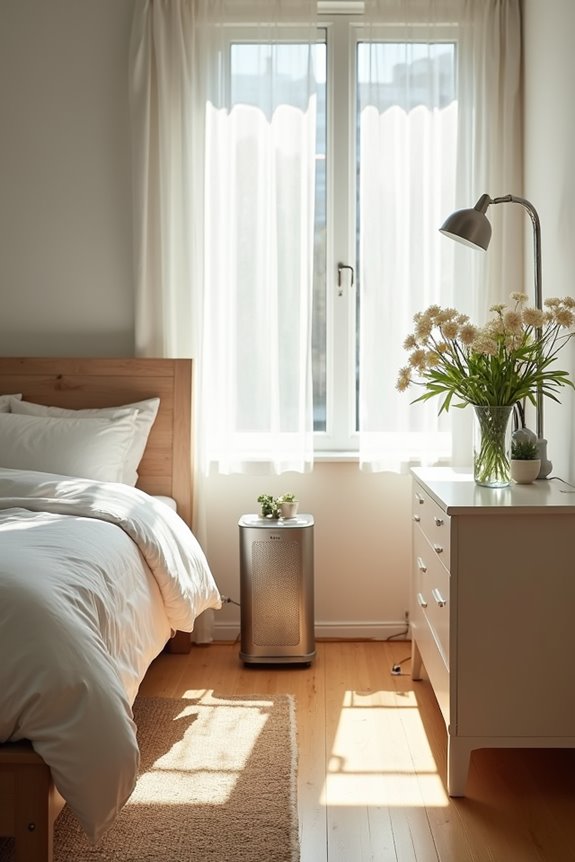
That’s when I embraced a comprehensive approach. I crack open windows and run fans to boost air exchange, diluting lingering odor compounds. I’ve paired ventilation with a dehumidifier and HEPA air purifier, which tackle moisture and mold spores simultaneously. Finally, I reassess everything—checking for water leaks and condensation that could restart the whole cycle.
This five-step strategy genuinely works. You’re not alone in battling post-cleaning odors; we’re just attacking them smarter now.
What to Do if Odors Persist Beyond DIY Solutions
If you’ve tackled ventilation, run dehumidifiers, and replaced filters yet that musty smell still lingers in your bedroom, you’re probably facing something I’ve learned the hard way: hidden moisture and mold don’t always announce themselves visibly.
When DIY odor removal fails, I’ve discovered it’s time to call professionals. Here’s what I’d investigate:
- Hidden moisture sources—concealed leaks behind walls or under flooring that feed mold growth
- MVOC emissions—invisible mold releasing compounds causing stale air despite cleaning efforts
- Water damage indicators—warped surfaces, soft spots, or recurring damp areas signaling structural problems
- HVAC contamination—dirty ductwork circulating musty odors throughout your space
A professional assessment identifies what DIY methods miss. Mold remediation specialists and indoor air quality experts can pinpoint hidden issues, ensuring your bedroom becomes truly fresh again.