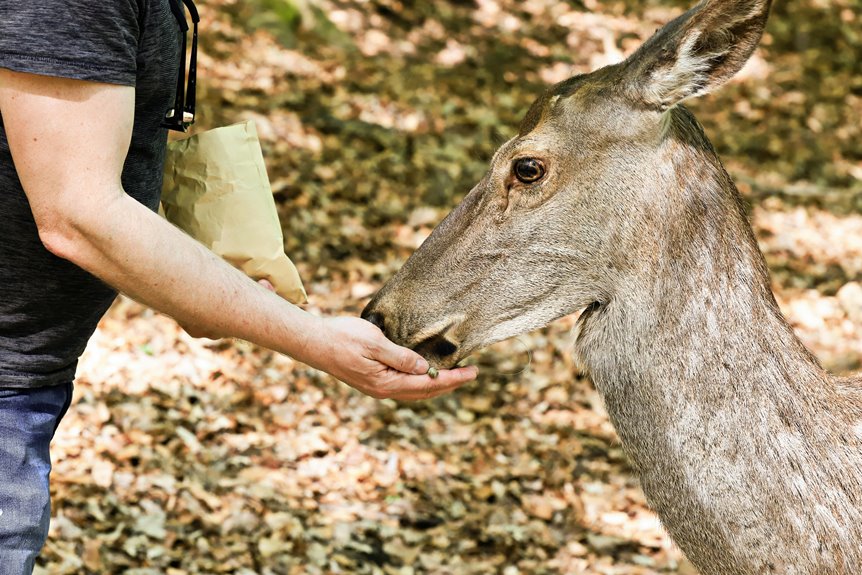
If you’re serious about feeding deer responsibly, skip the corn—it’ll wreck their digestion. Instead, I’d focus on three natural choices: nuts like acorns and hickory nuts for protein, quality forage that mimics their natural browse, and protein-rich greens to support their rumen health. These align with how deer actually eat in the wild. You’ll want to introduce any new foods gradually and follow your local wildlife regulations. There’s quite a bit more to know about timing and safe feeding practices.
What to Feed Deer: Browse, Nuts, and Protein-Rich Greens
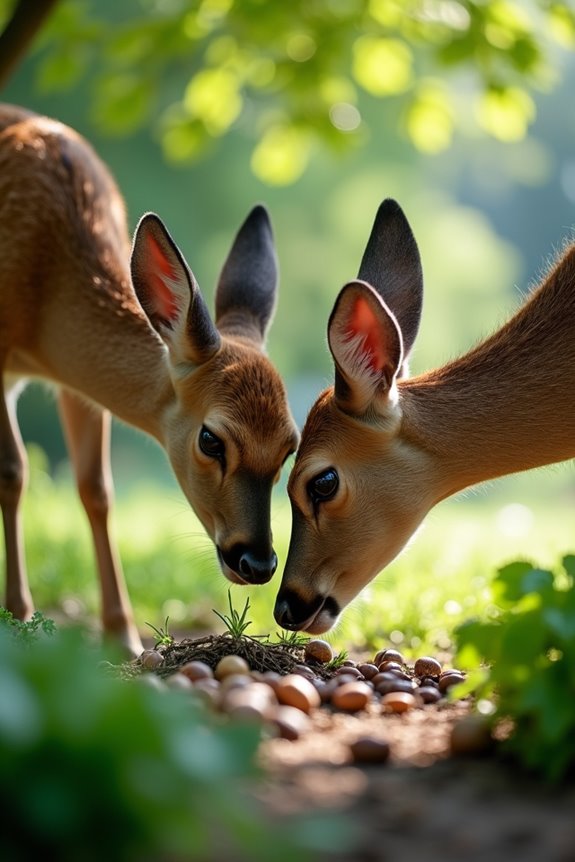
Have you noticed how deer in your yard seem to nibble everything except the grass? That’s because they’re browsers, not grazers, and they’re naturally drawn to deer browse like shrubs and tree buds. I’ve found that providing the right supplemental feed makes a real difference for the herd visiting my property.
The best approach combines three key elements: nuts, forage, and protein-rich greens. Mast items like acorns, hickory nuts, and other wild nuts offer crucial protein, especially during winter months. Alongside these, I scatter protein-rich greens that support rumen function and antler development.
I avoid high-starch corn entirely, focusing instead on natural browse mixed with modest supplemental offerings. This balanced nutrition keeps deer healthy while respecting their natural feeding patterns. Your backyard can become a thriving habitat they’ll visit season after season.
What NOT to Feed Deer: And Why Corn Causes Harm
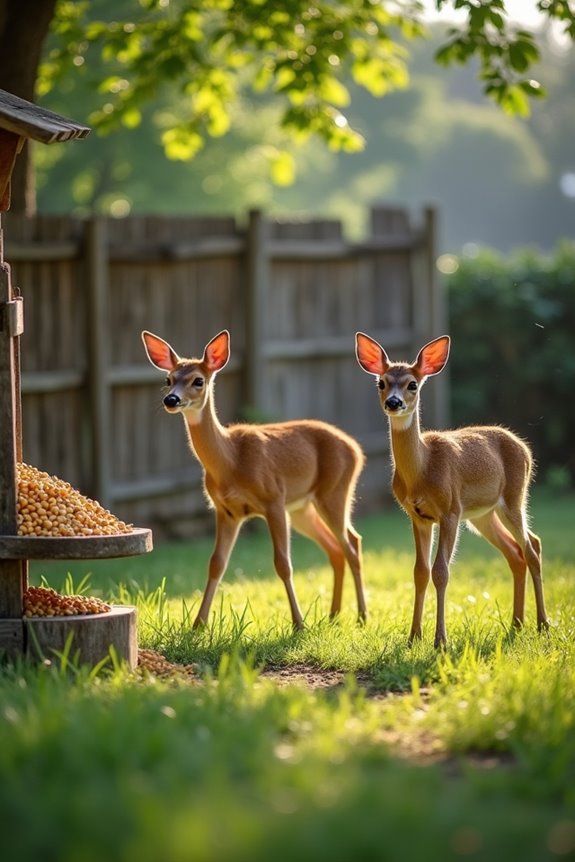
While I’ve learned what deer truly need to thrive, I’ve also discovered what can seriously harm them—and corn tops that list. You see, corn disrupts their gut health catastrophically. It’s high in carbohydrates yet lacks the fiber their digestive systems demand, causing severe diarrhea, dehydration, and poor body condition.
| Problem | Impact | Result |
|---|---|---|
| Low fiber content | Gut microbiome collapse | Rumen dysfunction |
| High-carb foods | Digestion failure | Weakened antlers |
| Sudden dietary changes | Shock to system | Potential death |
Here’s what I’ve realized: sudden corn introduction causes more harm than feeding nothing at all. We’re tempted by convenience, but our wildlife deserves better. Skip corn entirely. Instead, focus on natural browse, nuts, and specially formulated deer feed that honors their dietary balance and supports their long-term health.
Safe Feeding Practices: Timing, Quantity, and Local Regulations
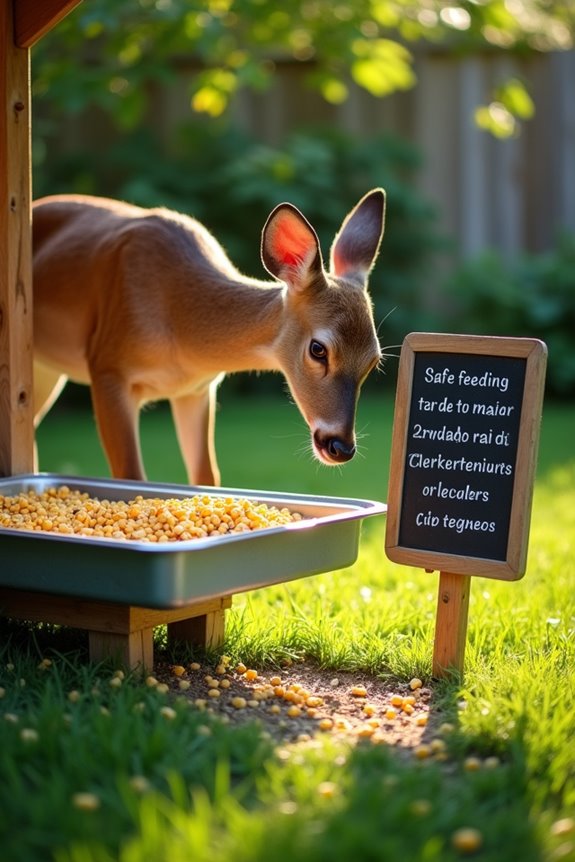
Now that we’ve identified what harms deer, let’s talk about doing it right—because knowing *what* to feed them matters far less than knowing *how* to feed them safely. I’ve learned that timing and quantity are everything when I’m offering supplemental feed. I introduce new foods gradually, letting their digestive systems adjust rather than shocking them with sudden changes. Winter browse works beautifully during cold months, but I avoid starting late-winter feeding unless I’m committed long-term. I also scatter multiple feeding sites across my property to prevent concentration that attracts predators like coyotes. Before I began, I checked my local regulations—county and state guidelines exist for good reasons. This thoughtful approach transforms feeding from risky to responsible, helping me support deer while respecting both nature and my community’s wildlife management goals.